Introduction
The global pistachio industry faces persistent challenges in ensuring product safety and quality throughout the production, processing, and distribution chain. As one of the most valuable tree nuts traded internationally, pistachios are susceptible to contamination by toxigenic fungi, particularly Aspergillus flavus and Aspergillus parasiticus, which produce aflatoxins—potent carcinogenic compounds that pose significant health risks and create substantial barriers to international trade. The presence of aflatoxins, especially the highly toxic and stable aflatoxin B₁ (AFB₁), has led to stringent regulatory limits in major importing markets, with maximum allowable levels typically ranging from 2 to 4 µg/kg for total aflatoxins in nuts destined for human consumption.
The contamination of pistachios with aflatoxigenic fungi can occur at multiple stages of the production chain, including orchard cultivation, harvesting, drying, transportation, and storage. Suboptimal harvesting practices, inadequate drying conditions, and improper storage environments—particularly those with elevated temperature and humidity—create favorable conditions for fungal growth and subsequent mycotoxin production. Conventional methods for controlling fungal contamination and aflatoxin levels, including thermal treatment, chemical washing, and physical sorting, have demonstrated limited efficacy and may adversely affect the nutritional and sensory properties of the product.
In response to these challenges, the food processing industry has increasingly turned to non-thermal technologies as alternative or complementary interventions for microbial decontamination and mycotoxin degradation. Among these technologies, Ultraviolet (UV) irradiation, specifically UVC radiation at wavelengths between 200 and 280 nanometers, has emerged as a safe, cost-effective, and residue-free method for surface disinfection and toxin degradation. UVC radiation operates through the photochemical destruction of DNA and RNA in microorganisms, leading to their inactivation, while simultaneously breaking the chemical bonds of aflatoxin molecules, particularly the double bonds in the furan ring structure.
Cold plasma technology represents another promising non-thermal intervention that has garnered significant research attention in recent years. Cold plasma, also known as non-thermal plasma or atmospheric pressure plasma, generates reactive oxygen and nitrogen species (RONS) that exhibit potent antimicrobial and mycotoxin-degrading activity while operating at near-ambient temperatures. This technology offers the advantage of treating both surface and near-surface contaminants without compromising the quality attributes of the product.
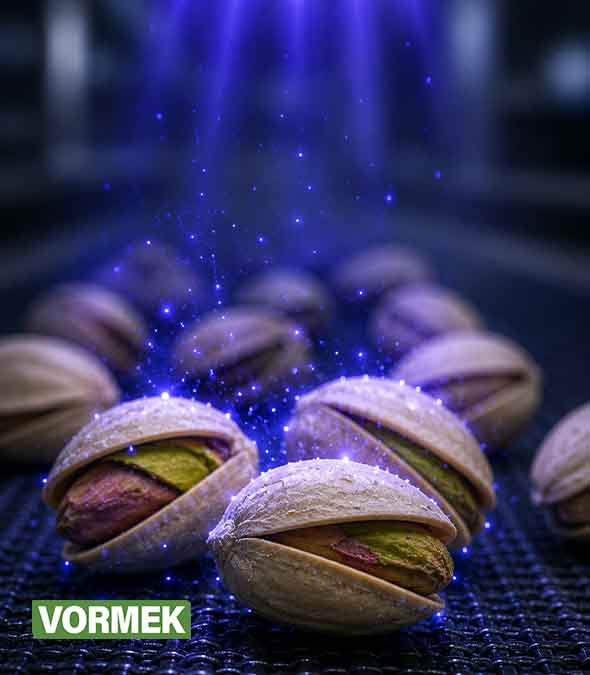
Recent research has demonstrated that the simultaneous application of UV radiation and cold plasma can produce synergistic effects exceeding the sum of their individual decontamination capabilities. This combination approach addresses the limitations of each technology when applied independently, with UV radiation providing effective surface decontamination and cold plasma penetrating more deeply into the product structure.
This comprehensive analysis examines the scientific principles underlying UV and cold plasma technologies, evaluates their individual and combined efficacy for pistachio decontamination, and provides practical guidance for their industrial implementation. The discussion encompasses the mechanisms of action, factors affecting performance, integration with processing operations, and quality considerations. The objective is to provide food processing engineers and quality assurance professionals with a thorough understanding of these technologies and their potential for enhancing the safety and marketability of pistachio products.
For pistachio processors seeking to optimize their decontamination strategies, the integration of non-thermal technologies such as UV irradiation and cold plasma represents a technically sound approach that warrants careful engineering consideration. Our technical team at Vormek provides comprehensive engineering support for food processing and packaging applications. Contact us to discuss how our solutions can be integrated with advanced decontamination technologies for your specific requirements.
The Aflatoxin Challenge in Pistachio Production
Sources and Pathways of Contamination
Aflatoxins are secondary metabolites produced primarily by Aspergillus flavus and Aspergillus parasiticus, fungi that are ubiquitous in agricultural environments and particularly prevalent in regions with warm, humid climates. These fungi can infect pistachio orchards during cultivation, with the infection pathway typically beginning at the flowering stage and progressing through fruit development. The characteristic early splitting of pistachio hulls, known as “early split,” creates an entry point for fungal spores, making the developing kernel vulnerable to colonization.
Post-harvest contamination represents an equally significant pathway for aflatoxin contamination. Inadequate drying practices, where the moisture content of the product exceeds safe levels (typically below 10% for nuts), create conditions favorable for fungal growth during storage. Temperature fluctuations and high relative humidity in storage environments can also trigger fungal growth and aflatoxin production, even in products that were initially dried to safe moisture levels.
The economic impact of aflatoxin contamination is substantial, with rejection of contaminated shipments resulting in significant financial losses for producers and exporters. The European Union, as the largest importer of Iranian pistachios, enforces some of the most stringent aflatoxin limits globally, with maximum allowable levels of 2 µg/kg for AFB₁ and 4 µg/kg for total aflatoxins in nuts intended for direct human consumption. These regulatory limits create considerable pressure on producers to implement rigorous control measures throughout the production chain.
Health Implications and Regulatory Framework
The toxicological significance of aflatoxins arises from their potent carcinogenic, mutagenic, and teratogenic properties. AFB₁, the most prevalent and toxic aflatoxin, is classified as a Group 1 human carcinogen by the International Agency for Research on Cancer (IARC). The mechanism of carcinogenicity involves metabolic activation to a reactive epoxide intermediate that binds to DNA, forming adducts that can lead to mutations in critical genes, particularly the p53 tumor suppressor gene.
The establishment of regulatory limits for aflatoxins involves a complex balance between public health protection and the practical realities of agricultural production. The “as low as reasonably achievable” (ALARA) principle guides regulatory approaches in many jurisdictions, with limits set at the lowest levels that are technically feasible while maintaining food supply adequacy. The diversity of regulatory limits across different markets—ranging from 2 µg/kg in the EU to 20 µg/kg in the United States—creates compliance challenges for international traders.
Conventional Control Strategies and Their Limitations
Traditional approaches to controlling aflatoxin contamination in pistachios include a range of physical, chemical, and biological interventions. Physical sorting, including manual sorting, mechanical sorting, and optical sorting, can remove visibly contaminated nuts but cannot detect internal contamination. Chemical treatments, including the use of ammoniation, oxidative agents, and acid treatments, have demonstrated efficacy in aflatoxin degradation but may raise safety and acceptability concerns.
Thermal processing, including roasting, can reduce fungal populations and degrade some aflatoxins, but the temperatures required for complete aflatoxin destruction often exceed those that preserve product quality. High temperatures can cause undesirable changes in color, flavor, and texture, and may reduce the nutritional value of the product.
The limitations of conventional approaches have driven interest in non-thermal technologies that can provide effective decontamination while preserving product quality attributes. The absence of chemical residues, the ability to operate at near-ambient temperatures, and the potential for integration into existing processing lines make non-thermal technologies attractive alternatives or complements to conventional methods.
The Science of Ultraviolet Irradiation
Principles and Mechanisms of Action
Ultraviolet (UV) irradiation is a form of electromagnetic radiation with wavelengths shorter than visible light but longer than X-rays. The UV spectrum is divided into three regions: UVA (315-400 nm), UVB (280-315 nm), and UVC (200-280 nm). UVC radiation, with wavelengths in the range of 200-280 nm, exhibits the highest germicidal efficacy due to its ability to be absorbed by the nucleic acids of microorganisms.
The mechanism of microbial inactivation by UVC radiation involves the absorption of photons by DNA and RNA molecules, leading to the formation of photoproducts, primarily cyclobutane pyrimidine dimers (CPDs). The formation of these dimers distorts the DNA helix and blocks transcription and replication processes, ultimately leading to cell death. The effectiveness of UV irradiation depends on the wavelength, with maximum absorbance at 260-265 nm, which corresponds to the absorption peak of nucleic acids.
For aflatoxin degradation, UVC radiation operates through photochemical cleavage of chemical bonds within the aflatoxin molecule. The furan ring, which is essential for the toxicological activity of aflatoxin B₁, contains a double bond that absorbs UVC energy, leading to bond cleavage and the formation of photodegradation products with reduced or eliminated toxicity. The degradation products typically exhibit altered fluorescence properties, providing a basis for analytical monitoring of treatment efficacy.
Factors Affecting Efficacy
The effectiveness of UVC treatment for pistachio decontamination is influenced by multiple factors that must be considered for process optimization:
- Radiation Dose and Exposure Time determines the total energy delivered to the product surface. The dose is a function of both radiation intensity and exposure duration. Research on pistachio decontamination has evaluated exposure times ranging from 15 to 45 minutes, with longer exposures generally producing greater reductions in fungal populations and aflatoxin levels.
- Moisture Content of the product significantly affects treatment efficacy. Studies have demonstrated that UVC radiation is more effective in reducing fungal contamination in samples with higher moisture content, as the presence of water facilitates the absorption and penetration of UV radiation into the surface layers.
- Surface Characteristics of the product, including its color and texture, affect the absorption and scattering of UV radiation. Products with smoother, lighter surfaces typically exhibit higher reflectivity, potentially reducing the effective dose delivered to the target microorganisms.
- Distance and Geometry between the UV source and the product surface affects the intensity of radiation reaching the target. The inverse square law describes the relationship between distance and intensity, with doubling the distance reducing intensity by a factor of four. Industrial systems must optimize this parameter for consistent treatment.
- Shadowing Effects create challenges for uniform treatment of irregularly shaped products. The three-dimensional nature of pistachio kernels creates surfaces that may be shielded from direct UV exposure, potentially reducing the overall treatment efficacy.
Performance Characteristics for Pistachio Decontamination
Research on UVC treatment of pistachios has demonstrated significant reductions in both fungal populations and aflatoxin concentrations. The efficacy varies with treatment parameters and the specific target species:
- Fungal Inactivation studies have shown that UVC radiation effectively reduces the growth of Aspergillus species on pistachio surfaces. The susceptibility of different nut types to UVC treatment varies, with research indicating the following order of sensitivity: walnuts ≈ almonds ≈ pistachios > peanuts. The greater resistance observed in peanuts may be attributed to differences in surface structure or the presence of protective surface oils.
- Aflatoxin Degradation follows a first-order kinetics pattern, meaning the degradation rate is proportional to the remaining toxin concentration. Among the four major aflatoxin types, AFG₂ exhibits the highest sensitivity to UVC degradation, achieving complete removal within 15 minutes of treatment across all nut types examined. AFG₁ shows intermediate sensitivity, achieving complete degradation in almonds and pistachios after 45 minutes of treatment. AFB₁ demonstrates the highest resistance, with reductions reaching 96.5% after 45 minutes of treatment but without complete elimination.
- Resistance Patterns are related to the structural characteristics of different aflatoxin types. The presence of specific functional groups and double bonds affects their susceptibility to photochemical cleavage, with those containing more conjugated double bonds generally exhibiting higher absorption of UVC radiation and greater degradation rates.
The Science of Cold Plasma Technology
Principles and Mechanisms of Action
Cold plasma, also known as non-thermal plasma or atmospheric pressure plasma, is an ionized gas containing a mixture of reactive species including electrons, ions, free radicals, excited molecules, and photons. Unlike thermal plasma, cold plasma operates at near-ambient temperatures (typically 30-60°C), enabling treatment of heat-sensitive materials without thermal damage.
The generation of cold plasma requires the application of electrical energy to a gas, causing the breakdown of molecules into reactive species. When air is used as the working gas, the plasma contains a mixture of reactive oxygen and nitrogen species (RONS), including atomic oxygen, atomic nitrogen, hydroxyl radicals, ozone, peroxides, nitrates, and nitrites. These reactive species, generated in concentrations exceeding 1,000 ppm under typical operating conditions, are responsible for the antimicrobial and mycotoxin-degrading activity of cold plasma.
The mechanisms of microbial inactivation by cold plasma are multifactorial, involving both direct and indirect effects. Direct effects include the interaction of charged particles and radicals with cell membranes, causing lipid oxidation, protein denaturation, and DNA damage. Indirect effects involve the generation of secondary reactive species within the cellular environment, creating oxidative stress that overwhelms cellular defense mechanisms.
For aflatoxin degradation, the primary mechanism involves the oxidative cleavage of chemical bonds within the toxin molecule. Reactive oxygen species, particularly hydroxyl radicals, react with the furan ring and other functional groups, forming degradation products with reduced or absent toxicity. The highly reactive nature of these species allows for degradation of both surface and near-surface contaminants, potentially overcoming some of the penetration limitations of UV radiation.
Factors Affecting Efficacy
The effectiveness of cold plasma treatment for pistachio decontamination is influenced by multiple interrelated factors:
- Operating Parameters including voltage, frequency, treatment time, and power input affect the generation of reactive species and their availability for decontamination. Research on pistachio decontamination has evaluated power levels up to 80 W with treatment times of 10-15 minutes. The optimization of these parameters requires balancing decontamination efficacy against potential quality impacts.
- Working Gas Composition significantly affects the types and concentrations of reactive species generated. Air plasma produces a complex mixture of reactive oxygen and nitrogen species, while the addition of specific gases may modulate the reactive species profile to optimize decontamination or minimize quality impacts.
- Product Characteristics including moisture content, surface structure, and composition influence the interactions between reactive species and the product. The presence of moisture can enhance the generation of hydroxyl radicals, potentially improving decontamination efficacy while also facilitating deeper penetration of reactive species.
- Matrix Effects represent a significant consideration for the application of cold plasma to complex food matrices. Research has demonstrated that cold plasma is considerably more effective for reducing aflatoxins in spiked samples or standard toxin solutions compared to naturally contaminated products. This reduced efficacy for naturally occurring contaminants is attributed to the binding of aflatoxins to the food matrix, which limits their accessibility to reactive species generated by the plasma.
Performance Characteristics for Pistachio Decontamination
Research on cold plasma treatment of pistachios and other nuts has demonstrated significant potential for both fungal inactivation and aflatoxin degradation:
- Fungal Inactivation studies have shown that cold plasma treatment can achieve 1-5 log reductions in microbial populations on nut surfaces, depending on treatment parameters. The effectiveness is influenced by both the specific microbial species and the treatment conditions.
- Aflatoxin Degradation by cold plasma varies with both the treatment parameters and the nature of the contamination. In naturally contaminated mixed nuts, cold plasma treatment achieved AFB₁ reductions of 24.6% after 16 minutes of treatment, while reductions in spiked samples reached 88.4% under similar treatment conditions. Standard toxin solutions exhibited even higher reductions, with 80.9% degradation of AFB₁ achieved within just 2 minutes of treatment. These results highlight the significant impact of matrix binding on treatment efficacy and the need for optimized conditions for naturally contaminated products.
- Quality Preservation is a key advantage of cold plasma technology. The near-ambient operating temperature minimizes thermal damage to heat-sensitive nutrients and sensory attributes. Studies have reported no substantial modifications in pH and DPPH radical scavenging activity of treated samples, indicating preservation of antioxidant capacity and overall product quality.
- Mechanisms of Degradation involve the oxidative attack of the aflatoxin molecule by reactive species, with the furan ring being a primary target. The degradation products exhibit reduced toxicity, though the specific nature of these products and their potential health implications require further investigation.
Synergistic Application of UV and Cold Plasma
Complementary Mechanisms and Additive Effects
The combination of UV irradiation and cold plasma treatment offers the potential for synergistic effects that exceed the sum of their individual contributions. The mechanisms by which these technologies complement each other are multiple and significant:
- Enhanced Microbial Inactivation has been demonstrated in simultaneous application studies. Research on dried pistachios artificially contaminated with aflatoxigenic fungi showed that the combined UV-cold plasma treatment achieved fungal deactivation rates greater than the sum of the individual treatment effects. A maximum reduction of Aspergillus oryzae count (3.7 log CFU/g) was observed after simultaneous UV-cold plasma treatment for 15 minutes, indicating true synergy rather than mere additivity.
- Penetration Depth Complementarity represents another dimension of synergy. UV radiation is limited to surface decontamination due to its low penetration of food materials, while cold plasma can penetrate to greater depths through the diffusion of reactive species. The combination addresses both surface and near-surface contaminants, providing more comprehensive decontamination.
- Mechanism Diversity ensures that microorganisms with resistance to one treatment modality remain susceptible to the other. UV radiation primarily targets DNA through photochemical damage, while cold plasma acts through multiple mechanisms including membrane oxidation, protein denaturation, and oxidative stress. This multi-target approach reduces the likelihood of resistance development.
- Reactive Species Enhancement may occur through the interaction of UV radiation with plasma-generated species. UV radiation can facilitate the photochemical activation of reactive species, potentially increasing their availability for decontamination reactions.
Research Evidence for Combined Efficacy
Recent studies have systematically evaluated the combined effects of UV and cold plasma on pistachios:
- Microbiological Performance studies demonstrated that the combined treatment significantly outperformed individual treatments. The synergy was attributed to the complementary mechanisms of action, with UV radiation providing surface decontamination and cold plasma generating reactive species that could interact with both surface and near-surface contaminants.
- Quality Attribute Preservation research showed no substantial modifications in key quality parameters including pH, DPPH radical scavenging activity, and overall product quality. This finding indicates that the combined treatment can achieve enhanced decontamination without sacrificing product quality attributes.
- Practical Implications suggest that the combined application of UV and cold plasma could be integrated into pistachio processing lines as a final intervention prior to packaging. The configuration of the treatment system must ensure uniform exposure to both treatments while maintaining process efficiency and product flow.
Optimization Strategies for Industrial Implementation
The successful implementation of combined UV and cold plasma treatment requires systematic optimization of multiple process parameters:
- Treatment Sequence may involve simultaneous or sequential application of the two technologies. Simultaneous application has been evaluated in research settings and demonstrated efficacy, while sequential application may offer flexibility for integration with existing processing operations.
- Process Parameters for both technologies must be individually optimized and then co-optimized to maximize synergy. Key parameters include UV intensity and exposure time, plasma power input and treatment time, and the geometry of product exposure to both treatments.
- Product Handling must ensure uniform exposure of all product surfaces to both treatments. The irregular shape and size of pistachio kernels create challenges for uniform treatment, potentially requiring specialized handling systems such as tumbling or fluidized bed processing.
Integration with Processing Operations
Processing Line Configuration
The integration of UV and cold plasma treatment into pistachio processing lines requires careful consideration of both process flow and equipment configuration. The ideal placement of these technologies within the processing line depends on the specific objectives and constraints of each operation.
- Positioning within the Processing Line is typically at the final stage of processing, following sorting, grading, and cleaning operations. This position ensures that the product surface is free from debris that could shield microorganisms from the treatment, maximizing efficacy. Positioning after packaging is not feasible for UV treatment but may be considered for cold plasma if permeable packaging is used.
- Flow Rate and Residence Time must be matched to the treatment requirements and production capacity. The residence time required for effective treatment (typically 15-45 minutes for UV) may be longer than typical processing operations, necessitating specialized equipment design or integration with product storage.
- Material Handling Systems must be designed to minimize the accumulation of stationary product and ensure consistent exposure of all product surfaces. Systems such as vibrating conveyors, tumbling drums, or fluidized bed designs can provide the product movement necessary for uniform treatment.
Equipment Design Considerations
The design of UV and cold plasma treatment equipment for pistachio processing presents unique engineering challenges:
- UV Equipment Design requires careful consideration of the radiation source geometry, reflector design, and product handling systems. The selected UV wavelength (typically 254 nm for mercury lamps or 265 nm for LED systems) must match the absorption characteristics of the target microorganisms and toxins. The positioning of UV sources must ensure uniform radiation across the product treatment zone.
- Cold Plasma Equipment Design must address both the generation of reactive species and their delivery to the product surface. The plasma generation configuration, including electrode design and gas flow systems, must be optimized for the specific process requirements. The containment of reactive species and the prevention of ozone generation above workplace exposure limits are critical safety considerations.
- Integration of UV and Cold Plasma into a single treatment unit requires consideration of potential interactions between the two technologies. UV radiation may enhance the generation of reactive species in the plasma, potentially improving efficacy, but must be integrated in a manner that ensures safe and reliable operation.
Quality Assurance and Process Control
The industrial implementation of UV and cold plasma treatment requires robust quality assurance and process control systems:
- Verification of Treatment Efficacy requires regular monitoring of both microbial and chemical contaminants. The performance of treatment systems must be validated for the specific product types and contamination scenarios encountered in production.
- Monitoring of Process Parameters ensures consistent treatment delivery. Key parameters to monitor include UV intensity, exposure time, plasma power input, and product residence time. The integration of these parameters into a process control system enables real-time monitoring and adjustment.
- Validation of Treatment Uniformity requires assessment of product exposure to both UV and cold plasma across the entire treated product population. Sampling and testing protocols must be designed to detect non-uniform treatment conditions.
Quality and Safety Considerations
Impact on Product Quality
The application of UV and cold plasma to pistachios can affect product quality attributes through various mechanisms:
- Color and Appearance of pistachios can be affected by UV radiation, particularly with extended exposure. The characteristic green color of pistachios is due to chlorophyll and other pigments that may be susceptible to photodegradation. Optimization of treatment parameters is necessary to minimize color changes while achieving decontamination objectives.
- Flavor and Aroma can be affected by the oxidative reactions that occur during treatment. The generation of reactive oxygen species may promote lipid oxidation, potentially leading to the development of off-flavors. However, studies have reported no significant changes in the flavor quality of treated products when optimized conditions are used.
- Nutritional Properties are generally well-preserved by non-thermal treatments. Research has shown no significant changes in total fat content, protein content, total phenolic compounds, soluble carbohydrates, or insoluble carbohydrates of treated pistachios. The antioxidant capacity, measured by DPPH radical scavenging activity, was also preserved under optimized treatment conditions.
- Texture and Structure are typically unaffected by UV and cold plasma treatments, as they operate at near-ambient temperatures and do not cause the structural changes associated with thermal processing. This preservation of texture contributes to the maintenance of product quality.
Safety Considerations
The safety of UV and cold plasma treatment for pistachios encompasses multiple dimensions:
- Worker Safety requires attention to the potential hazards associated with UV radiation and plasma generation. UV radiation can cause eye and skin damage, necessitating appropriate shielding and safety protocols. Cold plasma systems may generate ozone and other reactive species that require monitoring and control to ensure workplace concentrations remain below exposure limits.
- Product Safety requires consideration of potential toxicological effects of treatment byproducts. The degradation products of aflatoxins must be characterized to ensure they do not retain toxicological activity. The interaction of reactive species with product components may generate potentially harmful compounds that require assessment.
- Regulatory Compliance requires demonstration that the treatment process achieves the required decontamination levels without creating new hazards. The use of UV and cold plasma as food processing aids is subject to regulatory approval in many jurisdictions, requiring appropriate validation and documentation.
Environmental Considerations
The environmental footprint of UV and cold plasma treatment compares favorably to alternative technologies:
- Energy Consumption for UV and cold plasma treatment is generally lower than thermal processing alternatives, contributing to reduced operational costs and environmental impact. The potential for integration of these technologies with renewable energy sources further enhances their sustainability credentials.
- Chemical Usage is minimized or eliminated with UV and cold plasma treatment, reducing the need for chemical inputs and the associated environmental impacts. The absence of chemical residues eliminates the need for disposal of treatment chemicals and reduces the risk of environmental contamination.
- Waste Generation is limited to the normal product waste streams, as the treatment process does not generate additional waste. The reduction of aflatoxin contamination also contributes to waste reduction by decreasing the amount of product that must be rejected or diverted to non-food uses.
Comparison with Alternative Technologies
Ozone Treatment
Ozone treatment is another non-thermal approach for aflatoxin degradation that has been investigated for pistachio applications:
- Mechanism involves the oxidative cleavage of aflatoxin molecules by ozone, a powerful oxidizing agent. The treatment can be applied as a gas or in aqueous solution.
- Efficacy research has demonstrated that ozone treatment can achieve significant aflatoxin degradation in pistachios, particularly when combined with UV irradiation and acid treatment. A combination of ozone, UV-C, and citric acid achieved more than 90% degradation of AFB₁ and AFB₂, and more than 99% degradation of AFG₁ and AFG₂.
- Complementary Mechanisms between ozone and UV include the potential for UV to enhance the generation of hydroxyl radicals from ozone, potentially improving degradation efficacy. The combination of ozone, UV, and acid treatment may provide enhanced performance compared to UV alone, though the use of additional inputs increases process complexity.
High‑Pressure Processing
High-pressure processing (HPP) is a non-thermal technology that applies hydrostatic pressure to achieve microbial inactivation:
- Mechanism involves the denaturation of proteins and disruption of cell membranes through high pressure. HPP can achieve significant microbial reduction while preserving product quality attributes.
- Application to Pistachios is limited by the dry nature of the product and the potential for structural damage. HPP is more suitable for high-moisture products where the transmission of pressure through the product is feasible.
- Comparison with UV and cold plasma indicates that these technologies are more suitable for dry products like pistachios, where the effectiveness of pressure treatment is limited.
Chemical Treatments
Chemical treatments for aflatoxin degradation remain an option for some applications:
- Acid Treatment with citric acid has demonstrated efficacy for aflatoxin degradation in pistachios, particularly in combination with other technologies. The mechanism involves acid-catalyzed cleavage of aflatoxin molecules.
- Limitations include the potential for chemical residues, product quality impacts, and regulatory constraints. Consumer preference for minimal processing and clean-label products also limits the attractiveness of chemical treatments.
- Combined Approaches that integrate chemical treatments with physical technologies such as UV and ozone offer the potential for enhanced efficacy, though the complexity of such approaches may limit their practical implementation.
Future Directions and Emerging Applications
Technology Development
The ongoing development of UV and cold plasma technologies offers opportunities for improved performance and expanded applications:
- UV LED Technology is advancing rapidly, offering potential advantages over conventional mercury lamps including greater energy efficiency, longer lifetime, instant on/off capability, and absence of mercury. These advantages may facilitate the integration of UV treatment into processing lines and enable more precise control of treatment parameters.
- Plasma Source Development continues with new electrode designs and power supplies that improve the efficiency and consistency of reactive species generation. The development of atmospheric pressure plasma sources suitable for integration into production lines is an active area of research and development.
- Combined Systems that integrate UV and cold plasma in a single treatment unit are being developed, offering the potential for simplified installation, shared infrastructure, and optimized synergy between the two technologies.
Process Integration
The integration of UV and cold plasma treatment into pistachio processing lines represents an opportunity for process improvement:
- Continuous Processing systems are being developed for high-throughput applications, enabling the integration of treatment into continuous production lines. The design of continuous systems must address the uniform exposure of all product surfaces and the maintenance of treatment conditions over extended operation.
- Automation and Control systems are being advanced to provide real-time monitoring and adjustment of treatment parameters. The integration of sensors and control systems enables consistent treatment delivery and rapid response to process variations.
- Traceability and Documentation requirements for regulated processes drive the development of comprehensive monitoring and recording systems. The integration of treatment parameters with product tracking systems provides the documentation necessary for regulatory compliance and quality assurance.
Regulatory Developments
The regulatory landscape for non-thermal processing technologies continues to evolve:
- Approval Processes for the use of UV and cold plasma as food processing aids vary between jurisdictions. The development of standardized approaches for the validation and approval of these technologies would facilitate their adoption and international acceptance.
- Acceptance of Treated Products in international markets depends on compliance with the regulatory requirements of the destination country. The alignment of regulatory approaches across major trading partners would reduce barriers to the adoption of these technologies.
- Labeling Requirements for products treated with UV or cold plasma are generally limited, as these technologies are considered processing aids rather than additives. The clean-label positioning of these technologies is a significant advantage for marketing purposes.
FAQ
1. What are the primary sources of aflatoxin contamination in pistachios?
Aflatoxin contamination in pistachios originates from toxigenic fungi, primarily Aspergillus flavus and Aspergillus parasiticus. Contamination can occur during cultivation (through early split hulls creating entry points for fungal spores), harvesting, drying, transportation, and storage. Inadequate drying practices and improper storage conditions with elevated temperature and humidity create favorable environments for fungal growth and subsequent mycotoxin production.
2. What are the regulatory limits for aflatoxins in pistachios?
Regulatory limits vary significantly between major markets. The European Union enforces some of the most stringent limits, with maximum allowable levels of 2 µg/kg for aflatoxin B₁ and 4 µg/kg for total aflatoxins in nuts intended for direct human consumption. In contrast, the United States permits up to 20 µg/kg for total aflatoxins. These variations create compliance challenges for international traders.
3. How does UVC radiation inactivate microorganisms?
UVC radiation (200-280 nm) inactivates microorganisms through photochemical damage to DNA and RNA. The radiation is absorbed by nucleic acids, forming cyclobutane pyrimidine dimers (CPDs) that distort the DNA helix and block transcription and replication processes. Maximum absorbance occurs at 260-265 nm, corresponding to the absorption peak of nucleic acids, leading to cell death.
4. What is the mechanism of aflatoxin degradation by UVC radiation?
UVC radiation degrades aflatoxins through photochemical cleavage of chemical bonds within the aflatoxin molecule. The furan ring, essential for the toxicological activity of aflatoxin B₁, contains a double bond that absorbs UVC energy, leading to bond cleavage and formation of photodegradation products with reduced or eliminated toxicity. AFG₂ exhibits the highest sensitivity to UVC degradation, achieving complete removal within 15 minutes, while AFB₁ demonstrates the highest resistance, achieving 96.5% reduction after 45 minutes.
5. How does cold plasma technology work for food decontamination?
Cold plasma is an ionized gas containing reactive oxygen and nitrogen species (RONS) generated by applying electrical energy to a gas. Operating at near-ambient temperatures (30-60°C), it generates reactive species including atomic oxygen, hydroxyl radicals, ozone, and peroxides that exhibit potent antimicrobial and mycotoxin-degrading activity through oxidative cleavage of chemical bonds. The technology offers the advantage of treating both surface and near-surface contaminants without thermal damage to the product.
6. What is the synergistic effect of combining UV and cold plasma?
The combination of UV irradiation and cold plasma treatment creates a synergistic effect that exceeds the sum of their individual contributions. Research on dried pistachios demonstrated that simultaneous UV-cold plasma treatment achieved fungal deactivation rates greater than individual treatments, with a maximum reduction of Aspergillus oryzae count (3.7 log CFU/g) after 15 minutes of combined treatment. The synergy arises from complementary mechanisms: UV provides surface decontamination while cold plasma penetrates deeper, and mechanism diversity reduces the likelihood of resistance development.
7. Does UV or cold plasma treatment affect the quality of pistachios?
Under optimized treatment conditions, both UV and cold plasma technologies preserve product quality attributes. Studies have reported no significant changes in total fat, protein, total phenolic compounds, soluble carbohydrates, or insoluble carbohydrates. Antioxidant capacity (DPPH radical scavenging activity) and pH were also preserved. However, extended UV exposure may affect color and appearance due to photodegradation of chlorophyll and other pigments, requiring optimization of treatment parameters.
8. What are the advantages of non-thermal technologies over conventional methods?
Non-thermal technologies offer several advantages over conventional methods: they operate at near-ambient temperatures, preserving heat-sensitive nutrients and sensory attributes; they leave no chemical residues; they can be integrated into existing processing lines; they reduce the need for chemical inputs; and they align with consumer preferences for minimally processed, clean-label products.
9. What are the main challenges in industrial implementation of UV and cold plasma?
Key challenges include: ensuring uniform exposure of all product surfaces (particularly important for irregularly shaped pistachio kernels); optimizing treatment parameters for specific product characteristics and contamination scenarios; managing the longer residence times required for effective treatment (15-45 minutes for UV); addressing the reduced efficacy of cold plasma for naturally bound aflatoxins compared to spiked samples; and ensuring worker safety through appropriate shielding and monitoring of ozone and other reactive species.
10. What are the emerging trends in non-thermal decontamination technologies?
Emerging trends include the development of UV LED technology offering greater energy efficiency and absence of mercury; advancement of atmospheric pressure plasma sources suitable for production line integration; development of combined systems integrating UV and cold plasma in a single treatment unit; continuous processing systems for high-throughput applications; and integration of advanced automation and control systems for real-time monitoring and adjustment of treatment parameters.
Conclusion
The application of Ultraviolet irradiation and cold plasma technology for the decontamination of pistachios represents a scientifically validated approach to addressing the persistent challenge of aflatoxin contamination in this valuable agricultural commodity. The mechanisms of action—photochemical degradation of DNA and aflatoxin molecules by UV radiation and oxidative degradation by reactive species generated by cold plasma—provide effective reduction of both fungal populations and mycotoxin concentrations.
The individual technologies each offer distinct advantages and limitations. UV radiation provides effective surface decontamination but has limited penetration, while cold plasma can reach deeper into the product but may have reduced efficacy for naturally bound contaminants. The combination of these technologies creates a synergistic effect, with demonstrated deactivation rates exceeding the sum of individual treatments. The research evidence confirms that the combined UV-cold plasma approach achieves significant reductions in fungal populations and aflatoxin levels while preserving product quality attributes including color, flavor, texture, and nutritional value.
The integration of UV and cold plasma treatment into pistachio processing lines requires careful engineering consideration of equipment design, process parameters, and quality assurance systems. The selection of appropriate treatment conditions must balance decontamination efficacy against product quality preservation, with optimization for the specific product characteristics and contamination scenarios.
The economic benefits of improved product safety, reduced rejection rates, and enhanced market access justify the investment in non-thermal decontamination technologies. For pistachio processors operating in increasingly competitive international markets, the ability to consistently deliver products meeting stringent aflatoxin limits represents a significant competitive advantage.
The evolution of consumer expectations toward minimally processed, clean-label products continues to drive interest in non-thermal technologies that can achieve safety objectives without compromising product quality attributes. The development of UV and cold plasma technologies, both individually and in combination, provides the food processing industry with tools to meet these expectations while ensuring product safety.
For pistachio processors seeking to optimize their decontamination strategies, a systematic approach that integrates UV and cold plasma technologies—supported by rigorous quality assurance procedures and process control systems—provides the foundation for successful implementation. The investment in advanced processing technologies is an investment in product quality, food safety, and long-term business success.
Vormek Packaging Solutions provides comprehensive engineering support for food processing and packaging applications. Contact our technical team to discuss how our solutions can be integrated with advanced non-thermal decontamination technologies for your specific requirements.