Einleitung: Die wirtschaftliche Bedeutung der Molkereiverpackung
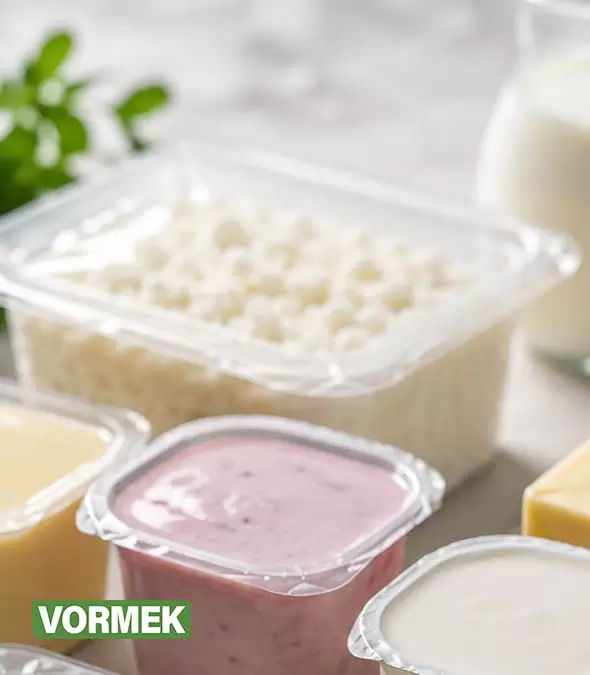
Die Molkereiindustrie ist einer der größten und wettbewerbsintensivsten Sektoren innerhalb der globalen Lebensmittelverarbeitungslandschaft. Produkte wie Joghurt, Käse, Sahne, Butter, Milchdesserts und proteinbasierte Zubereitungen sind nicht nur ernährungsphysiologisch wertvoll, sondern auch äußerst empfindlich gegenüber Lagerbedingungen, was eine präzise und standardisierte Verpackung zu einer absoluten Notwendigkeit macht.
Molkereiprodukte stellen einzigartige Herausforderungen dar, die sie von vielen anderen Lebensmittelkategorien unterscheiden. Ihr hoher Feuchtigkeitsgehalt, ihr Proteingehalt und ihr oft neutraler pH-Wert schaffen ein Umfeld, in dem mikrobielles Wachstum schnell auftreten kann, wenn keine angemessenen Kontrollen aufrechterhalten werden. Die Fehlertoleranz bei der Molkereiverpackung ist außergewöhnlich gering, und die Folgen eines Versagens gehen weit über die Produktverschwendung hinaus und umfassen Markenschäden, Gesundheitsrisiken für Verbraucher und behördliche Strafen.
Im heutigen wettbewerbsintensiven Markt hat sich die Verpackung von einer einfachen Schutzfunktion zu einem strategischen Geschäftsinstrument entwickelt. Sie spielt eine entscheidende Rolle bei der Erhaltung der Qualität, der Verlängerung der Haltbarkeit, der Reduzierung von Abfällen und letztlich bei der Bestimmung des kommerziellen Erfolgs von Molkereiprodukten. Die Auswahl der geeigneten Verpackungstechnologie kann direkten Einfluss auf Produktrückgaben, Verbraucherzufriedenheit und Marktexpansionsmöglichkeiten haben.
Steigende Produktionskosten, Kühlkettenvertriebskosten und intensiver Wettbewerb zwischen Molkereimarken haben die Verpackung zu einem kritischen Erfolgsfaktor erhoben. Jedes Gramm Verpackungsmaterial, jede Versiegelung und jedes Etikett trägt zum Gesamtnutzenversprechen des Endprodukts bei. Hersteller, die dies erkennen und entsprechend investieren, sind besser positioniert, um sowohl auf Inlands- als auch auf Exportmärkten erfolgreich zu sein.
Erfüllt Ihre Molkereiverpackung die Leistung, die Ihre Produkte verdienen? Das Ingenieurteam von Vormek ist spezialisiert auf Verpackungslösungen für Joghurt, Käse, Sahne und andere Molkereiprodukte. Kontaktieren Sie uns, um Ihre spezifischen Anforderungen zu besprechen.
Molkereiprodukte und ihre besonderen Verpackungsanforderungen
Joghurt: Eine Fallstudie zur Komplexität der Verpackung
Joghurt ist eines der weltweit am häufigsten konsumierten Molkereiprodukte, und seine Verpackung bietet sowohl Chancen als auch Herausforderungen. Die cremige Textur des Produkts, die Anfälligkeit für Molketrennung und die Empfindlichkeit gegenüber Temperaturschwankungen erfordern eine Verpackung, die die Produktintegrität erhält und gleichzeitig Verbraucherkomfort bietet.
Wichtige Verpackungsaspekte für Joghurt sind:
- Barriereeigenschaften: Schutz vor Sauerstoff und Licht, um Oxidation zu verhindern und den Geschmack zu erhalten
- Kontrolle von Flüssigkeitsaustritt: Verhinderung von Molketrennung und Auslaufen während der Lagerung und des Transports
- Lagerstabilität: Erhaltung der Produktkonsistenz und -qualität während der gesamten Haltbarkeitsdauer
- Verbraucherkomfort: Leicht zu öffnende Funktionen, Wiederverschließbarkeit und Portionskontrolle
- Markendifferenzierung: Unverwechselbare Formen, Farben und Grafiken, die in den überfüllten Verkaufsregalen Aufmerksamkeit erregen
Käse: Eine vielfältige Kategorie mit unterschiedlichen Anforderungen
Käse umfasst eine enorme Vielfalt an Produkten, von frischen, weichen Sorten wie Mozzarella und Frischkäse bis hin zu hartem, gereiftem Käse wie Parmesan und Cheddar. Jede Kategorie stellt ihre eigenen Verpackungsherausforderungen dar.
Frischkäse erfordert eine Verpackung, die vor Feuchtigkeitsverlust und Kontamination schützt und gleichzeitig einen gewissen Gasaustausch ermöglicht, um unerwünschte Veränderungen von Textur und Geschmack zu verhindern. Diese Produkte haben typischerweise eine kürzere Haltbarkeit und profitieren von einer Verpackung, die die Frische erhält, ohne das empfindliche Gleichgewicht von Feuchtigkeit und Säure zu verändern.
Halbfester und harter Käse erfordert eine Verpackung, die den Feuchtigkeitsverlust kontrolliert und gleichzeitig dem Käse ermöglicht, sein Geschmacksprofil weiterzuentwickeln. Die Reifung ist ein kritischer Teil des Qualitätsentwicklungsprozesses für diese Produkte, und die Verpackung muss diesen Prozess unterstützen, anstatt ihn zu beeinträchtigen.
Schmelzkäse stellt seine eigenen Herausforderungen dar, einschließlich der Notwendigkeit einer Verpackung, die hohen Temperaturen während der Verarbeitung standhält und die Siegelintegrität während der gesamten Verteilung aufrechterhält.
Sahne und Butter: Fettreiche Produkte mit besonderen Anforderungen
Der hohe Fettgehalt von Sahne und Butter macht sie besonders anfällig für oxidative Ranzigkeit. Die Verpackung muss hervorragende Sauerstoffbarriereeigenschaften bieten, um diesen Abbau zu verhindern. Darüber hinaus sind diese Produkte lichtempfindlich, was die Oxidation beschleunigen und unerwünschte Geschmacksveränderungen verursachen kann.
Milchdesserts und Spezialprodukte
Der wachsende Markt für hochwertige Milchdesserts, Puddings, Creme- und Spezialitäten hat eine Nachfrage nach Verpackungen geschaffen, die die Premium-Positionierung dieser Produkte widerspiegeln. Innovative Designs, verbesserte Barriereeigenschaften und Komfortfunktionen sind in diesem Segment oft erforderlich, um die Verbrauchererwartungen zu erfüllen.
Protein-angereicherte Molkereiprodukte
Der Aufstieg proteinangereicherter Molkereiprodukte hat der Verpackungsanforderung eine weitere Dimension hinzugefügt. Diese Produkte enthalten oft zugesetzte Proteine, Ballaststoffe und andere funktionelle Inhaltsstoffe, die die Haltbarkeit beeinträchtigen und spezifische Verpackungsbedingungen erfordern können.
Vergleich der Molkereiverpackungstechnologien: Die richtige Wahl treffen
Die Auswahl der geeigneten Verpackungstechnologie für Molkereiprodukte erfordert eine sorgfältige Abwägung mehrerer Faktoren, einschließlich Produkteigenschaften, Produktionsvolumen, Vertriebskanäle und Budgetbeschränkungen. Der folgende Vergleich bietet einen Rahmen für die Bewertung der verfügbaren Optionen:
| Verpackungstechnologie | Qualitätsschutz | Eignung für Massenproduktion |
|---|---|---|
| Standard-Behälter mit Deckel | Mäßig | Geeignet |
| Schalenversiegelungsanlagen | Hoch | Geeignet |
| MAP (Schutzgasverpackung) | Sehr hoch | Geeignet |
| Thermoformung | Sehr hoch | Hoch geeignet |
| Form-Füll-Verschließ-Systeme | Hoch | Sehr hoch |
| Vakuumverpackung | Hoch | Mäßig |
Schalenversiegelung: Vielseitigkeit und Effizienz
Die Schalenversiegelungstechnologie hat aufgrund ihrer Vielseitigkeit und Effizienz in der Molkereiverpackung zunehmend an Bedeutung gewonnen. Bei dieser Methode wird das Produkt in vorgeformte Schalen gegeben und eine Deckelfolie darüber versiegelt, wodurch eine sichere, professionell aussehende Verpackung entsteht.
Wichtige Vorteile der Schalenversiegelung für Molkereiprodukte:
- Flexibilität: Schnelle Umstellung zwischen verschiedenen Schalengrößen und Produkttypen, ideal für Hersteller mit unterschiedlichen Produktportfolios
- Präsentation: Klares, hochwertiges Erscheinungsbild, das Verbraucher anspricht und die Markenpositionierung unterstützt
- Integrität: Sichere Siegel, die Kontamination und Auslaufen verhindern
- Skalierbarkeit: Geeignet für kleine und große Produktionsvolumina, mit manuellen, halbautomatischen und automatischen Konfigurationen erhältlich
- Barriereoptionen: Kompatibilität mit einer breiten Palette von Barrierefolien, um spezifische Produktanforderungen zu erfüllen
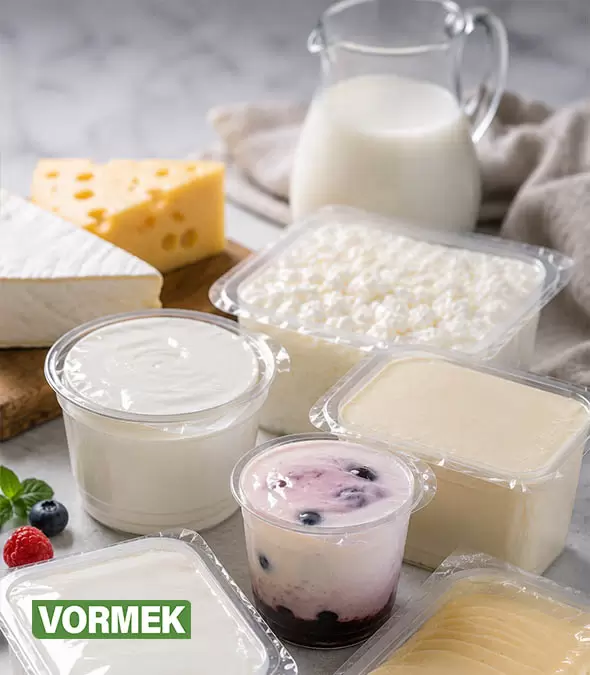
Die Schalenversiegelung ist besonders geeignet für Produkte wie Käseportionen, Joghurtbecher, Sahnebehälter und Milchdesserts, die eine verbraucherfertige Verpackung mit starker Regalpräsenz erfordern.
Thermoformung: Hochvolumen-Produktion mit hoher Effizienz
Thermoformmaschinen stellen den Höhepunkt der Verpackungsautomatisierung für Molkereiprodukte dar. Diese Systeme formen Schalen aus einer Folienrolle, befüllen sie mit dem Produkt, bringen eine Deckelfolie auf und versiegeln und schneiden einzelne Verpackungen in einem einzigen, kontinuierlichen Arbeitsgang.
Wichtige Vorteile der Thermoformung für Molkereiprodukte:
- Produktionsgeschwindigkeit: In der Lage, große Mengen mit minimalem manuellem Eingriff zu produzieren
- Materialeffizienz: Optimierter Folieneinsatz reduziert Abfall und senkt die Verpackungskosten
- Konsistenz: Einheitliche Verpackungsabmessungen und Siegelqualität in jedem Zyklus
- Automatisierung: Vollständige Integration von Formen, Befüllen, Versiegeln und Schneiden reduziert Arbeitskosten und menschliche Fehler
- Platzeffizienz: Kompakte Grundfläche im Verhältnis zur Produktionskapazität
Die Thermoformung ist besonders geeignet für Produkte mit hohem Volumen wie Joghurtbecher, streichfähige Käseportionen und Einzelportions-Milchdesserts, bei denen Konsistenz und Effizienz an erster Stelle stehen.
MAP-Technologie für Molkereiprodukte
Die Schutzgasverpackung (Modified Atmosphere Packaging, MAP) hat sich für bestimmte Molkereiprodukte als hochwirksam erwiesen. Durch die Anpassung der Gaszusammensetzung im Inneren der Verpackung kann MAP die Haltbarkeit erheblich verlängern und die Produktqualität erhalten.
MAP ist besonders vorteilhaft für:
- Frischkäse, bei dem mikrobielles Wachstum ein Hauptproblem darstellt
- Geriebenen Käse, bei dem die Oberfläche groß ist und die Sauerstoffexposition eine erhebliche Herausforderung darstellt
- Sahne und Butter, bei denen oxidative Ranzigkeit kontrolliert werden muss
- Premium-Joghurt, bei dem die Erhaltung der Frische und die Verhinderung von Trennung entscheidend sind
- Spezialmolkereiprodukte mit erweiterten Vertriebsanforderungen
Die Wirksamkeit von MAP hängt von mehreren Faktoren ab, einschließlich der spezifischen Gasmischung, der Temperaturkontrolle während der gesamten Lieferkette und der Barriereeigenschaften der Verpackungsmaterialien.
Kritische Herausforderungen bei der Verpackung von Molkereiprodukten
Molkereiprodukte gehören zu den empfindlichsten Lebensmittelkategorien, und ihre Verpackung muss eine Reihe von Herausforderungen bewältigen, um Produktsicherheit, Qualität und kommerzielle Tragfähigkeit zu gewährleisten.
Sekundärkontamination
Die Verhinderung von Kontamination während des Verpackungsprozesses ist von größter Bedeutung. Selbst geringfügige Kontamination kann zu Produktverderb, verkürzter Haltbarkeit und potenziellen Gesundheitsrisiken für Verbraucher führen. Zu den wichtigsten Präventionsstrategien gehören:
- Hygienisches Gerätedesign: Geräte mit glatten Oberflächen, minimalen Spalten und einfacher Reinigbarkeit verringern das Risiko mikrobieller Ansiedlung.
- Umgebungskontrolle: Die Aufrechterhaltung geeigneter Temperatur- und Feuchtigkeitsbedingungen in der Verpackungsumgebung minimiert das Wachstum von Verderbsorganismen.
- Sanitärprotokolle: Regelmäßige, validierte Reinigungs- und Desinfektionsverfahren stellen sicher, dass die Geräte frei von Verunreinigungen bleiben.
- Qualitätsüberwachung: Routinemäßige Prüf- und Inspektionsprogramme bestätigen die Wirksamkeit der Kontaminationskontrollen.
Verpackungsleckage
Undichtigkeiten beeinträchtigen die Produktintegrität, beschleunigen den Verderb und erzeugen unansehnliche und unordentliche Verpackungen, die Verbraucher abschrecken. Die Behebung von Leckagen erfordert Aufmerksamkeit für:
- Siegelintegrität: Konsistente, zuverlässige Siegel, die ihre Integrität während der gesamten Lebensdauer des Produkts bewahren
- Materialkompatibilität: Folien und Schalen, die effektiv zusammenwirken, um ein dauerhaftes Siegel zu erzeugen
- Prozesskontrolle: Präzise Steuerung der Siegelparameter (Temperatur, Druck und Zeit), um eine optimale Siegelbildung zu gewährleisten
- Verpackungsdesign: Schalen- und Folien-Designs, die Spannungspunkte minimieren und Siegelversagen verhindern
Sauerstoffeintritt
Sauerstoffpenetration ist eine Hauptursache für Qualitätsverschlechterung bei Molkereiprodukten. Sie kann zu Folgendem führen:
- Geschmacksveränderungen: Oxidative Ranzigkeit, die Fehlaromen und -gerüche erzeugt
- Farbveränderungen: Verfärbungen, die Produkte alt oder unappetitlich aussehen lassen
- Nährstoffverluste: Abbau von Vitaminen und anderen Nährstoffen
- Verkürzte Haltbarkeit: Reduzierte Produkthaltbarkeit und erhöhte Abfälle
Wirksame Sauerstoffbarrieren sind für die Erhaltung der Produktqualität unerlässlich. Dies erfordert die Verwendung von Hochbarrierefolien und eine ordnungsgemäße Versiegelung der Verpackung, um den Sauerstoffeintritt während der gesamten Verteilung zu verhindern.
Veränderungen von Geschmack und Geruch
Molkereiprodukte sind besonders anfällig für die Aufnahme von Fremdaromen und -gerüchen. Dies kann durch schlechte Barriereeigenschaften der Verpackung geschehen, die das Eindringen unerwünschter Aromen ermöglichen und die Produktqualität beeinträchtigen. Darüber hinaus können Reaktionen zwischen Verpackungsmaterialien und Produktbestandteilen unerwünschte Geschmacksstoffe erzeugen. Eine sorgfältige Materialauswahl ist erforderlich, um Kompatibilität zu gewährleisten und Geschmacksübertragung zu verhindern.
Mechanische Schäden während Transport und Handhabung
Die Lieferkette setzt verpackte Produkte verschiedenen Belastungen aus, darunter Vibration, Druck und Temperaturschwankungen. Die richtige Verpackung muss schützen gegen:
- Physikalische Schäden: Risse, Quetschungen oder Verformungen, die die Produktintegrität beeinträchtigen
- Flüssigkeitsverlust: Austretende Feuchtigkeit aufgrund schlechter Versiegelung oder Verpackungsversagen
- Etikettenschäden: Abrieb oder Risse, die Informationen verdecken und die Markenwirkung verringern
- Thermische Belastung: Verpackung, die die Siegelintegrität trotz Temperaturschwankungen aufrechterhält
Unansehnliches Verpackungsbild
In einer überfüllten Einzelhandelsumgebung ist das Verpackungsbild entscheidend. Verbraucher treffen Urteile über die Produktqualität anhand der Verpackung, und alle Unvollkommenheiten können den Umsatz reduzieren.
Wichtige Erscheinungsfaktoren sind:
- Folienklarheit: Klare, trübungsfreie Folien, die die Sichtbarkeit des Produkts ermöglichen
- Etikettenqualität: Scharfe, lebendige Grafiken, die Markenwerte vermitteln
- Verpackungsintegrität: Keine Falten, Knicke oder Unvollkommenheiten
- Schalenqualität: Saubere, gut geformte Schalen ohne Grat oder Defekte
Moderne Technologien in der Molkereiverpackung: Innovation und Fortschritt
Über MAP hinaus: Innovationen in der Molkereiverpackung
Die aktive Verpackung ist ein wachsender Trend in der Molkereiverarbeitung. Diese Technologie verwendet Materialien, die mit dem Produkt oder dem Kopfraum interagieren, um die Haltbarkeit zu verlängern und die Qualität zu erhalten. Beispiele hierfür sind Sauerstofffänger, die in die Verpackungsfolie integriert sind, um Restsauerstoff zu reduzieren, Feuchtigkeitsregulatoren, die optimale Feuchtigkeitswerte aufrechterhalten, und antimikrobielle Wirkstoffe, die das Oberflächenwachstum hemmen.
Die intelligente Verpackung ist ein weiterer aufkommender Bereich. Sensoren, die Frische, Gaszusammensetzung oder Temperatur überwachen, können in die Verpackung eingebettet werden, um dem Verbraucher oder der Lieferkette Echtzeitinformationen zu liefern. Diese Technologie befindet sich zwar noch in der Entwicklung, bietet jedoch vielversprechende Ansätze für hochwertige Molkereiprodukte.
Industrie 4.0 und Verpackungsautomatisierung
Die Digitalisierung von Verpackungsvorgängen verändert die Art und Weise, wie Molkereiprodukte verpackt werden. Zu den wichtigsten Trends gehören:
- Echtzeitüberwachung: Die kontinuierliche Erfassung von Verpackungsparametern wie Siegeltemperatur und -druck gewährleistet eine gleichbleibende Qualität
- Vorausschauende Wartung: Nutzung von Datenanalysen, um Wartungsbedarf vor Ausfällen vorherzusagen, wodurch Stillstandzeiten und Kosten reduziert werden
- Datenintegration: Die Verbindung von Verpackungssystemen mit Enterprise-Resource-Planning-(ERP)- und Qualitätsmanagementsystemen bietet eine ganzheitliche Sicht auf die Abläufe
- Rückverfolgbarkeit: Fortschrittliche Systeme, die jede Verpackung während der gesamten Produktion verfolgen und so bei Bedarf eine schnelle Rückrufaktion ermöglichen und durch Transparenz das Vertrauen der Verbraucher stärken
Nachhaltigkeit in der Molkereiverpackung
Umweltbedenken verändern die Molkereiverpackungsindustrie. Zu den wichtigsten Nachhaltigkeitsinitiativen gehören:
- Materialreduzierung: Leichtere Verpackungen, ohne Schutz oder Integrität zu beeinträchtigen
- Recycelbare Materialien: Verpackungen, die leicht recycelt werden können, und Materialien mit etablierten Recyclingströmen
- Rezyklatanteil: Einarbeitung von Post-Consumer-Rezyklaten in die Verpackung, soweit dies nach den Lebensmittelkontaktvorschriften zulässig ist
- Biobasierte Materialien: Nutzung nachwachsender Rohstoffe für Verpackungen, wie pflanzenbasierte Kunststoffe oder papierbasierte Alternativen
- Energieeffizienz: Optimierung von Verpackungsvorgängen zur Reduzierung des Energieverbrauchs und der damit verbundenen Emissionen
- Verpackungsminimierung: Reduzierung der Gesamtmenge an verwendeten Verpackungen, einschließlich unnötiger Lagen, Hüllen und Leerraum
Molkereiausrüstung auswählen: Wichtige Kriterien
Die Auswahl der richtigen Verpackungsausrüstung für Molkereiprodukte erfordert eine sorgfältige Bewertung mehrerer Faktoren. Die folgenden Kriterien sollten die Entscheidungsfindung leiten:
Produktart und -eigenschaften
Das spezifische zu verpackende Produkt – ob Joghurt, Käse, Sahne oder Milchdessert – beeinflusst die Ausrüstungsanforderungen. Zu berücksichtigende Faktoren sind Produktkonsistenz, Empfindlichkeit gegenüber Oxidation und Temperaturanforderungen.
- Produktkonsistenz: Flüssige, halbflüssige oder feste Produkte erfordern unterschiedliche Handhabungs- und Befüllungsansätze.
- Empfindlichkeit: Sauerstoffempfindliche Produkte erfordern eine Verpackung mit hervorragenden Sauerstoffbarriereeigenschaften.
- Temperatur: Heiß abgefüllte Produkte erfordern eine für hohe Temperaturen ausgelegte Ausrüstung.
Produktionskapazität
Die erforderliche Ausstoßmenge ist ein primärer Aspekt. Die Ausrüstung muss in der Lage sein, die aktuelle Nachfrage zu decken und gleichzeitig zukünftiges Wachstum zu ermöglichen.
- Kleinproduzenten finden möglicherweise halbautomatische Geräte ausreichend.
- Mittelproduzenten profitieren typischerweise von vollautomatischen Geräten.
- Großproduzenten benötigen die leistungsstärkste Ausrüstung.
Schalen- und Behälter-Spezifikationen
Die Abmessungen, Form und das Material der Verpackungsschalen beeinflussen die Geräteauswahl. Zu den Faktoren gehören:
- Größe und Form: Die Ausrüstung muss die spezifischen Abmessungen der Schalen und Behälter aufnehmen können.
- Material: Unterschiedliche Materialien (PET, PP, PS, Aluminium, Karton) haben unterschiedliche Form- und Siegelanforderungen.
- Vorgeformt vs. Inline-Formung: Einige Geräte verwenden vorgeformte Schalen; andere formen Schalen inline aus Rollenware.
Erforderliche Haltbarkeit
Die gewünschte Haltbarkeit beeinflusst direkt die ausgewählte Verpackungstechnologie. Eine längere Haltbarkeit erfordert typischerweise fortschrittlichere Barriereeigenschaften und kann MAP- oder Vakuumverpackungen erforderlich machen.
- Kurze Haltbarkeit (bis zu 14 Tagen): Standard-Schalenversiegelung mit mäßigen Barrierefolien ist oft ausreichend.
- Mittlere Haltbarkeit (14-45 Tage): Hochbarrierefolien und MAP sind typischerweise erforderlich.
- Verlängerte Haltbarkeit (45+ Tage): Fortschrittliche Barrierefolien, MAP oder Vakuumverpackung mit robusten Siegeln sind notwendig.
MAP-Anforderungen
Ob die Schutzgasverpackung für das spezifische Produkt benötigt wird. MAP erfordert Ausrüstung mit Gasspülfähigkeiten und geeigneten Folien mit den erforderlichen Barriereeigenschaften.
Automatisierungsgrad
Der gewünschte Automatisierungsgrad beeinflusst sowohl die Anfangsinvestition als auch die laufenden Arbeitskosten. Die Optionen reichen von vollständig manuell bis vollständig automatisch.
| Automatisierungsgrad | Arbeitskräftebedarf | Anschaffungskosten |
|---|---|---|
| Manuell | Hoch | Gering |
| Halbautomatisch | Mäßig | Mäßig |
| Vollautomatisch | Gering | Hoch |
| Roboterintegration | Minimal | Sehr hoch |
Hygiene und Reinigbarkeit
Molkereiverpackungsgeräte müssen strenge Hygienestandards erfüllen. Zu den wichtigsten Überlegungen gehören:
- Clean-In-Place (CIP): Systeme, die eine Reinigung ohne Demontage ermöglichen
- Design für Reinigung: Geräte, die ohne Spalten konstruiert sind, in denen sich Produktrückstände ansammeln können
- Materialien: Edelstahl und andere korrosionsbeständige Materialien
- Entwässerung: Oberflächen, die ein vollständiges Abfließen von Wasser und Reinigungslösungen ermöglichen
Erweiterbarkeit
Die Ausrüstung sollte eine zukünftige Erweiterung der Produktionskapazität oder des Produktsortiments ermöglichen, ohne dass ein vollständiger Austausch erforderlich ist. Modulare Designs sind aus diesem Grund oft vorzuziehen.
Kundendienst und Ersatzteilverfügbarkeit
Ein zuverlässiger Kundendienst ist für die Aufrechterhaltung der Produktionskontinuität unerlässlich. Zu berücksichtigende Faktoren:
- Lokaler Support: Verfügbarkeit von technischem Support in der Region
- Teileverfügbarkeit: Zugang zu Ersatzteilen für kritische Komponenten
- Schulung: Umfassende Schulungsprogramme für Bediener und Wartungspersonal
- Dokumentation: Vollständige technische Dokumentation für Betrieb, Wartung und Fehlerbehebung der Geräte
Schalenversiegelung vs. Thermoformung: Ein detaillierter Vergleich
Die Wahl zwischen Schalenversiegelungs- und Thermoformungstechnologie ist eine der wichtigsten Entscheidungen, vor der Molkereihersteller stehen. Beide Technologien haben ihre Stärken, und die optimale Wahl hängt vom spezifischen Produktionskontext ab.
| Merkmal | Schalenversiegelung | Thermoformung |
|---|---|---|
| Flexibilität bei Produktwechseln | Sehr hoch | Mäßig |
| Eignung für Massenproduktion | Mäßig bis hoch | Sehr hoch |
| Produktionsgeschwindigkeit | Hoch | Sehr hoch |
| Schalenvielfalt | Sehr hoch | Begrenzter |
| Anfängliche Kapitalinvestition | Mäßig | Höher |
| Betriebskosten | Mäßig | Geringer |
| Materialeffizienz | Mäßig | Sehr hoch |
| Platzbedarf | Mäßig | Höher |
| Umstellzeit | Sehr kurz | Länger |
| Haltbarkeitsfähigkeit | Hoch | Sehr hoch |
| MAP-Fähigkeit | Ja (mit Gasspülung) | Ja (integriert) |
| Vakuumfähigkeit | Ja (mit Vakuum) | Ja (integriert) |
Wann Schalenversiegelung zu wählen ist
Schalenversiegelungsanlagen sind die bevorzugte Wahl, wenn:
- Die Produktvielfalt hoch ist: Häufige Umstellungen zwischen verschiedenen Produkten und Schalengrößen sind effizienter
- Die Produktionsvolumina mäßig sind: Nicht alle Hersteller benötigen die hohe Leistung von Thermoformlinien
- Schalenvielfalt wichtig ist: Eine breite Palette von Schalengrößen, -formen und -materialien kann verarbeitet werden
- Die Kapitalinvestition begrenzt ist: Schalenversiegelungen erfordern im Allgemeinen eine geringere Anfangsinvestition
- Flexibilität entscheidend ist: Die Möglichkeit, schnell zwischen Produktlinien zu wechseln, hat Priorität
Wann Thermoformung zu wählen ist
Die Thermoformung ist die bevorzugte Wahl, wenn:
- Die Produktionsvolumina sehr hoch sind: Der Durchsatz von Thermoformlinien macht sie ideal für die Massenproduktion
- Die Materialeffizienz entscheidend ist: Die Thermoformung optimiert den Folieneinsatz und minimiert Abfälle
- Die Automatisierung von größter Bedeutung ist: Der vollständig integrierte Prozess erfordert nur minimale manuelle Eingriffe
- Konsistenz unerlässlich ist: Die Thermoformung erzeugt hochgradig gleichmäßige Verpackungen mit minimaler Variation
- Die Haltbarkeitsverlängerung das Ziel ist: Die Kombination aus hervorragenden Barriereeigenschaften und hermetischen Siegeln unterstützt eine verlängerte Haltbarkeit
Hygienisches Design und Reinigbarkeit in der Molkereiverpackung
Hygienisches Design ist grundlegend für Molkereiverpackungsgeräte. Die Geräte müssen so konstruiert sein, dass sie eine gründliche Reinigung und Desinfektion ermöglichen, das Kontaminationsrisiko verringern und die Produktsicherheit gewährleisten.
Wichtige Prinzipien des hygienischen Designs
1. Materialauswahl
Die Geräte sollten aus Materialien hergestellt werden, die:
- Beständig gegen Korrosion und chemische Angriffe sind
- Nicht porös und nicht saugfähig sind
- Mit Reinigungschemikalien und Desinfektionsmitteln kompatibel sind
- Für den vorgesehenen Temperaturbereich geeignet sind
Edelstahl (Sorten 304 und 316) ist aufgrund seiner Korrosionsbeständigkeit, Festigkeit und Reinigbarkeit das Material der Wahl für die meisten Molkereiverpackungsgeräte.
2. Oberflächenbeschaffenheit
Die Oberflächen sollten glatt und frei von Fehlern wie Lochfraß, Kratzern und Spalten sein, die Mikroorganismen beherbergen könnten. Eine Oberflächenrauheit von Ra 0,8 µm oder weniger wird typischerweise für produktberührende Oberflächen gefordert.
3. Geometrie
Die Geräte sollten konstruiert sein mit:
- Abgerundeten Ecken und glatten Übergängen
- Keinen scharfen Winkeln oder Spalten, in denen sich Produktrückstände ansammeln können
- Selbstentwässernden Oberflächen, um stehende Flüssigkeiten zu verhindern
- Zugänglichen Bereichen für Inspektion und Reinigung
4. Dichtungen und Dichtungsmaterialien
Dichtungen und Dichtungsmaterialien sollten:
- Aus Materialien hergestellt sein, die Reinigungschemikalien und hohen Temperaturen standhalten
- Für einen einfachen Austausch ausgelegt sein
- So positioniert sein, dass sie das Einschließen von Produktrückständen verhindern
5. CIP-Kompatibilität
Clean-In-Place-Fähigkeiten ermöglichen die automatisierte Reinigung der produktberührenden Oberflächen, wodurch Arbeitskräfte reduziert und die Reinigungskonsistenz verbessert werden.
CIP-Systeme in Molkereiverpackungsgeräten
CIP-Systeme sind für die Aufrechterhaltung der Hygiene in Molkereiverpackungslinien unerlässlich. Diese Systeme zirkulieren Reinigungslösungen durch die Geräte und ermöglichen eine gründliche Reinigung ohne Demontage.
Komponenten des CIP-Systems:
- Behälter für Reinigungslösungen und Spülwasser
- Pumpen für die Zirkulation der Reinigungslösungen
- Sprühvorrichtungen für die Reinigung der Innenflächen
- Temperaturregler für die Erwärmung der Reinigungslösungen
- Überwachungsgeräte zur Kontrolle der Lösungskonzentration und -temperatur
Typische CIP-Sequenz für Molkereigeräte:
- Vorspülung mit Wasser zur Entfernung loser Rückstände
- Alkalische Reinigung zur Auflösung von Fetten und Proteinen
- Zwischenspülung zur Entfernung alkalischer Rückstände
- Säurewäsche zur Entfernung von Mineralablagerungen
- Abschließende Spülung zur Entfernung aller Reinigungsrückstände
- Desinfektion zur Abtötung von Mikroorganismen
- Abschließende Spülung mit desinfiziertem Wasser
CIP-Systeme reduzieren die Reinigungszeit erheblich, verbessern die Reinigungskonsistenz und eliminieren die Notwendigkeit der Exposition von Bedienern gegenüber Reinigungschemikalien.
Die Rolle der Verpackung in der Molkereimarktentwicklung
Die Verpackung hat einen tiefgreifenden Einfluss auf den Markterfolg von Molkereiprodukten. Über ihre Schutzfunktionen hinaus beeinflusst die Verpackung die Verbraucherwahrnehmung, den Markenwert und die Marktexpansionsmöglichkeiten.
Verbrauchervertrauen und -zuversicht
Eine professionelle, zuverlässige Verpackung signalisiert den Verbrauchern, dass das Produkt im Inneren sicher, frisch und von hoher Qualität ist. Dies ist besonders wichtig für Molkereiprodukte, bei denen die Verbraucher empfindlich auf mögliche Qualitätsprobleme reagieren.
Faktoren, die durch Verpackung Verbrauchervertrauen aufbauen:
- Klare, genaue Kennzeichnung: Informationen, die leicht zu lesen und vollständig sind und Vertrauen in das Produkt und den Hersteller schaffen
- Manipulationssicherheit: Merkmale, die zeigen, dass die Verpackung nicht geöffnet oder manipuliert wurde
- Markenkonsistenz: Wiedererkennbares Design, das Markenbekanntheit und -treue aufbaut
- Transparenz: Die Sichtbarkeit des Produkts im Inneren schafft Vertrauen und reduziert Ängste
- Qualitätssignale: Hochwertige Verpackung, die überlegene Qualität suggeriert
Haltbarkeitsverlängerung und Marktexpansion
Eine längere Haltbarkeit eröffnet neue Marktchancen. Produkte, die ohne Qualitätsverlust in entferntere Märkte versendet oder über längere Zeiträume gelagert werden können, haben einen klaren Vorteil.
Vorteile der Marktexpansion durch verlängerte Haltbarkeit:
- Exportmärkte: Produkte, die längere Transportzeiten überstehen
- Abgelegene Regionen: Produkte, die Verbraucher in Gebieten ohne häufige Wiederauffüllung im Einzelhandel erreichen
- Vertriebseffizienz: Produkte, die über effiziente Vertriebskanäle versendet werden können
- Foodservice-Anwendungen: Produkte, die in großen gewerblichen Küchen gelagert werden können
Steigerung des Markenwerts
Die Verpackung ist eine kritische Komponente der Markenstrategie. Sie kommuniziert Markenwerte, differenziert Produkte von Wettbewerbern und schafft emotionale Verbindungen zu den Verbrauchern.
Verpackung als Markeninstrument:
- Design: Unverwechselbare Formen, Farben und Grafiken, die Aufmerksamkeit erregen und die Markenidentität widerspiegeln
- Materialauswahl: Hochwertige Materialien, die Qualität und Sorgfalt suggerieren
- Innovation: Einzigartige Merkmale, die Innovation und Differenzierung demonstrieren
- Nachhaltigkeit: Umweltfreundliche Verpackungen, die umweltbewusste Verbraucher ansprechen
Produktdifferenzierung
In einem wettbewerbsintensiven Markt kann eine unverwechselbare Verpackung Produkte differenzieren und zum Ausprobieren anregen.
Differenzierungsstrategien:
- Form: Einzigartige Flaschen- oder Behälterformen, die auffallen
- Farbe: Markenfarben, die eine schnelle Wiedererkennung ermöglichen
- Textur: Geprägte Etiketten oder strukturierte Materialien, die ein Sinneserlebnis schaffen
- Verschluss: Innovative Öffnungsmechanismen, die Komfort bieten
- Nachhaltigkeit: Umweltfreundliche Verpackungen, die eine wachsende Verbrauchergruppe ansprechen
Akzeptanz durch Einzelhändler
Große Einzelhändler haben strenge Verpackungsanforderungen. Die Erfüllung dieser Anforderungen ist oft eine Voraussetzung für den Vertrieb über große Einzelhandelskanäle.
Erwartungen der Einzelhändler an die Verpackung:
- Qualität: Gut versiegelte, attraktive Verpackungen, die ihr Erscheinungsbild im Regal behalten
- Konsistenz: Einheitliche Verpackungen, die ordnungsgemäß gestapelt werden können
- Haltbarkeit: Verpackungen, die Handhabung und Transport zum Geschäft standhalten
- Informationen: Vollständige und genaue Kennzeichnung, oft einschließlich spezifischer Anforderungen des Einzelhändlers
- Nachhaltigkeit: Zunehmend verlangen Einzelhändler nachhaltige Verpackungen von ihren Lieferanten
Qualitätskontrolle in der Molkereiverpackung
Die Aufrechterhaltung der Qualität in der Molkereiverpackung erfordert robuste Qualitätskontrollprogramme, die sowohl den Verpackungsprozess als auch das verpackte Produkt überwachen.
Qualitätskontrolle während des Prozesses
- Siegelqualität: Regelmäßige Überwachung der Siegelintegrität, einschließlich Sichtprüfung von Siegelbreite und -erscheinung sowie Prüfung der Siegelstärke. Siegelversagen sind eine Hauptursache für Produktfehler.
- Verpackungsbild: Überwachung auf Fehler wie Falten, Knicke, Fältchen, Blasen oder Kontamination. Das Vorhandensein von Folienrückständen oder Partikeln im Inneren der Verpackung kann auf Qualitätsprobleme hinweisen.
- Füllstand: Konsistenz des Füllvolumens oder -gewichts, um eine ordnungsgemäße Portionierung und visuelle Konsistenz zu gewährleisten.
- Etikettengenauigkeit: Sicherstellen, dass alle erforderlichen Informationen vorhanden und korrekt angebracht sind. Eine falsche Etikettierung ist ein Risiko für die Einhaltung gesetzlicher Vorschriften.
- Gaszusammensetzung: Bei MAP-Produkten Überwachung der Gaszusammensetzung, um sicherzustellen, dass die richtige Atmosphäre aufrechterhalten wird.
Qualitätskontrolle des Fertigprodukts
- Sensorische Bewertung: Prüfung von Produktgeschmack, -aroma, -textur und -aussehen, um sicherzustellen, dass sie den Spezifikationen entsprechen. Dies ist der ultimative Qualitätstest.
- Mikrobiologische Untersuchung: Beprobung und Untersuchung zum Nachweis des Fehlens von Krankheitserregern und Verderbsorganismen.
- Haltbarkeitsprüfung: Prüfung der Produktqualität während der vorgesehenen Haltbarkeitsdauer, um zu bestätigen, dass sie Frische und Sicherheit behält.
- Prüfung der Verpackungsintegrität: Prüfung, um sicherzustellen, dass die Verpackung versiegelt bleibt und die vorgesehene Barriere bietet.
- Physikalische Prüfung: Prüfung auf Verpackungsabmessungen, Festigkeit und andere physikalische Eigenschaften.
Expertenperspektive zur Molkereiverpackung
Eine erfolgreiche Molkereiverpackung erfordert eine Kombination aus Prozesskenntnissen, geeigneter Materialauswahl und zuverlässiger Ausrüstung. Die Erfahrung der Branche zeigt, dass die Erzielung einer optimalen Haltbarkeit und der Erhalt der Produktqualität von mehr abhängt als nur von der Wahl einer einzelnen Maschine. Jede Komponente der Produktions- und Verpackungskette muss als integriertes System bewertet werden.
Praktische Produkttests unter realen Produktionsbedingungen sind die zuverlässigste Methode, um die optimale Verpackungslösung für jede Anlage zu ermitteln. Dieser Ansatz ermöglicht es den Herstellern, ihre Verpackungsentscheidungen zu validieren, bevor sie in die vollständige Produktion übergehen.
Wichtige Überlegungen sind:
- Prüfung der Materialkompatibilität: Sicherstellen, dass Verpackungsmaterialien nicht mit dem Produkt reagieren oder dessen Qualität beeinträchtigen
- Validierung der Siegelintegrität: Bestätigung, dass die Siegel unter den zu erwartenden Vertriebsbedingungen ihre Integrität bewahren
- Haltbarkeitsstudien: Überwachung der Produktqualität während der vorgesehenen Haltbarkeitsdauer
- Prozessvalidierung: Überprüfung, dass der Verpackungsprozess konsistent die erforderliche Qualität liefert
- Hygienevalidierung: Bestätigung, dass die Reinigungs- und Desinfektionsverfahren wirksam sind
Häufig gestellte Fragen zur Molkereiverpackung
1. Funktioniert die MAP-Technologie für Molkereiprodukte?
Ja, MAP ist für viele Molkereiprodukte wirksam, insbesondere für halbfeste und harte Käsesorten, geriebenen Käse, Sahne, Butter und einige Premium-Joghurts. MAP hilft, mikrobielles Wachstum zu kontrollieren und oxidative Veränderungen zu verhindern, wodurch die Haltbarkeit verlängert und die Qualität erhalten wird.
2. Schalenversiegelung oder Thermoformung – was ist besser?
Die Antwort hängt vom Produktionsvolumen und der Produktvielfalt ab. Schalenversiegelungsanlagen bieten eine größere Flexibilität bei Produktwechseln und können eine breitere Palette von Schalentypen verarbeiten. Die Thermoformung ist wirtschaftlicher für die Großproduktion und bietet eine überlegene Materialeffizienz. Für viele Hersteller ist eine Kombination beider Technologien optimal.
3. Warum ist die Siegelqualität bei der Molkereiverpackung wichtig?
Jeder Defekt im Siegel kann Sauerstoffeintritt, Kontamination und Feuchtigkeitsverlust ermöglichen, was die Haltbarkeit und Qualität des Produkts verringert. Die Siegelintegrität ist entscheidend für die Aufrechterhaltung der Produktsicherheit und der Verbraucherzufriedenheit.
4. Welche Faktoren beeinflussen die Haltbarkeit von Molkereiprodukten am meisten?
- Qualität der Rohmilch und der Zutaten
- Verarbeitungsbedingungen
- Hygienestandards während der gesamten Produktion
- Verpackungsart und Materialqualität
- Lagertemperatur (Kühlkettenintegrität)
- Einwirkung von Licht und Sauerstoff
5. Können Molkereiprodukte mit nachhaltigen Materialien verpackt werden?
Ja, nachhaltige Verpackungsmaterialien wie recyceltes PET, biobasierte Kunststoffe und papierbasierte Optionen sind zunehmend für Molkereiprodukte erhältlich. Hersteller müssen jedoch sicherstellen, dass diese Materialien einen ausreichenden Schutz für die Produktqualität und -sicherheit bieten. Dies ist ein sich entwickelnder Bereich, und Hersteller sollten nachhaltige Materialien vor der Implementierung gründlich testen.
6. Wie wirkt sich die Kühlkette auf die Molkereiverpackung aus?
Die Kühlkette ist für die Produktqualität unerlässlich. Temperaturschwankungen können Kondensation im Inneren der Verpackung verursachen, das Produktbild beeinträchtigen und möglicherweise das mikrobielle Wachstum fördern. Die Verpackung muss ihre Integrität unter Temperaturschwankungen und Vertriebsbelastungen bewahren.
7. Was ist der beste Weg, um Molkereiverpackungsabfälle zu reduzieren?
Die Abfallreduzierung erfordert einen umfassenden Ansatz, der die Verwendung nachhaltiger und recycelbarer Materialien, wo immer möglich, die Minimierung von Verpackungsschichten und -volumen, die Verbesserung der Siegelqualität zur Reduzierung von Produktrückgaben aufgrund von Undichtigkeiten, die Optimierung des Verpackungsdesigns zur Minimierung von überschüssigem Material und die Zusammenarbeit mit Lieferanten, die nachhaltige Verpackungsinitiativen unterstützen, umfasst.
8. Was sind die kritischen Hygieneanforderungen für Molkereiverpackungsgeräte?
Molkereiverpackungsgeräte müssen für eine gründliche Reinigung und Desinfektion ausgelegt sein. Dazu gehören glatte Oberflächen, keine Spalten, in denen sich Rückstände ansammeln können, CIP-Kompatibilität, korrosionsbeständige Materialien und selbstentwässernde Oberflächen. Regelmäßige Reinigungs- und Desinfektionsverfahren müssen validiert und konsequent befolgt werden.
9. Wie wirkt sich die Verpackung auf den Geschmack von Molkereiprodukten aus?
Die Verpackung kann den Geschmack durch Sauerstoffeintritt, der Ranzigkeit verursacht, durch die Aufnahme von Fremdaromen über schlechte Barrieren und durch Reaktionen zwischen Verpackungsmaterialien und Produktbestandteilen beeinflussen. Die richtige Materialauswahl und Barriereeigenschaften sind unerlässlich, um diese Probleme zu verhindern.
10. Welche Rolle spielt die Automatisierung in der Molkereiverpackung?
Die Automatisierung verbessert die Konsistenz, reduziert die Arbeitskosten, erhöht die Produktionsgeschwindigkeit, minimiert menschliche Fehler und ermöglicht eine Echtzeit-Qualitätsüberwachung. Automatisierte Systeme können auch in übergeordnete Produktionsmanagementsysteme für eine umfassende Betriebssteuerung integriert werden.
Fazit
Die Verpackung von Molkereiprodukten ist eine komplexe und vielschichtige Disziplin, die eine sorgfältige Berücksichtigung der Produkteigenschaften, der Vertriebsanforderungen, der Einhaltung gesetzlicher Vorschriften und der Marktpositionierung erfordert. Die Auswahl geeigneter Verpackungsausrüstung und -materialien beeinflusst direkt die Produktqualität, -sicherheit, -haltbarkeit und den kommerziellen Erfolg.
Wichtige Erkenntnisse für Molkereihersteller:
- Verpackung ist ein strategisches Gut: Über ihre Schutzfunktion hinaus ist die Verpackung ein leistungsstarkes Markeninstrument und ein Schlüsselfaktor für den Markterfolg. Die Investition in Verpackungen sollte als Investition in den Markenwert betrachtet werden, nicht nur als betriebliche Notwendigkeit.
- Die richtige Ausrüstung ist entscheidend: Die Auswahl der geeigneten Verpackungsausrüstung ist für Qualität, Effizienz und Zuverlässigkeit unerlässlich. Eine sorgfältige Bewertung auf der Grundlage von Produktart, Volumen und Zielsetzung führt zum besten Ergebnis.
- Hygiene ist nicht verhandelbar: Molkereiprodukte sind sehr anfällig für Kontaminationen. Geräte mit hygienischem Design und effektiven Reinigungsmöglichkeiten sind eine absolute Voraussetzung.
- Nachhaltigkeit ist eine wachsende Priorität: Umweltbedenken verändern die Verpackungsindustrie. Hersteller, die Nachhaltigkeit befürworten, sind besser positioniert, um gesetzliche Anforderungen und Verbrauchererwartungen zu erfüllen.
- Technologie treibt Verbesserungen voran: Kontinuierliche Innovationen in der Verpackungstechnologie bieten Möglichkeiten zur Qualitätsverbesserung, Kostensenkung und Marktexpansion.
- Qualitätskontrolle ist unerlässlich: Robuste Qualitätskontrollprogramme, einschließlich Prozessüberwachung und Prüfung von Fertigprodukten, sind für die Aufrechterhaltung der Produktqualität und -sicherheit unerlässlich.
Vormek bietet fortschrittliche Verpackungslösungen, die auf die Bedürfnisse der Molkereiindustrie zugeschnitten sind. Unsere Schalenversiegelungsmaschinen, Thermoformmaschinen und Vakuumverpackungssysteme sind auf Präzision, Zuverlässigkeit und Hygiene ausgelegt und ermöglichen es Herstellern, Produkte zu liefern, die den höchsten Standards an Qualität und Sicherheit entsprechen. Kontaktieren Sie unser Ingenieurteam, um Ihre Molkereiverpackungsanforderungen zu besprechen.