Die wachsende Herausforderung der Dattelauthentizität auf den Weltmärkten
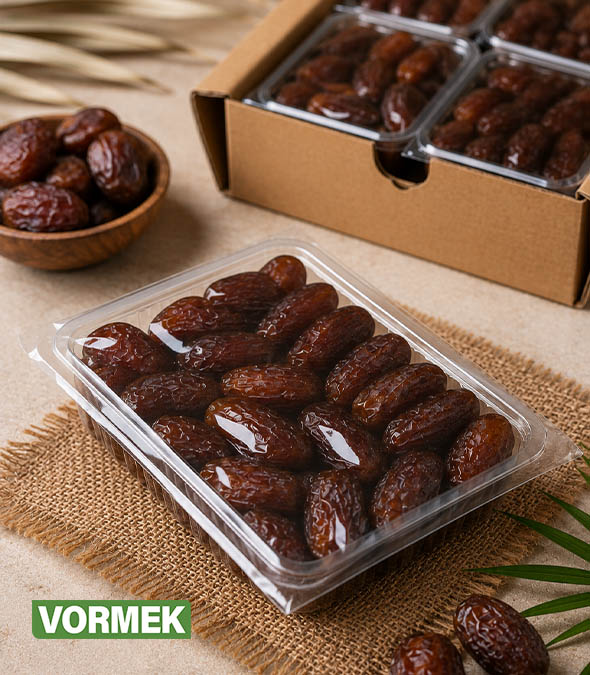
Datteln zählen zu den bedeutendsten landwirtschaftlichen Erzeugnissen tropischer und subtropischer Regionen und werden für ihr außergewöhnliches Nährwertprofil, ihr langes Lagerpotenzial und ihre starke Stellung auf den Inlands- und Auslandsmärkten geschätzt. Da die weltweite Nachfrage nach hochwertigen Datteln weiter steigt, wird die Gewährleistung von Produktauthentizität und -sicherheit zu einer grundlegenden Herausforderung für die Branche. Leider sind Datteln, wie viele hochwertige Lebensmittelrohstoffe, zunehmend anfällig für verschiedene Formen des Handelsbetrugs, darunter der Zusatz nicht zugelassener Substanzen, die Vermischung mit minderwertigen Sorten sowie irreführende Verpackungs- und Kennzeichnungspraktiken.
Diese Verfälschungspraktiken mindern nicht nur den Nährwert und die Qualität von Datteln, sondern stellen auch potenzielle Gesundheitsrisiken für Verbraucher dar und untergraben das Marktvertrauen in die Erzeuger. Angesichts der Bedeutung von Dattelausfuhren für die Volkswirtschaften und der kulturellen Bedeutung dieser Frucht in vielen Regionen ist es unerlässlich, die Arten von Verfälschungen, ihre zugrundeliegenden Ursachen zu verstehen und wirksame vorbeugende und kontrollierende Maßnahmen zu implementieren.
Die Entwicklung und Anwendung präziser Analysemethoden, die Standardisierung von Produktions- und Verpackungsprozessen sowie die Verbraucheraufklärung sind die wichtigsten Instrumente zur Bewältigung dieser Herausforderung. Dieser Artikel bietet eine umfassende wissenschaftliche und technische Untersuchung der Dattelverfälschung, einschließlich gängiger Betrugspraktiken, Nachweismethoden und der Rolle fortschrittlicher Verpackungstechnologien zur Erhaltung der Dattelqualität und zur Verhinderung von Verderb.
Die Dattelindustrie steht im Vergleich zu anderen landwirtschaftlichen Rohstoffen vor besonderen Herausforderungen. Die langen Lieferketten, die Vielfalt der Dattelsorten mit stark unterschiedlichen Marktwerten und die in einigen Erzeugerregionen relativ begrenzte Anwendung moderner Qualitätskontrolltechnologien tragen alle zur Anfälligkeit der Branche für Verfälschungen bei. Das Verständnis dieser strukturellen Faktoren ist für die Entwicklung wirksamer Gegenmaßnahmen von wesentlicher Bedeutung.
Die wirtschaftliche und ernährungsphysiologische Bedeutung von Datteln
Datteln nehmen in der globalen Landwirtschaft eine einzigartige Stellung ein; die Dattelpalme (Phoenix dactylifera L.) wird in über 40 Ländern angebaut, insbesondere im Nahen Osten, in Nordafrika und zunehmend auch in anderen Regionen mit geeignetem Klima. Die weltweite Dattelpalmenpopulation übersteigt einhundert Millionen Bäume, wobei etwa 60 % im Nahen Osten und in Nordafrika konzentriert sind. Zu den führenden Erzeugern zählen Ägypten, Saudi-Arabien, Iran, Algerien, Irak und Pakistan, wobei die Produktionsmengen mit steigender internationaler Nachfrage weiter wachsen.
Die Nährstoffzusammensetzung der Datteln trägt wesentlich zu ihrem Wert bei. Datteln sind reich an essenziellen Mineralstoffen wie Kalzium, Magnesium, Eisen und Kalium sowie an Ballaststoffen (zwischen 6,4 % und 11,5 %), Fettsäuren, Proteinen und Kohlenhydraten. Der Gesamtzuckergehalt variiert von 44 % bis 88 %, hauptsächlich bestehend aus Fruktose und Glukose, was Datteln zu einer konzentrierten Energiequelle macht, die menschliche Populationen in ariden Regionen seit Jahrtausenden unterstützt.
Über ihren Nährwert hinaus besitzen Datteln dokumentierte antibakterielle, immunstärkende, antimykotische, antiulzerative und krebshemmende Eigenschaften. Die in Datteln enthaltenen phenolischen Komponenten tragen zu ihren antioxidativen Eigenschaften bei und steigern ihre Attraktivität als funktionelles Lebensmittel. Diese vielfältigen Vorteile haben zu einem erheblichen Wachstum von Dattelverbrauch und -handel geführt und machen die Frucht zunehmend zu einem attraktiven Ziel für Handelsbetrug.
Die wirtschaftliche Bedeutung von Datteln geht weit über den Frischverzehr hinaus. Dattelsirup, ein aus Datteln gewonnener konzentrierter Süßstoff, hat aufgrund seiner Nährstoffzusammensetzung und Anwendungen in der Lebensmittel- und Pharmaindustrie Anerkennung gefunden. Studien haben bestätigt, dass Dattelsirup reich an bioaktiven Verbindungen wie Flavonoiden, Phenolsäuren und Carotinoiden ist, die zu seinen gesundheitsfördernden Wirkungen beitragen. Dieser wachsende Markt für veredelte Dattelprodukte hat zusätzliche Möglichkeiten für Verfälschungen in der gesamten Lieferkette geschaffen.
Die weltweite Dattelproduktion hat in den vergangenen Jahrzehnten ein beständiges Wachstum gezeigt. Laut FAO-Statistik überstieg die weltweite Dattelproduktion in den letzten Jahren 9 Millionen Tonnen, wobei die Exportmengen weiter zunehmen. Zu den wichtigsten Importländern gehören Länder in Europa, Nordamerika und Südostasien, wo der Dattelkonsum aufgrund des zunehmenden Bewusstseins für die gesundheitlichen Vorteile der Frucht und der kulturellen Diversifizierung der Verbraucherpopulationen erheblich gestiegen ist.
Die Dattel-Lieferkette ist durch mehrere Akteure gekennzeichnet, von Kleinbauern in traditionellen Erzeugerregionen bis hin zu großen gewerblichen Betrieben und internationalen Handelsunternehmen. Diese Vielfalt der Beteiligten, die zwar das Wachstum der Branche fördert, schafft jedoch auch Herausforderungen für die Qualitätskontrolle und Rückverfolgbarkeit. Traditionelle Bauern arbeiten oft isoliert mit begrenztem Zugang zu modernen landwirtschaftlichen Praktiken, und Verarbeitungsbetriebe halten möglicherweise nicht durchgängig die Standards von Lebensmittelsicherheits-Managementsystemen ein.
Häufige Formen der Verfälschung bei Datteln
Verfälschungen in der Dattelindustrie treten in verschiedenen Formen auf, die nach der Art des Betrugs und dem Punkt in der Lieferkette, an dem sie auftreten, kategorisiert werden können.
Physikalische Verfälschung
Die physikalische Verfälschung umfasst die direkte Manipulation des Produkts, um das Volumen zu erhöhen, das Aussehen zu verbessern oder Kosten zu senken, ohne einen Mehrwert für den Verbraucher zu schaffen.
- Zusatz von Zuckersirup: Eine der häufigsten physikalischen Verfälschungspraktiken ist der Zusatz von preisgünstigen Zuckersirupen zu Dattelprodukten. Untersuchungen haben gezeigt, dass Dattelsirup mit Glukose, Fruktose oder Saccharose in Anteilen von 5 % bis 50 % verfälscht werden kann. Diese Praxis erhöht das Produktvolumen bei gleichzeitiger Senkung der Produktionskosten, mindert jedoch den Nährwert erheblich und kann gesundheitliche Bedenken für Verbraucher mit spezifischen Ernährungsanforderungen hervorrufen. Die Betrugserkennungs-Community hat ausgefeilte analytische Ansätze zur Identifizierung von Zuckersirupverfälschungen entwickelt. Eine Studie, die FT-IR-Fingerabdrücke in Kombination mit physikochemischen Parametern und multivariater Analyse einsetzte, konnte reinen Dattelsirup erfolgreich von verfälschten Proben unterscheiden.
- Vermischung minderwertiger Sorten mit Premiumprodukten: Hochwertige Datteln können mit billigeren Sorten vermischt und unter Premiummarken verpackt werden, um die wahre Qualität des Produkts zu verschleiern. Diese Praxis ist besonders bei Premium-Dattelsorten verbreitet, die auf den Exportmärkten deutlich höhere Preise erzielen. Der Mischprozess findet oft während der Nacherntebehandlung statt, wo die Sortierung typischerweise manuell von ungelernten Arbeitskräften durchgeführt wird, die möglicherweise nicht die gebotene Sorgfalt und Aufmerksamkeit aufbringen.
- Zugesetzte Feuchtigkeit und künstliche Süßstoffe: Datteln können mit zusätzlicher Feuchtigkeit behandelt werden, um das Gewicht zu erhöhen, oder mit künstlichen Süßstoffen, um den nach Verdünnung reduzierten natürlichen Zuckergehalt auszugleichen. Diese Praxis erhöht künstlich das Produktgewicht, während die Qualität beeinträchtigt wird.
- Zusatz von Fremdstoffen: In einigen Fällen können Dattelprodukte mit dattelfremden Materialien verfälscht werden, darunter andere Fruchtstücke, pflanzliche Stoffe oder sogar unlösliche Materialien, die zur Gewichtserhöhung zugesetzt werden.
Chemische Verfälschung
Die chemische Verfälschung umfasst die Verwendung nicht zugelassener Zusatzstoffe, um das Aussehen zu verbessern, die Haltbarkeit zu erhöhen oder Qualitätsmängel zu verschleiern.
- Künstliche Farbstoffe: Synthetische Farbstoffe können Datteln zugesetzt werden, um die Farbgleichmäßigkeit zu verbessern oder ein ansprechenderes Aussehen zu verleihen. Dies ist besonders bei verarbeiteten Dattelprodukten problematisch, wo die natürliche Farbvariation zwischen Sorten und Chargen mit künstlichen Farbmitteln überdeckt werden kann. Einige künstliche Farbstoffe wurden mit gesundheitsschädlichen Wirkungen in Verbindung gebracht, insbesondere bei empfindlichen Bevölkerungsgruppen wie Kindern.
- Konservierungs- und Klärmittel: Die Verwendung nicht zugelassener Konservierungs- oder synthetischer Klärmittel kann die Haltbarkeit künstlich verlängern und gleichzeitig Verbindungen einführen, die in Lebensmitteln nicht erlaubt sind. Einige dieser Substanzen können bei längerem Verzehr gesundheitsschädliche Wirkungen haben. Das Vorhandensein nicht deklarierter Konservierungsstoffe täuscht auch Verbraucher, die möglicherweise gezielt nach konservierungsstofffreien Produkten suchen.
Indirekte mikrobiologische Verfälschung
Diese Kategorie der Verfälschung umfasst die Schaffung von Bedingungen, die das Wachstum von Verderbsmikroorganismen oder Krankheitserregern fördern. Dies ist zwar nicht immer eine beabsichtigte direkte Verfälschung, resultiert jedoch häufig aus Praktiken, die darauf abzielen, die Produktqualität falsch darzustellen.
- Unsachgemäße Lagerbedingungen: Unter ungeeigneten Bedingungen gelagerte Datteln können Pilz- oder Bakterienkontaminationen entwickeln, während sie dennoch als hochwertige Produkte vermarktet werden. Studien haben gezeigt, dass Dattelsirup, der mit traditionellen Methoden hergestellt wird, erhöhte Hydroxymethylfurfural-(HMF)- und Wasseraktivitätswerte aufweisen kann, was auf schlechte Herstellungsprozesse und beeinträchtigte Lagerung hindeutet. Das Wachstum toxigener Schimmelpilze wie Aspergillus-Arten ist von besonderer Bedeutung, da diese Aflatoxine produzieren können, die krebserregend sind und mit Lebererkrankungen in Verbindung gebracht werden.
- Kreuzkontamination: Die Verwendung kontaminierter Geräte oder unsachgemäße Handhabungspraktiken können pathogene Mikroorganismen einschleppen und die Lebensmittelsicherheit gefährden, selbst wenn das Produkt von akzeptabler Qualität zu sein scheint. Kreuzkontaminationen mit Allergenen oder anderen Lebensmittelmaterialien stellen ebenfalls eine Form nicht deklarierter Verfälschung dar, die ernsthafte Gesundheitsrisiken für empfindliche Verbraucher darstellen kann.
Schädlingsbefall als beitragender Faktor zur Dattelverschlechterung
Schädlingsbefall stellt eine erhebliche Bedrohung für die Dattelqualität dar und stellt eine indirekte Form der Verfälschung dar, wenn befallene Datteln als Premiumprodukte vermarktet werden. Der Getreideplattkäfer (Oryzaephilus surinamensis) ist ein besonders zerstörerischer Schädling, der die Fruchtqualität direkt beeinträchtigt, den Verderb beschleunigt und den wirtschaftlichen Wert der Dattelernte untergräbt.
Dieser Käfer kann eine Vielzahl von gelagerten Lebensmitteln befallen, wobei Datteln besonders anfällig sind. Starker Befall führt zu Fruchtfäule und erheblichen Schäden, die Datteln für den menschlichen Verzehr ungeeignet machen. Die Fraßaktivität des Käfers reduziert Phospholipide, Lipide, essentielle Aminosäuren und Proteine in der Frucht. Hohe relative Luftfeuchtigkeit und Feuchtigkeitsgehalt verbessern die Fähigkeit des Schädlings zu fressen und sich zu vermehren, was angemessene Lagerbedingungen entscheidend macht.
Der Befall mit O. surinamensis und anderen Lagerungsschädlingen kann die Gesamtdattelproduktion in Kombination mit anderen Krankheiten und Schädlingen um bis zu 30 % reduzieren. Das Vorhandensein dieser Schädlinge führt zur Einbringung von Fremdstoffen (Insektenfragmente, Exkremente) in das Produkt, was sowohl eine wirtschaftliche Verfälschung als auch ein Lebensmittelsicherheitsproblem darstellt. Diese Kontamination kann durch die Verarbeitung und Verpackung fortbestehen, wenn keine angemessenen Qualitätskontrollmaßnahmen implementiert werden.
Andere bedeutende Dattelschädlinge umfassen den Roten Palmrüssler (Rhynchophorus ferrugineus) und verschiedene Vorratsschädlinge, die sowohl frische als auch getrocknete Datteln befallen können. Die Bekämpfung dieser Schädlinge erfordert integrierte Schädlingsbekämpfungsstrategien in der gesamten Produktions- und Lagerkette.
Wissenschaftliche Folgen der Verfälschung von Dattelprodukten
Verfälschungspraktiken haben signifikante und messbare Auswirkungen auf die Zusammensetzung und Qualität von Dattelprodukten, mit Konsequenzen, die wissenschaftlich bewertet werden können.
Veränderung des chemischen Profils
Die Verfälschung von Dattelsirup mit Zuckersirupen verändert das Zuckerprofil und reduziert die Konzentration wertvoller bioaktiver Verbindungen. Authentischer Dattelsirup ist durch spezifische Verhältnisse von Glukose, Fruktose und Saccharose sowie phenolischen Verbindungen und Mineralstoffen gekennzeichnet. Der Zusatz preisgünstiger Sirupe stört diese natürlichen Verhältnisse und verringert den Nährwert und den funktionellen Wert des Produkts.
Die FTIR-Spektroskopie wurde erfolgreich eingesetzt, um solche Veränderungen zu identifizieren, indem Variationen in den spektralen Peakparametern analysiert werden, die mit wichtigen funktionellen Gruppen verbunden sind, einschließlich O-H-Streckung (um 3320 cm⁻¹), C-H-Streckung (2930 cm⁻¹) und C-O-Streckung (1230 cm⁻¹). Diese spektralen Marker helfen, reinen von verfälschtem Dattelsirup zu unterscheiden und bieten eine schnelle Methode für die Qualitätskontrolle.
Der Abbau phenolischer Verbindungen ist besonders besorgniserregend, da diese zu den antioxidativen Eigenschaften von Datteln beitragen und mit verschiedenen gesundheitlichen Vorteilen in Verbindung gebracht werden. Der Verlust dieser bioaktiven Verbindungen durch Verfälschung reduziert den funktionellen Wert von Datteln und Dattelprodukten.
Erhöhte Wasseraktivität
Das Hinzufügen von Feuchtigkeit oder minderwertigen Sirupen zu Datteln kann die Wasseraktivität (aw) des Produkts erhöhen und es dadurch anfälliger für mikrobielles Wachstum und Verderb machen. Studien haben bestätigt, dass die Wasseraktivität von Dattelsirupen auf schlechte Herstellungspraktiken und begrenzte Lagerfähigkeit hinweisen kann. Eine höhere Wasseraktivität schafft günstige Bedingungen für das Wachstum von Verderbsmikroorganismen und verringert die Produktstabilität und Haltbarkeit.
Der Zusammenhang zwischen Wasseraktivität und mikrobiellem Wachstum ist in der Lebensmittelwissenschaft gut etabliert. Die meisten Verderbsbakterien benötigen aw über 0,90, während Schimmelpilze bereits bei aw-Werten von 0,70 wachsen können. Datteln haben natürlicherweise eine geringe Wasseraktivität (typischerweise 0,60–0,75), die das mikrobielle Wachstum hemmt und zu ihrer langen Haltbarkeit beiträgt. Verfälschungen, die aw über diese Schwellenwerte erhöhen, können den Verderb rasch beschleunigen.
Reduzierte Stabilität und Haltbarkeit
Der Abbau natürlicher Schutzbestandteile in Datteln durch Verfälschung oder unsachgemäße Verarbeitung verringert die Produktstabilität. Die hohe Konzentration von Hydroxymethylfurfural (HMF) in bestimmten Dattelsirupen wurde als Marker für übermäßige Erhitzung oder schlechte Lagerbedingungen identifiziert. Erhöhte HMF-Werte korrelieren mit reduzierter Produktqualität und verkürzter Haltbarkeit, mit Auswirkungen auf sowohl die wirtschaftliche Tragfähigkeit als auch die Lebensmittelsicherheit.
Risiken mikrobieller Kontamination
Verfälschungspraktiken, die Kontaminanten einführen oder günstige Bedingungen für mikrobielles Wachstum schaffen, erhöhen das Risiko lebensmittelbedingter Erkrankungen. Das Vorhandensein von Krankheitserregern wie Salmonella spp. und Staphylococcus aureus in Dattelprodukten wurde dokumentiert, wobei die Kontamination auf mangelnde Hygiene während der Verarbeitung oder Lagerung zurückgeführt wurde. Das Wachstum toxigener Schimmelpilze, insbesondere von Aspergillus-Arten, ist bei der Dattellagerung von erheblicher Bedeutung. Diese Schimmelpilze können Aflatoxine produzieren, die potente Karzinogene sind und mit akuter Hepatitis und anderen Gesundheitsproblemen in Verbindung gebracht werden.
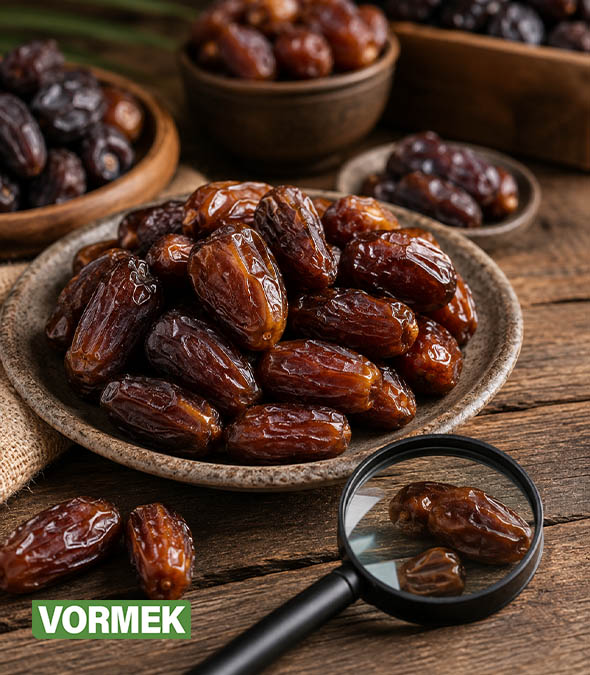
Nachweismethoden für Verfälschungen bei Datteln
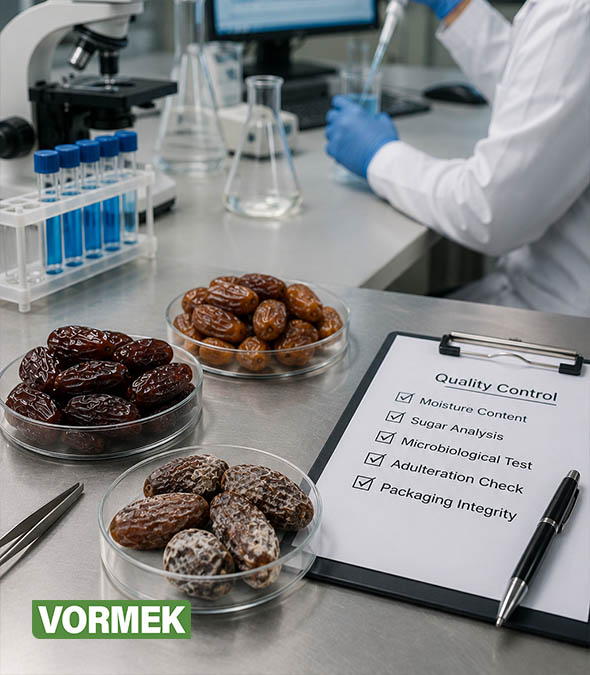
Die Identifizierung von Verfälschungen in Dattelprodukten erfordert ausgefeilte analytische Ansätze, die authentische Produkte von beeinträchtigten unterscheiden können. Mehrere Analysetechniken sind verfügbar, jede mit spezifischen Vorteilen für verschiedene Arten der Verfälschungserkennung.
Chemische Analysemethoden
- FTIR-Spektroskopie: Die Fourier-Transform-Infrarot-(FTIR)-Spektroskopie hat sich als leistungsfähiges, schnelles und zerstörungsfreies analytisches Werkzeug für die Charakterisierung von Dattelsirup und die Erkennung von Verfälschungen erwiesen. Diese Technik misst Infrarot-Absorptionsmuster, um einzigartige spektrale Fingerabdrücke für jede Probe zu erzeugen. Durch die Analyse wichtiger spektraler Parameter einschließlich Peakpositionen, Intensitäten, Halbwertsbreite (FWHM) und Fläche unter dem Peak können Forscher Referenzparameter für die Qualitätsbewertung festlegen. Die Vorteile der FTIR umfassen Geschwindigkeit, minimale Probenvorbereitung, Kosteneffizienz und die Möglichkeit, Proben ohne Zerstörung zu analysieren.
- HPLC und GC-MS: Die Hochleistungsflüssigkeitschromatographie (HPLC) und die Gaschromatographie-Massenspektrometrie (GC-MS) bieten eine detailliertere Analyse der chemischen Zusammensetzung. Diese Techniken können spezifische Zuckerprofile, phenolische Verbindungen und andere chemische Marker identifizieren, die auf Authentizität hinweisen. Die HPLC ist besonders nützlich zur Bestimmung des Zuckerprofils von Dattelprodukten und zur Identifizierung der charakteristischen Verhältnisse von Glukose, Fruktose und Saccharose.
- Multivariate chemometrische Analyse: Die Kombination spektroskopischer oder chromatographischer Daten mit chemometrischen (multivariaten Analysetechniken) ermöglicht eine ausgefeiltere Erkennung von Verfälschungsmustern. Diese statistischen Methoden können aussagekräftige Muster aus komplexen Spektraldaten extrahieren und die Zuverlässigkeit der Qualitätskontrollverfahren verbessern.
Mikrobiologische Analyse
Mikrobiologische Tests können Verderbsorganismen oder Krankheitserreger in Datteln identifizieren, die infolge von Verfälschung oder unsachgemäßer Handhabung vorhanden sind. Dies umfasst Tests auf Bakterienspezies und Verderbspilze, die durch kontaminierte Geräte, schlechte Lagerbedingungen oder den Zusatz kontaminierter Substanzen eingeschleppt worden sein könnten. Standardmikrobiologische Methoden umfassen die Gesamtkeimzahl, die Hefe- und Schimmelpilzzählung sowie den Nachweis spezifischer Krankheitserreger wie Salmonella, Listeria und E. coli.
Physikalische Beurteilung
Physikalische Beurteilungstechniken bewerten Farbe, Textur, Feuchtigkeitsgehalt und andere sichtbare Eigenschaften, die auf Verfälschungen hinweisen können. Bildanalyse, Kolorimetrie und Texturprofilierung können Unregelmäßigkeiten identifizieren, die auf Vermischung oder Verarbeitungsunregelmäßigkeiten hindeuten. Diese Methoden werden oft als Screening-Werkzeuge vor einer detaillierteren chemischen Analyse eingesetzt.
Die Rolle fortschrittlicher Verpackungstechnologien zur Erhaltung der Dattelqualität
Angemessene Verpackungs- und Lagerbedingungen spielen eine entscheidende Rolle bei der Erhaltung der Dattelqualität und der Verhinderung von Verderb, der als Verfälschung interpretiert werden könnte oder aus Verfälschungspraktiken resultiert.
Schutzgasverpackung (MAP)
Die Schutzgasverpackung (Modified Atmosphere Packaging, MAP) hat sich als wirksam erwiesen, um die Haltbarkeit zu verlängern und die Qualität frischer Datteln zu erhalten. Untersuchungen an ‘Barhee’-Datteln im Khalal-Stadium zeigten, dass MAP die Qualitätserhaltung während der Lagerung erheblich verbessert. Studien, die verschiedene MAP-Bedingungen verglichen, ergaben, dass aktive MAP-Behandlungen mit erhöhten CO₂-Konzentrationen den geringsten Gewichtsverlust und minimale Qualitätsänderungen über längere Lagerungszeiträume aufwiesen. Die Umwandlung in Rotab (Reifung) zeigte eine abnehmende Tendenz bei MAP-Behandlungen, wobei die Lagerung bei niedriger Temperatur die Qualität effektiver erhielt.
Die Forschung an frischen Datteln hat gezeigt, dass die Schutzgasverpackung mit unterschiedlichen Gaskombinationen die Reifung wirksam kontrollieren und Qualitätsparameter wie pH-Wert, Gesamtlösliche Feststoffe, Zuckergehalt, Feuchtigkeitsgehalt und Gerbstoffgehalt aufrechterhalten kann. Die Auswahl geeigneter Gasmischungen für die Dattel-MAP ist entscheidend für die Erzielung der gewünschten Konservierungseffekte.
Antibeschlag-Folien
Die Kondensationskontrolle ist eine zentrale Herausforderung bei der Dattelverpackung, insbesondere in Kühlkettenumgebungen, in denen Temperaturschwankungen zu Feuchtigkeitsansammlungen im Pack führen. Antibeschlag-Deckelfolien wurden entwickelt, um diese Herausforderung zu bewältigen, indem sie die Tröpfchenbildung verhindern und während der gesamten Lagerung und Präsentation eine gleichbleibende Klarheit gewährleisten.
Antibeschlag-Folien bieten mehrere Vorteile für die Dattelkonservierung. Durch die Verhinderung von Feuchtigkeitsansammlungen helfen diese Folien, die trockenen Oberflächenbedingungen aufrechtzuerhalten, die das mikrobielle Wachstum hemmen. Die verbesserte Sichtbarkeit der verpackten Produkte verbessert die Verbraucherwahrnehmung am Point of Sale. Moderne Antibeschlag-Folientechnologien bieten unter Kühlbedingungen eine gleichbleibende Leistung, was sie für moderne Lieferketten geeignet macht.
Integrierte Verpackungslösungen
Die Kombination von MAP mit geeigneter Folientechnologie bietet einen umfassenden Schutz vor Qualitätsverschlechterung. Eine angemessene Verpackung kontrolliert den Sauerstoff- und Feuchtigkeitsgehalt innerhalb der Verpackung, verlangsamt die Atmung und verzögert die Reifung frischer Datteln. Die Auswahl geeigneter Verpackungsmaterialien muss die spezifischen Anforderungen von Datteln berücksichtigen, einschließlich Feuchtigkeitsempfindlichkeit, Anfälligkeit für Sauerstoff und die Notwendigkeit, die visuelle Attraktivität zu erhalten. Mehrschichtfolien mit maßgeschneiderten Barriereeigenschaften können die optimale Kombination aus Konservierung und Präsentation bieten.
Temperatur- und Feuchtigkeitskontrolle
Über die Verpackung hinaus sind eine angemessene Temperatur- und Feuchtigkeitskontrolle während der Lagerung und des Transports entscheidend für die Erhaltung der Dattelqualität. Das Kühlkettenmanagement stellt sicher, dass Datteln während des gesamten Verteilungsprozesses bei geeigneten Temperaturen gehalten werden, wodurch die Qualitätsverschlechterung minimiert wird. Die Feuchtigkeitskontrolle ist ebenso wichtig, da übermäßige Feuchtigkeit das mikrobielle Wachstum fördern und den Verderb beschleunigen kann. Umgekehrt können übermäßig trockene Bedingungen zu Feuchtigkeitsverlust und Texturverschlechterung führen.
Strategien zur Bekämpfung von Verfälschungen in der Dattelindustrie
Fortschrittliche Analysemethoden
Die Implementierung fortschrittlicher Analysetechniken in routinemäßigen Qualitätskontrollverfahren ist für die Erkennung von Verfälschungen unerlässlich. Die FTIR-Spektroskopie bietet mit ihrer Geschwindigkeit, Kosteneffizienz und minimalen Anforderungen an die Probenvorbereitung eine praktische Lösung für das Screening von Dattelprodukten. In Verbindung mit multivariater statistischer Analyse kann die FTIR Dattelsirupproben effektiv klassifizieren und authentifizieren und bietet eine zuverlässige Methode zur Qualitätsbewertung. HPLC und GC-MS sollten für detailliertere Analysen verwendet werden, wenn eine Verfälschung vermutet wird.
Verbesserte Überwachung und Standardisierung
Eine strengere Durchsetzung bestehender Standards und die Implementierung regelmäßiger Audits in der gesamten Produktions- und Verpackungskette können die Möglichkeiten für Verfälschungen erheblich reduzieren. Die Festlegung und Durchsetzung von Qualitätsstandards für Datteln, einschließlich Grenzwerten für Feuchtigkeitsgehalt, Zuckerzusammensetzung und Zusatzstoffverwendung, würde einen Rahmen für die Einhaltung der Vorschriften schaffen. Die Entwicklung spektraler Referenzparameter für reine Dattelprodukte könnte als Grundlage für die routinemäßige Qualitätsbewertung und Verfälschungserkennung dienen.
Verbraucheraufklärung und -bewusstsein
Die Aufklärung der Verbraucher über die Anzeichen von Qualitätsdatteln und einfache Methoden zur Identifizierung kann die Nachfrage nach verfälschten Produkten verringern. Die Bereitstellung klarer Informationen über Sorte, Produktionsstandort und Lagerbedingungen erhöht die Rückverfolgbarkeit und das Verbrauchervertrauen. Kampagnen zur Verbraucheraufklärung können die Bedeutung des Kaufs von Datteln von seriösen Quellen, die Überprüfung von Produktkennzeichnungen und die Kenntnis von Preisabweichungen hervorheben, die auf Verfälschungen hinweisen können.
Transparenz der Lieferkette
Die Verbesserung der Rückverfolgbarkeit in der gesamten Dattel-Lieferkette ist für die Verhinderung von Verfälschungen unerlässlich. Derzeit sind viele Dattel-Lieferketten lang und fragmentiert, wobei mehrere Akteure an Sammlung, Verarbeitung, Verpackung und Vertrieb beteiligt sind. Die Implementierung digitaler Rückverfolgbarkeitssysteme könnte viele dieser Herausforderungen angehen. Die Blockchain-Technologie wurde als Lösung zur Verbesserung der Transparenz und Rückverfolgbarkeit in der Dattel-Lieferkette vorgeschlagen. Durch die Bereitstellung eines unveränderlichen Aufzeichnungsprotokolls über Produktbewegungen und -handhabung könnte die Blockchain helfen, den Punkt zu identifizieren, an dem die Verfälschung auftritt, und Verantwortlichkeiten festzulegen.
Regulatorische Durchsetzung
Die Stärkung der regulatorischen Aufsicht und Durchsetzung ist für die Abschreckung von Verfälschungen unerlässlich. Dies umfasst die Durchführung regelmäßiger Inspektionen von Verarbeitungsbetrieben, die Implementierung von Stichprobenprüfungen von Produkten auf dem Markt und die Verhängung sinnvoller Strafen für festgestellte Verstöße. Die internationale Zusammenarbeit ist besonders wichtig für Dattelprodukte, die grenzüberschreitend gehandelt werden. Die Harmonisierung von Standards und Durchsetzungsansätzen zwischen Erzeuger- und Verbraucherländern kann die Möglichkeiten für Verfälschungen verringern und einen gleichbleibenden Verbraucherschutz gewährleisten.
Zusammenfassung und Fazit
Datteln stellen ein lebenswichtiges landwirtschaftliches Erzeugnis mit erheblicher wirtschaftlicher und ernährungsphysiologischer Bedeutung in vielen Regionen dar. Der hohe Wert der Datteln, verbunden mit der wachsenden internationalen Nachfrage, hat Möglichkeiten für Verfälschungen geschaffen, die die Verbrauchergesundheit schädigen, das Marktvertrauen untergraben und den Ruf der Erzeuger schädigen können.
Verfälschungen in der Dattelindustrie treten typischerweise in physikalischer Form (Zusatz von Zuckersirup, Vermischung minderwertiger Sorten), chemischer Form (künstliche Farbstoffe, Konservierungsmittel) und indirekt mikrobiologischer Form (Kontamination durch schlechte Lagerung) auf. Jede dieser Praktiken hat dokumentierte Auswirkungen auf die Produktqualität, einschließlich der Veränderung von Zucker- und Phenolprofilen, erhöhter Wasseraktivität sowie reduzierter Stabilität und Haltbarkeit.
Wissenschaftliche Nachweismethoden, einschließlich FTIR-Spektroskopie, HPLC und GC-MS, bieten wirksame Mittel zur Identifizierung verfälschter Dattelprodukte. Diese Analysetechniken können spezifische chemische Marker erkennen, zugesetzte Zucker identifizieren und Veränderungen des Gehalts an bioaktiven Verbindungen bewerten. In Verbindung mit multivariaten statistischen Ansätzen bieten diese Werkzeuge schnelle, zuverlässige Screening-Fähigkeiten, die in routinemäßige Qualitätskontrollverfahren integriert werden können.
Die Rolle fortschrittlicher Verpackungstechnologien zur Erhaltung der Dattelqualität sollte nicht unterschätzt werden. MAP und Antibeschlag-Folien haben ihre Wirksamkeit bei der Erhaltung von Qualitätsparametern und der Verringerung von Möglichkeiten sowohl für physikalische als auch für mikrobiologische Verfälschungen unter Beweis gestellt. Eine angemessene Temperatur- und Feuchtigkeitskontrolle während der Lagerung und des Transports ist für die Erhaltung der Produktintegrität ebenso entscheidend.
Ein umfassender Ansatz, der analytische Methoden, Standardisierung, Verbraucheraufklärung und Transparenz in der Lieferkette kombiniert, ist für die Bekämpfung von Verfälschungen in der Dattelindustrie unerlässlich. Regulatorische Aufsicht, Verantwortung der Erzeuger und Verbraucherbewusstsein tragen alle zur Aufrechterhaltung der Sicherheit, Qualität und des wirtschaftlichen Werts von Dattelprodukten bei.
Die Zukunft der Dattelindustrie hängt vom Engagement aller Beteiligten für die Wahrung der Produktintegrität ab. Investitionen in Qualitätskontrolltechnologien, Schulung von Personal und Implementierung transparenter Lieferkettensysteme werden für die Deckung der wachsenden weltweiten Nachfrage bei gleichzeitiger Gewährleistung des Verbrauchervertrauens und des Schutzes des Rufs der Dattel erzeugenden Länder von entscheidender Bedeutung sein.
Benötigen Sie fachkundige Beratung zu Dattelverpackungslösungen?
Kontaktieren Sie Vormek Packaging Solutions für eine professionelle Beratung zur Optimierung Ihrer Dattelverpackungs- und Konservierungsstrategien. Unser technisches Team bietet maßgeschneiderte Empfehlungen für MAP, Vakuumverpackung und Thermoforming-Lösungen, die auf Ihre spezifischen Produktanforderungen und Lieferkettenbedürfnisse zugeschnitten sind.