Technische Analyse
Einleitung
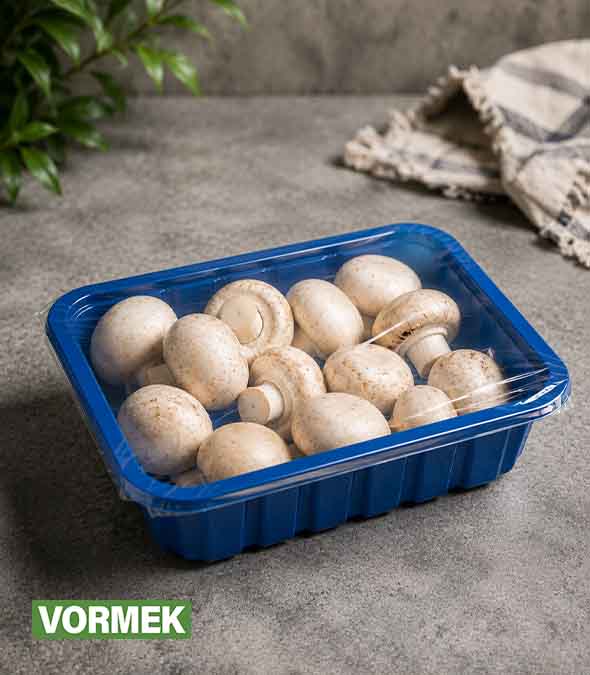
Der weiße Champignon (Agaricus bisporus) ist eines der wirtschaftlich bedeutendsten gartenbaulichen Produkte auf dem globalen Lebensmittelmarkt. Seine Beliebtheit bei den Verbrauchern, die auf einen außergewöhnlichen Nährwert und vielseitige kulinarische Anwendungen zurückzuführen ist, hat den Pilzanbau zu einem bedeutenden Agrarsektor gemacht. Doch diese kommerzielle Erfolgsgeschichte steht vor einer anhaltenden technischen Herausforderung, die weiterhin die Grenzen der Lebensmittelverpackungstechnik auf die Probe stellt: die extreme Verderblichkeit des geernteten Produkts.
Frische Champignons gehören zu den empfindlichsten Produkten in der Lieferkette. Unter Umgebungsbedingungen behalten sie ihre akzeptable Qualität bei bestenfalls etwa drei Tagen. Diese bemerkenswert kurze Nacherntelebensdauer ist auf mehrere intrinsische biologische Faktoren zurückzuführen, die ein perfektes Zusammenspiel von Verderbnis-Mechanismen schaffen. Die hohe Atmungsrate, der erhöhte Feuchtigkeitsgehalt und das Fehlen einer schützenden Kutikula beschleunigen sowohl den physiologischen als auch den mikrobiologischen Verderb in einem Ausmaß, das weit über dem der meisten anderen Frischprodukte liegt.
Die wirtschaftlichen Auswirkungen dieser Herausforderung sind erheblich. Bedeutende Prozentsätze der geernteten Pilze gehen vor dem Erreichen der Verbraucher durch Verderb verloren, was verschwendete Produktionsmittel, Arbeitskraft und Transportressourcen bedeutet. Dies hat intensive Forschungsanstrengungen vorangetrieben, die auf die Entwicklung fortschrittlicher Verpackungstechnologien abzielen, die in der Lage sind, die Pilzqualität zu erhalten und die Haltbarkeit zu verlängern.
Für Verpackungsingenieure und Maschinenhersteller stellt der Pilz eine besonders anspruchsvolle Anwendung dar. Die Verpackungslösung muss gleichzeitig Gasaustausch, Feuchtigkeitskontrolle, mechanischen Schutz und mikrobielle Hemmung bewältigen und dabei innerhalb der wirtschaftlichen Zwänge der kommerziellen Lebensmittelproduktion operieren. Dieser Artikel untersucht die technischen Herausforderungen der Frischpilzverpackung und beleuchtet die verfügbaren Technologien und Gerätelösungen zu deren Bewältigung.
Für Lebensmittelhersteller, die Verpackungsanlagen suchen, die speziell für anspruchsvolle Frischprodukteanwendungen ausgelegt sind, bietet das technische Team von Vormek fachkundige Beratung und integrierte Verpackungslösungen.
1. Verständnis der biologischen Grundlagen der Pilzverderblichkeit
1.1 Atmung und Stoffwechselaktivität
Frische Pilze zeigen nach der Ernte außergewöhnlich hohe Atmungsraten. Die Atmung, der Prozess, bei dem pflanzliches Gewebe Sauerstoff verbraucht und Kohlendioxid freisetzt, setzt sich nach der Ernte fort und treibt den Verbrauch von gespeicherten Kohlenhydraten und anderen Energiereserven an. Bei Pilzen läuft diese Stoffwechselaktivität mit Raten ab, die um ein Vielfaches höher sind als bei den meisten anderen Frischprodukten.
Die hohe Atmungsrate trägt auf verschiedene Weise direkt zur Qualitätsverschlechterung bei:
- Erschöpfung der Energiereserven: Gespeicherte Kohlenhydrate werden verbraucht, was die Fähigkeit des Pilzes verringert, die Zellintegrität und den Turgordruck aufrechtzuerhalten
- Wärmeerzeugung: Die Atmungsaktivität produziert Stoffwechselwärme, die die Gewebetemperatur erhöht und den weiteren Verderb beschleunigt
- Erhöhter Feuchtigkeitsverlust: Die Stoffwechselprozesse erzeugen Wasserdampf, der durch die ungeschützte Oberfläche entweicht
- Beschleunigte Alterung: Die biochemischen Wege, die zur Gewebealterung und zum -abbau führen, werden schneller aktiviert
Die Forschung hat gezeigt, dass die Temperatur die Atmungsraten und die anschließende Haltbarkeit dramatisch beeinflusst. Studien mit multivariaten Haltbarkeitsmodellen haben gezeigt, dass bei 4 °C gelagerte Pilze ihre Qualität etwa 15,1 Tage lang behalten, während solche bei 8 °C nur 10,3 Tage und bei 12 °C die Haltbarkeit auf nur 4,7 Tage sinkt. Diese Temperaturempfindlichkeit unterstreicht die entscheidende Bedeutung des Kältemanagements von der Ernte bis zur Präsentation im Einzelhandel.
1.2 Strukturelle Anfälligkeit
Die strukturelle Anatomie der Pilze trägt erheblich zu ihrer Verderblichkeit bei. Im Gegensatz zu vielen Früchten und Gemüsen, die schützende äußere Schichten oder Kutikulen besitzen, fehlt den Pilzen jegliche nennenswerte Barriere gegen Wasserverlust oder mikrobielle Invasion. Der Fruchtkörper besteht aus locker gepackten Hyphen mit erheblichem innerem Luftraum, was eine Struktur schafft, die sowohl mechanisch zerbrechlich als auch stark dehydrierungsanfällig ist.
Diese strukturelle Anfälligkeit äußert sich in mehreren Qualitätsmängeln:
- Hutöffnung: Mit zunehmendem Alter der Pilze dehnt sich der Hut aus und der Schleier (die Membran, die den Hutrand mit dem Stiel verbindet) reißt. Dieser Prozess, obwohl natürlich, wird in der kommerziellen Sortierung als Qualitätsmangel betrachtet, da geöffnete Hüte auf fortgeschrittene Reife und eine geringere verbleibende Haltbarkeit hinweisen.
- Verlust der Festigkeit: Das Pilzgewebe wird nach der Ernte durch den enzymatischen Abbau von Zellwandbestandteilen zunehmend weicher. Diese Texturverschlechterung verringert die Verbraucherakzeptanz und erhöht die Anfälligkeit für mechanische Schäden während der Handhabung und des Transports.
- Gewichtsverlust: Wasserverlust durch die ungeschützte Oberfläche kann das Produktgewicht innerhalb von Tagen nach der Ernte um mehrere Prozentpunkte reduzieren. Dies stellt einen direkten wirtschaftlichen Verlust für die Erzeuger und einen geringeren Wert für die Verbraucher dar.
1.3 Enzymatische Bräunung
Die enzymatische Bräunungsreaktion ist wohl der sichtbarste und kommerziell schädlichste Verderbnis-Mechanismus bei Pilzen. Der Prozess beinhaltet die Oxidation von phenolischen Verbindungen durch das Enzym Polyphenoloxidase (PPO), das dunkel gefärbte Melanine produziert, die Pilze optisch unattraktiv machen.
Der Bräunungsmechanismus läuft in mehreren Schritten ab:
- Gewebeschädigung: Ernte, Handhabung oder Verarbeitung brechen Zellmembranen auf und setzen PPO aus seiner normalen Kompartimentierung frei
- Substratzugang: Das Enzym erhält Zugang zu phenolischen Substraten, die normalerweise abgeschirmt sind
- Oxidation: In Gegenwart von Sauerstoff katalysiert PPO die Oxidation von Monophenolen und o-Diphenolen zu o-Chinonen
- Polymerisation: Die reaktiven Chinone polymerisieren nicht-enzymatisch zu Melaninpigmenten
Die Bräunungsreaktion ist besonders problematisch, da sie nach ihrer Einleitung schnell ablaufen und nur schwer rückgängig zu machen ist. Verpackungsstrategien, die die Sauerstoffverfügbarkeit einschränken oder Enzyminhibitoren einbauen, können diesen Prozess erheblich verlangsamen.
1.4 Mikrobieller Verderb
Frische Pilze stellen ein ideales Substrat für mikrobielle Vermehrung dar. Der hohe Feuchtigkeitsgehalt, der neutrale pH-Wert und das nährstoffreiche Gewebe bieten hervorragende Bedingungen für Bakterien, Hefen und Schimmelpilze. Der wichtigste Verderbsmikroorganismus bei Pilzen ist Pseudomonas spp., der sich unter typischen Lagerbedingungen schnell vermehrt.
Mikrobieller Verderb äußert sich in:
- Oberflächen-Schleim: Bakterienwachstum produziert extrazelluläre Polysaccharide, die eine schleimige, unangenehme Oberfläche erzeugen
- Nebengerüchen: Mikrobieller Stoffwechsel erzeugt flüchtige Verbindungen mit unangenehmen sensorischen Eigenschaften
- Verfärbung: Einige Mikroorganismen produzieren Pigmente oder verändern die Oberflächenchemie
- Gewebeabbau: Mikrobielle Enzyme bauen Zellwandbestandteile ab und beschleunigen die Texturerweichung
Studien haben gezeigt, dass die mesophile Bakterienzahl in verpackten Pilzen typischerweise innerhalb weniger Tage Lagerung 7 log KBE/g überschreitet, wobei Pseudomonas spp. die vorherrschende Population darstellt. Effektive Verpackungsstrategien müssen daher Mechanismen zur Hemmung oder Verlangsamung des mikrobiellen Wachstums beinhalten.
2. Kernherausforderungen der technischen Pilzverpackung
2.1 Feuchtigkeitsmanagement
Das Feuchtigkeitsmanagement stellt wohl die bedeutendste technische Herausforderung bei der Pilzverpackung dar. Frische Pilze enthalten etwa 90 % Wasser und verlieren aktiv Feuchtigkeit durch Atmung und Transpiration. Die Verpackungsumgebung muss daher mehrere konkurrierende Anforderungen ausgleichen:
- Verhinderung von Austrocknung: Wenn die Verpackung übermäßigen Feuchtigkeitsverlust zulässt, schrumpfen die Pilze, verlieren an Gewicht und entwickeln ein unerwünschtes Aussehen.
- Vermeidung von Kondensation: Wenn die Verpackung zu viel Feuchtigkeit zurückhält, bildet sich Kondenswasser im Verpackungsinneren. Dieses freie Wasser fördert mikrobielle Vermehrung und beschleunigt die enzymatische Bräunung.
- Steuerung der Transpiration: Die Wasserdampfdurchlässigkeitsrate (WVTR) des Verpackungsmaterials muss sorgfältig ausgewählt werden, um ausreichend Feuchtigkeitsabgabe zu ermöglichen, während Austrocknung verhindert wird.
Die Forschung hat gezeigt, dass Kondensation auf der inneren Verpackungsoberfläche besonders schädlich für die Pilzqualität ist. Eine Studie ergab, dass Pilze, die mit dehnbarer PVC-Folie verpackt wurden, bereits nach einem Tag Lagerung dunkelbraune Flecken entwickelten und nahezu 30 % einen geöffneten Schleier aufwiesen, was weitgehend auf die Bildung von Kondenswasser in Kombination mit einem hohen Sauerstoffpartialdruck im Kopfraum zurückzuführen war.
2.2 Optimierung des Gasaustauschs
Die Pilzatmung stellt eine einzigartige Herausforderung für den Gasaustausch dar. Im Gegensatz zu vielen Produkten, die von hohen CO₂- und niedrigen O₂-Atmosphären profitieren, reagieren Pilze empfindlich auf übermäßige CO₂-Konzentrationen. Das Verpackungsmaterial muss daher das richtige Gleichgewicht der O₂- und CO₂-Durchlässigkeit erreichen, um eine vorteilhafte Atmosphärenzusammensetzung aufrechtzuerhalten und gleichzeitig die Anreicherung von hemmenden CO₂-Werten zu verhindern.
Die ideale Atmosphäre für Pilze umfasst typischerweise:
- Reduzierten Sauerstoff (2–5 % O₂), um Atmung und enzymatische Bräunung zu verlangsamen
- Moderate Kohlendioxidkonzentration (5–10 % CO₂) zur Hemmung des mikrobiellen Wachstums, aber nicht so hoch, dass physiologische Schäden verursacht werden
- Ausgewogene Gasverhältnisse, die anaerobe Bedingungen oder CO₂-Toxizität vermeiden
Verpackungsmaterialien mit unzureichender Gasdurchlässigkeit lassen die CO₂-Werte auf hemmende Konzentrationen ansteigen. Umgekehrt lassen Materialien mit übermäßiger Durchlässigkeit die O₂-Werte zu hoch bleiben, was die Atmung und Bräunung nicht verlangsamt.
2.3 Temperaturmanagement
Die Empfindlichkeit von Pilzen gegenüber Temperaturschwankungen stellt eine erhebliche Herausforderung für das Verpackungsdesign und das Lieferkettenmanagement dar. Temperaturmissbrauch während des Transports oder der Lagerung kann selbst das beste Verpackungssystem schnell beeinträchtigen.
Untersuchungen zu Temperaturschwankungen in modifizierten Atmosphärenverpackungen ergaben, dass ein Temperaturanstieg von 4 °C auf 20 °C, selbst für kurze Zeiträume, eine schwere Qualitätsverschlechterung verursachte. Der Temperaturanstieg verursachte anoxische Bedingungen (O₂ unter 1,5 %) mit übermäßiger CO₂-Anreicherung (22 %), was zu starker Bräunung, Festigkeitsverlust und erhöhten Ethanolwerten im Pilzgewebe führte.
Diese Ergebnisse zeigen, dass die Verpackungsleistung nur so wirksam ist wie das sie unterstützende Kältemanagement. Verpackungsingenieure müssen Systeme entwickeln, die angemessene Temperaturschwankungen tolerieren, während sie die Produktqualität erhalten.
2.4 Mechanischer Schutz
Die mechanische Zerbrechlichkeit von Pilzen erfordert besondere Aufmerksamkeit für das Verpackungsdesign und die Handhabung. Quetsch- und Druckschäden können die enzymatische Bräunung auslösen und Eintrittspforten für mikrobielle Infektionen schaffen.
Ein effektiver mechanischer Schutz erfordert:
- Schalen-Design: Ausreichende Tiefe und Unterstützung, um die Kompression der unteren Lagen zu verhindern
- Polsterung: Saugfähige Pads oder gepolsterte Oberflächen zur Absorption von Aufprallkräften
- Stapelfestigkeit: Verpackungsdesign, das die strukturelle Integrität unter Stapellasten beibehält
- Handhabungskompatibilität: Design, das automatisierte Handhabung ohne Produktschaden ermöglicht
2.5 Mikrobielle Kontrolle
Während die modifizierte Atmosphärenverpackung (MAP) durch reduzierten Sauerstoff und erhöhtes CO₂ eine gewisse mikrobielle Hemmung bietet, können für eine verlängerte Haltbarkeit zusätzliche Kontrollen erforderlich sein.
Optionen für eine verbesserte mikrobielle Kontrolle umfassen:
- Desinfizierende Waschungen: Die Wäsche vor der Verpackung mit Wasserstoffperoxid oder anderen lebensmittelverträglichen Desinfektionsmitteln kann die anfängliche mikrobielle Belastung reduzieren.
- Aktive Verpackung: Der Einbau von antimikrobiellen Mitteln in die Verpackungsmaterialien bietet eine kontinuierliche mikrobielle Hemmung während der gesamten Lagerung.
- Oberflächenbehandlungen: Die Anwendung von essbaren Beschichtungen mit antimikrobiellen Verbindungen kann das mikrobielle Oberflächenwachstum hemmen.
3. Fortschrittliche Verpackungstechnologien für Pilze
3.1 Modifizierte Atmosphärenverpackung (MAP)
Die modifizierte Atmosphärenverpackung bleibt die am weitesten verbreitete Technologie für die kommerzielle Pilzverpackung. MAP funktioniert, indem die Gaszusammensetzung in der verschlossenen Verpackung verändert wird, um Bedingungen zu schaffen, die die Atmung verlangsamen und Verderbsorganismen hemmen.
Der MAP-Ansatz für Pilze umfasst typischerweise:
- Passive MAP: Die Verpackung wird mit Umgebungsluft versiegelt, und die gewünschte Atmosphäre entwickelt sich durch die Wechselwirkung von Produktatmung und Gasdurchlässigkeit der Verpackung. Dieser Ansatz ist einfacher und kostengünstiger, bietet aber eine weniger präzise Atmosphärenkontrolle.
- Aktive MAP: Die Verpackung wird vor dem Versiegeln mit einem spezifischen Gasgemisch gespült. Dies ermöglicht eine schnellere Einstellung der gewünschten Atmosphäre.
- Perforationsvermittelte MAP: Mikroperforationen in der Verpackungsfolie ermöglichen einen kontrollierten Gasaustausch. Die Größe und Anzahl der Perforationen bestimmen die Durchlässigkeitseigenschaften. Studien haben gezeigt, dass perforationsvermittelte MAP-Designs in thermogeformten Recycled-PET-Verpackungssystemen verbesserte CO₂- und niedrigere O₂-Werte aufrechterhalten können.
Die praktische Umsetzung von MAP für Pilze muss die spezifischen Atmungseigenschaften des Produkts berücksichtigen. Die Forschung hat gezeigt, dass die herkömmliche dehnbare PVC-Folie, die häufig für die Pilzüberverpackung verwendet wird, aufgrund unzureichender Gasdurchlässigkeit und Kondensationsproblemen tatsächlich eine schnelle Verschlechterung fördern kann.
3.2 Aktive Verpackung
Die aktive Verpackung stellt eine bedeutende Weiterentwicklung gegenüber der konventionellen MAP dar, indem sie funktionelle Komponenten einbezieht, die aktiv mit dem Produkt oder der Verpackungsumgebung interagieren. Diese Komponenten können in das Verpackungsmaterial eingebettet oder als separate Beutel oder Einsätze eingebracht werden.
- Sauerstofffänger: Diese Systeme absorbieren Restsauerstoff in der Verpackung, reduzieren die O₂-Werte weiter und verlangsamen oxidative Reaktionen. Dies ist besonders vorteilhaft zur Verhinderung der enzymatischen Bräunung.
- Ethylenabsorber: Obwohl Ethylen bei der Pilzverderblichkeit weniger bedeutend ist als bei manchen Produkten, können Absorptionssysteme helfen, eventuell produziertes Ethylen und seine potenziellen Auswirkungen auf die Alterung zu kontrollieren.
- Antimikrobielle Systeme: Verpackungsfolien, die antimikrobielle Mittel enthalten, können eine kontinuierliche Hemmung des mikrobiellen Oberflächenwachstums bieten. Beispielsweise haben Chitosan-basierte Nanoemulsionsfolien eine signifikante antimikrobielle Aktivität gegen mehrere mikrobielle Stämme gezeigt, während sie die Pilzqualitätsparameter aufrechterhalten.
- Feuchtigkeitsregulatoren: In die Verpackung eingebaute Trockenmittel können überschüssige Feuchtigkeit absorbieren, die Kondensatbildung verhindern und gleichzeitig eine ausreichende Luftfeuchtigkeit aufrechterhalten, um Austrocknung zu verhindern.
3.3 Essbare Beschichtungen
Essbare Beschichtungen bieten eine schützende Barriere direkt auf der Pilzoberfläche. Diese Beschichtungen werden typischerweise aus Biopolymeren wie Polysacchariden, Proteinen oder Lipiden formuliert und können funktionelle Inhaltsstoffe wie ätherische Öle oder Enzyminhibitoren enthalten.
Die Schutzmechanismen essbarer Beschichtungen umfassen:
- Gasbarriere: Die Beschichtung schränkt den Gasaustausch an der Pilzoberfläche ein und reduziert die Atmungsraten.
- Feuchtigkeitsbarriere: Die Beschichtung reduziert Transpiration und Feuchtigkeitsverlust.
- Mikrobielle Hemmung: Antimikrobielle Verbindungen in der Beschichtung können das mikrobielle Oberflächenwachstum hemmen.
- Enzymhemmung: Spezifische Hemmstoffe der Polyphenoloxidase und anderer bräunungsfördernder Enzyme können eingearbeitet werden.
Die Forschung hat die Wirksamkeit verschiedener Formulierungen essbarer Beschichtungen gezeigt. Beispielsweise behielten Chitosan-Nanoemulsionsbeschichtungen in gelagerten Pilzen signifikant höhere Gehalte an organischen Säuren, Phenolen, Ascorbinsäure und Festigkeit im Vergleich zu unbeschichteten Kontrollen.
3.4 Biologisch abbaubare und kompostierbare Verpackungen
Umweltbedenken haben das Interesse an biologisch abbaubaren und kompostierbaren Verpackungsalternativen zu herkömmlichen erdölbasierten Kunststoffen geweckt. Für die Pilzverpackung bieten diese Materialien den zusätzlichen Vorteil, dass sie geeignete Gasdurchlässigkeitsprofile für Frischprodukte bieten.
Die untersuchten Optionen umfassen:
- Polymilchsäure (PLA): PLA wird aus nachwachsenden Rohstoffen gewonnen, bietet gute Sauerstoffbarriereeigenschaften und kann mit herkömmlichen Verpackungsanlagen verarbeitet werden. Copolymer-Modifikationen wurden entwickelt, um die Flexibilität und die Gasdurchlässigkeitseigenschaften zu verbessern.
- Papierbasierte Systeme: Funktionalisierte Papierverpackungen, wie Weizengluten-beschichtetes Papier, haben vielversprechende Ergebnisse für die Pilzlagerung gezeigt. Das beschichtete Papier bietet moderate CO₂- und niedrige O₂-Partialdrücke ohne Kondensatbildung.
- Stärke- und Proteinfolien: Folien aus Stärken, Proteinen und anderen natürlichen Polymeren bieten Kompostierbarkeit zusammen mit geeigneten Gasbarriereeigenschaften für Frischprodukteanwendungen.
3.5 Nanopackaging
Die Nanotechnologie hat neue Möglichkeiten bei der Entwicklung von Verpackungsfolien eröffnet. In Polymermatrizen eingebettete Nanopartikel können die mechanischen Eigenschaften verbessern, antimikrobielle Aktivität bieten und die Barriereeigenschaften verstärken.
- Nanosilica-Verbundstoffe: Polyethylenfolien mit Nanosilica-Partikeln haben im Vergleich zu herkömmlichem PE verbesserte mechanische Eigenschaften und Gasbarriereeigenschaften gezeigt.
- Nanoton-verstärkte Folien: In Polymermatrizen dispergierte Ton-Nanopartikel schaffen gewundene Wege für die Gasdiffusion, was die Permeabilität reduziert und gleichzeitig Transparenz und Flexibilität beibehält.
- Silber- und Zinkoxid-Nanopartikel: Diese Materialien bieten antimikrobielle Aktivität, die das Bakterienwachstum auf Folienoberflächen hemmen kann.
Obwohl die Nanotechnologie-verstärkte Verpackung vielversprechend für Pilzanwendungen ist, erfordern die potenzielle Migration von Nanopartikeln und die damit verbundenen Lebensmittelsicherheitsaspekte eine sorgfältige Bewertung.
4. Verpackungsmaschinen-Aspekte für die Pilzverpackung
4.1 Schalenfüll- und -versiegelungssysteme
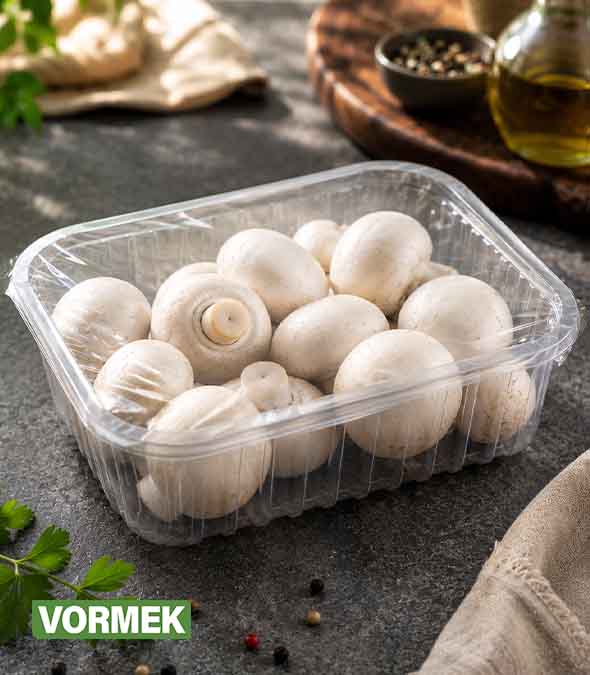
Der Pilzverpackungsprozess stellt besondere Herausforderungen an die Verpackungsmaschinen. Das Produkt ist empfindlich, variiert in Größe und Form und muss sorgfältig behandelt werden, um Schäden zu vermeiden. Schalenversiegelungssysteme müssen speziell für diese Anforderungen ausgelegt sein.
Wichtige Überlegungen für Schalenversiegelungsanlagen umfassen:
- Sanfte Produkthandhabung: Förder- und Füllsysteme müssen Produktaufprall und -kompression minimieren. Dies erfordert eine sorgfältige Kontrolle der Fallhöhen, Fördergeschwindigkeiten und Füllmechanismen.
- Schalenkompatibilität: Die Maschinen müssen die spezifischen Schalenkonstruktionen für die Pilzverpackung aufnehmen können, einschließlich verschiedener Tiefen, Materialien und Geometrien.
- Siegelqualität: Die Versiegelung zwischen Schale und Deckelfolie muss hermetisch und zuverlässig sein. Vormek-Schalenversiegelungsgeräte sind so konstruiert, dass sie unter verschiedenen Produktionsbedingungen eine gleichbleibende Siegelqualität mit präziser Temperatur- und Druckregelung bieten.
- Reinigbarkeit: Verpackungsanlagen müssen für eine gründliche Reinigung ausgelegt sein, um Kontaminationsansammlungen zu verhindern. Vormek-Geräte verfügen über hygienische Konstruktionsprinzipien, einschließlich Edelstahlkonstruktion und Waschfähigkeit.
4.2 Thermoformungssysteme
Thermoformungsverpackungssysteme sind besonders gut für Frischprodukteanwendungen, einschließlich Pilze, geeignet. Diese Systeme formen die Schale aus einer Folienrolle, füllen das Produkt und versiegeln es in einem kontinuierlichen Prozess mit einer Deckelfolie.
Vorteile der Thermoformung für die Pilzverpackung umfassen:
- Designflexibilität: Unterschiedliche Schalengeometrien können an spezifische Produktanforderungen angepasst werden
- Materialeffizienz: Die Formung von Schalen aus Folienvorrat minimiert Abfall im Vergleich zu vorgeformten Schalen
- Automatisierungsintegration: Thermoformungssysteme können vollständig in vorgelagerte Füll- und nachgelagerte Handhabungsanlagen integriert werden
Vormek-Thermoformmaschinen sind auf betriebliche Zuverlässigkeit in anspruchsvollen Lebensmittelproduktionsumgebungen ausgelegt. Die Anlagen sind für eine lange Lebensdauer mit industrieller Haltbarkeit und Präzisionstechnik konstruiert.
4.3 MAP-Gasspülsysteme
Die modifizierte Atmosphärenverpackung erfordert präzise Gashandhabungssysteme, um das richtige Gasgemisch zu liefern und eine ordnungsgemäße Versiegelung zu gewährleisten. Für die Pilzverpackung muss das Gasspülsystem in der Lage sein, die Zielatmosphäre zu erreichen und gleichzeitig die spezifischen Atmungseigenschaften des Produkts zu berücksichtigen.
Wichtige Merkmale effektiver MAP-Gasspülsysteme umfassen:
- Präzise Gaskontrolle: Genaue Dosierung und Mischung der Komponentengase zur Erreichung der gewünschten Kopfraumzusammensetzung.
- Effiziente Spülung: Effektive Verdrängung der Umgebungsluft zur Erzielung niedriger Restsauerstoffgehalte.
- Siegelintegrität: Aufrechterhaltung der modifizierten Atmosphäre durch zuverlässige hermetische Versiegelung.
4.4 Linienintegration und Automatisierung
Pilzverpackungslinien erfordern die Integration mehrerer Anlagenkomponenten. Diese Integration muss die spezifischen Anforderungen des Produkts berücksichtigen und gleichzeitig die Produktionseffizienz aufrechterhalten.
Integrationsaspekte umfassen:
- Produkthandhabung: Sanfte Handhabungssysteme, die mechanische Schäden minimieren.
- Gewichtskontrolle: Genaue Befüllung und Gewichtskontrolle zur Gewährleistung gleichbleibender Produktmengen.
- Qualitätsüberwachung: Inspektionssysteme zur Erkennung von Mängeln und Sicherstellung der Verpackungsintegrität.
- Datenerfassung: Umfassende Datenprotokollierung für Prozessüberwachung und Rückverfolgbarkeit.
5. Praktische Umsetzungsstrategien
5.1 Kältemanagement
Die Wirksamkeit jedes Pilzverpackungssystems hängt entscheidend vom Kältemanagement ab. Die Temperaturkontrolle muss unmittelbar nach der Ernte beginnen und bis zur Einzelhandelspräsentation fortgesetzt werden.
Wichtige Elemente des Kältemanagements umfassen:
- Schnelle Kühlung: Pilze sollten nach der Ernte schnell gekühlt werden, um die Feldwärme zu entfernen.
- Temperaturaufrechterhaltung: Lager- und Transporttemperaturen sollten für eine optimale Haltbarkeit konstant unter 4 °C gehalten werden.
- Temperaturüberwachung: Die kontinuierliche Temperaturüberwachung in der gesamten Lieferkette ermöglicht die Identifizierung und Korrektur von Temperaturmissbrauchsbedingungen.
- Transportlogistik: Das Verpackungsdesign sollte die während des Transports zu erwartenden Handhabungs- und Lagerbedingungen berücksichtigen.
5.2 Qualitätsüberwachung
Eine umfassende Qualitätsüberwachung während des gesamten Verpackungsprozesses gewährleistet eine gleichbleibende Produktqualität und ermöglicht eine kontinuierliche Verbesserung.
Die Qualitätsüberwachung sollte Folgendes umfassen:
- Qualität vor der Verpackung: Inspektion des eingehenden Produkts auf Mängel, Reife und Anfangsqualität.
- Verpackungsintegrität: Überprüfung der Siegelqualität und der Verpackungsintegrität zur Gewährleistung der hermetischen Versiegelung.
- Kopfraumanalyse: Überwachung der Kopfraumgaszusammensetzung zur Überprüfung der Erreichung der Zielatmosphäre.
- Lagerqualität: Regelmäßige Qualitätsbewertung während der Lagerung zur Überprüfung der Haltbarkeitsleistung.
- Sensorische Bewertung: Organoleptische Bewertung der Produktqualität am Ende der vorgesehenen Haltbarkeit.
5.3 Reinigung und Desinfektion
Das Hygienemanagement in Pilzverpackungsbetrieben erfordert sorgfältige Aufmerksamkeit, um Kontaminationen zu vermeiden, die die Produktqualität und -sicherheit beeinträchtigen könnten.
Wichtige Hygieneaspekte umfassen:
- Anlagendesign: Verpackungsanlagen sollten für eine einfache Reinigung mit glatten Oberflächen, minimalen Spalten und geeigneten Materialien ausgelegt sein. Vormek-Geräte verfügen über hygienische Konstruktionsprinzipien zur Erleichterung einer effektiven Reinigung.
- Desinfektionsplan: Regelmäßige Reinigung und Desinfektion aller Anlagenoberflächen, die mit Produkt oder Verpackung in Kontakt kommen.
- Desinfektionsmittel-Kompatibilität: Reinigungsmittel müssen mit den Anlagen- und Verpackungsmaterialien kompatibel sein.
- Umgebungsüberwachung: Regelmäßige Prüfung auf mikrobielle Kontamination in der Verpackungsumgebung.
6. Technische Leistungsaspekte
6.1 Auswahl des Verpackungsmaterials
| Materialtyp | Wichtige Eigenschaften | Pilztauglichkeit | Einschränkungen |
|---|---|---|---|
| Dehnbares PVC | Hohe Transparenz, Flexibilität, geringe Kosten | Begrenzt; verursacht oft Kondensation und unzureichenden Gasaustausch | Feuchtigkeitskondensation; unzureichende Gasperme-Selektivität |
| Perforierte Folien | Gasdurchlässigkeit durch Mikroperforationen | Mäßig; bietet etwas Atmosphärenkontrolle | Schwierig, präzises O₂/CO₂-Gleichgewicht zu erreichen; kann Dehydrierung zulassen |
| Nanosilica-PE-Verbund | Verbesserte Barriereeigenschaften und mechanische Eigenschaften | Gut; hat im Vergleich zu herkömmlichem PE überlegene Konservierung gezeigt | Höhere Kosten; begrenzte kommerzielle Verfügbarkeit |
| Biobasierte Papierbeschichtungen | Umweltfreundlich; hohe Gasperme-Selektivität | Vielversprechend; bietet CO₂/O₂-Gleichgewicht ohne Kondensation | Hohe WVTR führt zu Gewichtsverlust; mäßige mechanische Festigkeit |
6.2 Parameter des Verpackungsprozesses
| Parameter | Auswirkung auf die Pilzqualität | Kontrollmethode |
|---|---|---|
| Folienpermeabilität | Bestimmt die stationären O₂- und CO₂-Werte | Materialauswahl; Mikroperforationskontrolle |
| Siegeltemperatur | Beeinflusst die Siegelintegrität; übermäßige Hitze kann das Produkt in der Nähe schädigen | PID-Regelung; thermische Überwachung |
| Gasspüleffizienz | Bestimmt die anfängliche Atmosphärenzusammensetzung; Restsauerstoff fördert die Bräunung | Durchflusskontrolle; Zeitsteuerung; Kopfraumanalyse |
| Verpackungsbefülldichte | Beeinflusst das Kopfraumvolumen und die Gasverteilung | Füllgewichtskontrolle; Schalendesign |
| Temperaturkontrolle | Kritischer Einfluss auf Atmung und Haltbarkeit | Kühlung; Temperaturüberwachung |
7. Fazit
Die Verpackung von frischen weißen Champignons stellt eine komplexe Reihe von technischen Herausforderungen dar, die eine sorgfältige Berücksichtigung biologischer, chemischer und physikalischer Faktoren erfordern. Die hohe Atmungsrate, die strukturelle Zerbrechlichkeit, die Anfälligkeit für enzymatische Bräunung und die Feuchtigkeitsempfindlichkeit dieser wertvollen Kulturpflanze erfordern Verpackungslösungen, die mehrere konkurrierende Anforderungen ausgleichen.
Die modifizierte Atmosphärenverpackung bleibt die am weitesten verbreitete Technologie, aber ihre Wirksamkeit hängt von der geeigneten Materialauswahl und einer präzisen Prozesskontrolle ab. Die ideale Pilzverpackung muss einen ausreichenden Gasaustausch bieten, um CO₂-Toxizität zu verhindern, und gleichzeitig eine ausreichende Luftfeuchtigkeit aufrechterhalten, um Austrocknung zu vermeiden. Die Temperaturkontrolle ist entscheidend, und die Verpackungsleistung kann selbst durch mäßige Temperaturschwankungen erheblich beeinträchtigt werden.
Aufkommende Technologien wie aktive Verpackungen, essbare Beschichtungen und nanotechnologieverstärkte Folien bieten vielversprechende Wege zur weiteren Verlängerung der Pilzhaltbarkeit. Biologisch abbaubare und kompostierbare Materialien gewinnen ebenfalls an Aufmerksamkeit, da Umweltaspekte die Verpackungsentscheidungen zunehmend beeinflussen.
Die Maschinen, die diese Verpackungen herstellen, müssen unter Berücksichtigung von Hygiene, Zuverlässigkeit und schonender Produkthandhabung konstruiert werden. Geräte wie Schalenversiegelungsgeräte und Thermoformmaschinen müssen eine gleichbleibende Leistung bieten und gleichzeitig die empfindliche Natur von Frischpilzen berücksichtigen. Vormek-Verpackungslösungen sind mit diesen anspruchsvollen Anwendungen im Hinterkopf entwickelt und bieten die Präzision, Zuverlässigkeit und das hygienische Design, die Frischproduktverpacker benötigen.
Die Zukunft der Pilzverpackung wird wahrscheinlich eine kontinuierliche Entwicklung aktiver und intelligenter Verpackungstechnologien, eine verbesserte Integration von Kältemanagement und Verpackungsdesign sowie einen verstärkten Einsatz nachhaltiger Materialien sehen. Die fortgesetzte Forschungskooperation zwischen Lebensmittelwissenschaftlern, Materialingenieuren und Anlagenherstellern wird entscheidend sein, um die wachsende Nachfrage nach hochwertigen, frischen Pilzen mit verlängerter Haltbarkeit zu decken.
Vormek bietet umfassende Verpackungslösungen für Frischprodukteanwendungen, einschließlich Schalenversiegelungsgeräten, Thermoformmaschinen und integrierten Verpackungslinien. Unser technisches Team kann Ihnen bei der Auswahl und Konfiguration des optimalen Verpackungssystems für Ihre Pilzverpackungsanforderungen helfen.
Häufig gestellte Fragen (FAQ)
1. Warum haben frische Champignons eine so kurze Haltbarkeit?
Frische Champignons sind aufgrund mehrerer Faktoren sehr verderblich: extrem hohe Atmungsraten, die die Energiereserven schnell aufbrauchen, das Fehlen einer schützenden Kutikula, die einen schnellen Feuchtigkeitsverlust ermöglicht, die Anfälligkeit für enzymatische Bräunung und die Anfälligkeit für mikrobielles Wachstum. Bei Umgebungstemperatur behalten sie typischerweise nur etwa drei Tage lang eine akzeptable Qualität. Der hohe Feuchtigkeitsgehalt (etwa 90 %) und das Fehlen natürlicher Schutzbarrieren machen sie besonders anfällig für Verderb.
2. Was ist eine modifizierte Atmosphärenverpackung (MAP) für Pilze?
Die modifizierte Atmosphärenverpackung für Pilze beinhaltet die Veränderung der Gaszusammensetzung in der verschlossenen Verpackung, um die Atmung zu verlangsamen und den Verderb zu hemmen. Für Pilze umfasst die optimale Atmosphäre typischerweise reduzierten Sauerstoff (2–5 %) und mäßiges Kohlendioxid (5–10 %). Diese Atmosphäre wird entweder durch Spülen der Verpackung mit einem bestimmten Gasgemisch (aktive MAP) oder durch die Nutzung der Produktatmung zur Veränderung der Atmosphäre in einer Verpackung mit kontrollierter Durchlässigkeit (passive MAP) erreicht. Die Forschung hat gezeigt, dass eine unsachgemäße MAP den Verderb tatsächlich beschleunigen kann, wenn die Gaszusammensetzung oder das Feuchtigkeitsmanagement unzureichend ist.
3. Was verursacht die Bräunung bei verpackten Pilzen?
Die Bräunung bei Pilzen wird hauptsächlich durch die enzymatische Oxidation von phenolischen Verbindungen durch das Enzym Polyphenoloxidase (PPO) verursacht. Wenn Zellmembranen während der Ernte oder Handhabung beschädigt werden, erhält PPO Zugang zu phenolischen Substraten, katalysiert deren Oxidation zu Chinonen, die dann zu braunen Melaninpigmenten polymerisieren. Die Bräunung wird durch Sauerstoffverfügbarkeit, höhere Temperaturen und Feuchtigkeitskondensation auf der Pilzoberfläche beschleunigt. Effektive Verpackungsstrategien schränken die Sauerstoffexposition ein und sorgen für ein angemessenes Feuchtigkeitsmanagement, um die Bräunung zu minimieren.
4. Wie wichtig ist die Temperaturkontrolle bei der Pilzverpackung?
Die Temperaturkontrolle ist entscheidend für die Haltbarkeit von Pilzen. Die Forschung hat gezeigt, dass bei 4 °C gelagerte Pilze ihre Qualität etwa 15,1 Tage lang behalten, während solche bei 8 °C nur 10,3 Tage und bei 12 °C die Haltbarkeit auf nur 4,7 Tage sinkt. Temperaturschwankungen können besonders schädlich sein; eine Studie ergab, dass ein Temperaturanstieg von 4 °C auf 20 °C zu schweren Qualitätsverschlechterungen führte, einschließlich starker Bräunung und Festigkeitsverlust. Die Aufrechterhaltung einer konstanten Kältetemperatur ist für die Maximierung der Verpackungseffektivität unerlässlich.
5. Welche Verpackungsmaterialien eignen sich am besten für Pilze?
Das optimale Verpackungsmaterial für Pilze hängt von den spezifischen Anwendungsanforderungen ab. Die Forschung hat gezeigt, dass herkömmliche dehnbare PVC-Folie aufgrund von Kondensation und unzureichendem Gasaustausch schädlich sein kann. Effektivere Optionen umfassen perforierte Folien zur kontrollierten Atmosphärenerzeugung, Nanosilica-Polyethylen-Verbundstoffe für verbesserte Barriereeigenschaften und biobasierte Papierbeschichtungen, die ein gutes CO₂/O₂-Gleichgewicht ohne Kondensation bieten. Das Material muss eine angemessene Gasdurchlässigkeit erreichen und gleichzeitig die Feuchtigkeit so steuern, dass sowohl Austrocknung als auch Kondensation verhindert werden.
6. Was sind die größten Herausforderungen bei der Konstruktion von Verpackungsmaschinen für Pilze?
Die Konstruktion von Verpackungsmaschinen für Pilze stellt mehrere Herausforderungen dar: Das Produkt ist empfindlich und muss schonend behandelt werden, um Schäden zu vermeiden; Größe und Form der Pilze variieren erheblich; der Verpackungsprozess muss hermetische Versiegelungen bei gleichzeitiger Aufrechterhaltung der geeigneten Atmosphäre erreichen; und die Anlagen müssen für einen hygienischen Betrieb in einer Lebensmittelumgebung ausgelegt sein. Effektive Maschinen müssen schonende Handhabung mit zuverlässigem Hochgeschwindigkeitsbetrieb in Einklang bringen und Merkmale wie präzise Temperaturregelung, Siegelüberwachung und einfache Reinigbarkeit aufweisen.
7. Kann eine biologisch abbaubare Verpackung frische Pilze wirksam konservieren?
Biologisch abbaubare Verpackungen zeigen vielversprechende Ergebnisse für die Pilzkonservierung, insbesondere Materialien wie Weizengluten-beschichtetes Papier, das eine geeignete Gasdurchlässigkeit ohne Kondensation bietet. PLA-basierte Copolymere haben ebenfalls gute Konservierungsleistungen gezeigt, indem sie die Gewichtsverlustrate verringerten und die Qualitätsmerkmale während der Lagerung aufrechterhielten. Diese Materialien stehen jedoch oft vor Herausforderungen in Bezug auf Feuchtigkeitsdurchlässigkeit, mechanische Festigkeit oder Kosten im Vergleich zu herkömmlichen Kunststoffen. Die kontinuierliche Materialentwicklung verbessert ihre Leistung für Frischprodukteanwendungen.
8. Welche Rolle spielen essbare Beschichtungen bei der Pilzkonservierung?
Essbare Beschichtungen bilden eine schützende Barriere direkt auf der Pilzoberfläche, die den Feuchtigkeitsverlust reduziert, die Atmung verlangsamt und ein Substrat für antimikrobielle und enzymhemmende Verbindungen bietet. Beispielsweise haben Chitosan-basierte Beschichtungen eine signifikante Wirksamkeit gezeigt, indem sie im Vergleich zu unbeschichteten Pilzen höhere Gehalte an organischen Säuren, Phenolen, Festigkeit und Ascorbinsäure aufrechterhielten. Diese Beschichtungen können mit MAP für verbesserte Konservierungseffekte kombiniert werden.
9. Welche Auswirkungen hat Feuchtigkeitskondensation in der Pilzverpackung?
Feuchtigkeitskondensation im Inneren der Pilzverpackung ist besonders schädlich für die Qualität. Das freie Wasser fördert das mikrobielle Wachstum, beschleunigt die enzymatische Bräunung und kann ein ästhetisch unangenehmes Aussehen erzeugen. Die Forschung hat gezeigt, dass Kondensation in Kombination mit hohen Sauerstoffwerten innerhalb weniger Tage zu schweren Qualitätsverschlechterungen führen kann. Effektive Verpackungsdesigns müssen die Feuchtigkeit so steuern, dass sie Kondensation verhindern und gleichzeitig eine ausreichende Luftfeuchtigkeit aufrechterhalten, um Austrocknung zu vermeiden.
10. Wie können Hersteller die Haltbarkeit von verpackten Pilzen verbessern?
Hersteller können die Pilzhaltbarkeit durch einen umfassenden Ansatz verbessern: Implementierung eines effektiven Kältemanagements (konstante Temperaturen unter 4 °C); Auswahl von Verpackungsmaterialien mit geeigneter Gasdurchlässigkeit und Feuchtigkeitsmanagement; Prüfung aktiver Verpackungstechnologien für verbesserte Konservierung; Aufrechterhaltung strenger Hygiene während der gesamten Handhabung und Verpackung; und Überwachung der Verpackungsintegrität und Kopfraumzusammensetzung. Die Integration dieser Elemente mit geeignet konzipierten Verpackungsmaschinen und Qualitätskontrollsystemen wird die erzielte Haltbarkeit maximieren.
Aufruf zum Handeln
Optimieren Sie Ihre Pilzverpackungslinie mit fortschrittlichen Vormek-Geräten. Unsere Schalenversiegelungsgeräte und Thermoformungssysteme sind so konstruiert, dass sie die Präzision, Zuverlässigkeit und das hygienische Design bieten, die die Frischproduktverpackung erfordert.
Kontaktieren Sie noch heute Vormek Packaging Solutions für eine Beratung mit unserem Verpackungstechnik-Team. Wir können Ihnen bei der Auswahl und Konfiguration von Anlagen helfen, die auf Ihre spezifischen Produktanforderungen und Ihre Produktionsumgebung zugeschnitten sind.
Vormek Packaging Solutions – Engineering Excellence in Food Packaging.