Einleitung
Lebensmittelbetrug stellt eine der beständigsten und sich weiterentwickelnden Herausforderungen dar, vor denen die globale Lebensmittelversorgungskette steht. Definiert als die vorsätzliche und absichtliche Substitution, Zugabe, Manipulation oder falsche Darstellung von Lebensmitteln, Lebensmittelzutaten oder Lebensmittelverpackungen zum wirtschaftlichen Vorteil, untergräbt Lebensmittelbetrug das Verbrauchervertrauen, gefährdet die öffentliche Gesundheit und belastet legitime Lebensmittelhersteller erheblich. Die wirtschaftlichen Kosten von Lebensmittelbetrug werden auf jährlich 37 bis 65 Milliarden US-Dollar geschätzt, wobei die tatsächlichen Kosten wahrscheinlich weit höher liegen, wenn man immaterielle Folgen wie Reputationsschäden, gesundheitliche Auswirkungen und den Verlust von Menschenleben berücksichtigt.
Die Komplexität moderner Lebensmittelversorgungsketten hat beispiellose Möglichkeiten für betrügerische Praktiken geschaffen. Produkte durchqueren mehrere Rechtsräume, passieren zahlreiche Zwischenhändler und durchlaufen verschiedene Verarbeitungsschritte, die die wahre Beschaffenheit der Zutaten verschleiern können. Diese Undurchsichtigkeit, verbunden mit wirtschaftlichem Druck und den hohen Preisen, die bestimmte Lebensmittelkategorien erzielen, schafft einen fruchtbaren Boden für Verfälschung, Falschetikettierung und Produktpiraterie. Hochwertige Produkte wie Honig, Olivenöl, Gewürze, Fleisch, Milchprodukte und Meeresfrüchte sind besonders anfällig, da die finanziellen Anreize für Betrug erheblich sind.
Jüngste technologische Fortschritte haben das Werkzeugspektrum für die Authentizitätsprüfung von Lebensmitteln erheblich erweitert. Von molekularen Diagnoseverfahren, die Arten auf DNA-Ebene identifizieren können, über spektroskopische Techniken, die die chemische Zusammensetzung ohne Zerstörung der Probe offenbaren, über Sensorarrays, die die menschliche Sinneswahrnehmung nachahmen, bis hin zu Blockchain-Systemen, die unveränderliche Aufzeichnungen von Lieferkettentransaktionen erstellen – die Möglichkeiten für Lebensmittelsicherheitsexperten waren noch nie so leistungsfähig.
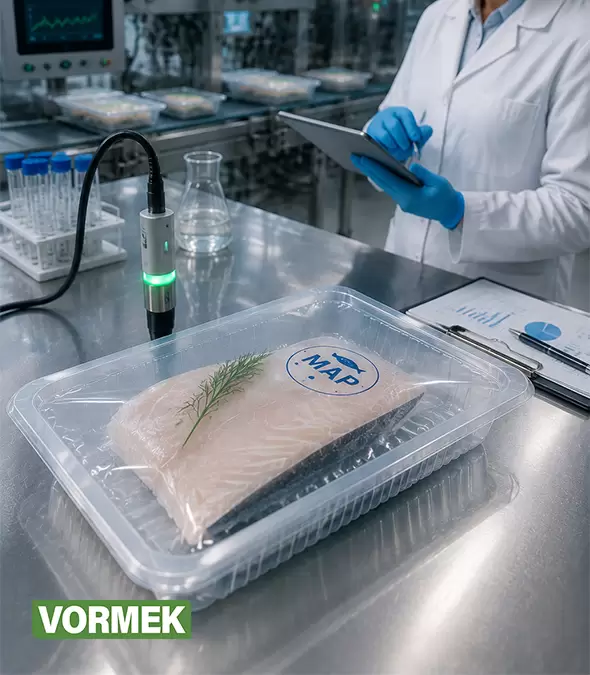
Dieser Artikel untersucht die Landschaft der Technologien zur Erkennung von Lebensmittelbetrug, gegliedert in fünf Hauptkategorien: spektroskopische und bildgebende Verfahren, chromatographische und massenspektrometrische Techniken, DNA-basierte molekulare Assays, neuartige Sensorplattformen und datengesteuerte digitale Ansätze. Für jede Kategorie werden die zugrunde liegenden Prinzipien, Hauptanwendungen und praktischen Überlegungen erörtert. Der Artikel untersucht auch, wie Verpackungsmaschinenhersteller durch die Integration von Detektionstechnologien und Rückverfolgbarkeitssystemen zur Lebensmittelbetrugsprävention in der gesamten Lieferkette beitragen können.
Für Lebensmittelhersteller und Verpackungsfachleute, die ihre Fähigkeiten zur Lebensmittelsicherheit und Authentizitätsprüfung verbessern möchten, bietet das technische Team von Vormek eine fachkundige Beratung zur Integration von Detektionstechnologien in Verpackungslinien.
1. Lebensmittelbetrug verstehen: Definitionen, Treiber und Auswirkungen
1.1 Definition von Lebensmittelbetrug
Lebensmittelbetrug umfasst eine Reihe von betrügerischen Praktiken, einschließlich Verfälschung, Substitution, Produktpiraterie, Falschetikettierung, Verschleierung und nicht genehmigter Verbesserungen. Obwohl verschiedene Definitionen existieren, ist der gemeinsame Nenner die vorsätzliche Täuschung zum wirtschaftlichen Vorteil. Das Europäische Komitee für Normung definiert Lebensmittelbetrug als eine “Diskrepanz zwischen den tatsächlichen Eigenschaften des Lebensmittelprodukts und der entsprechenden Produktangabe”.
Die häufigsten Formen von Lebensmittelbetrug umfassen:
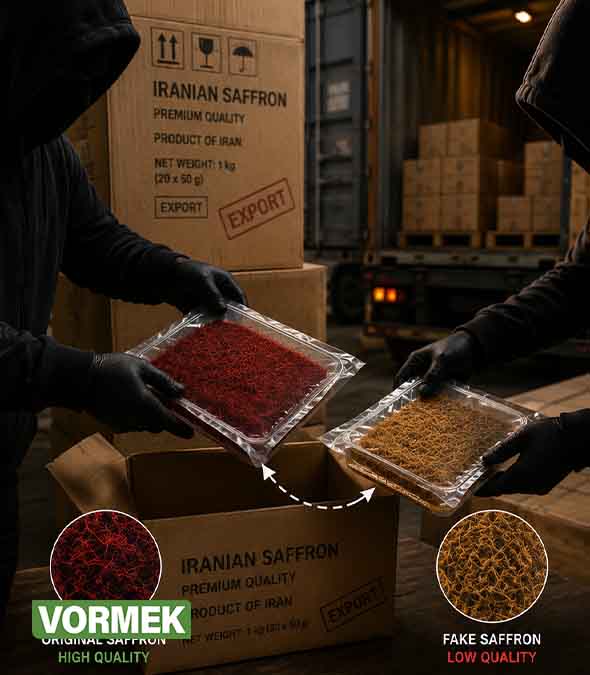
- Verfälschung: Die Zugabe von minderwertigen, nicht zugelassenen oder schädlichen Substanzen zu einem Lebensmittelprodukt. Dies kann das Verdünnen eines Produkts mit billigeren Zutaten (z. B. die Zugabe von Zuckersirup zu Honig) oder das Einbringen nicht erlaubter Substanzen (z. B. technische Farbstoffe in Gewürzen) beinhalten.
- Substitution: Der Ersatz einer hochwertigen Zutat oder eines hochwertigen Produkts durch eine minderwertige Alternative. Der berüchtigte “Pferdefleisch-Skandal” von 2013, bei dem in verarbeiteten Rindfleischprodukten Pferdefleisch gefunden wurde, ist ein Beispiel für diese Praxis.
- Falschetikettierung: Die Angabe falscher oder irreführender Informationen über Herkunft, Zusammensetzung oder Herstellungsverfahren eines Produkts. Dies umfasst die falsche Angabe der geografischen Herkunft (z. B. die Kennzeichnung von Olivenöl als italienisch, obwohl es aus anderen Ländern stammt) und die Behauptung einer Bio- oder Halal-Zertifizierung ohne Berechtigung.
- Produktpiraterie: Die Nachahmung von Verpackung, Markenauftritt oder Produktaussehen, um Verbraucher zu täuschen. Dies zielt oft auf Premiumprodukte ab, bei denen die Markenbekanntheit höhere Preise rechtfertigt.
1.2 Haupttreiber von Lebensmittelbetrug
Die Beständigkeit und Weiterentwicklung von Lebensmittelbetrug kann nicht verstanden werden, ohne die strukturellen Kräfte zu untersuchen, die ihn ermöglichen. Mehrere miteinander verbundene Faktoren tragen zur Verbreitung betrügerischer Praktiken bei:
- Globalisierung und Komplexität der Lieferkette: Das moderne Lebensmittelsystem erstreckt sich über Kontinente, wobei Zutaten und Fertigprodukte mehrere Rechtsräume durchqueren, bevor sie den Verbraucher erreichen. Jeder Übergabepunkt stellt eine potenzielle Schwachstelle dar, an der betrügerische Akteure Verunreinigungen einführen oder Produkte falsch darstellen können.
- Undurchsichtigkeit der Lieferkette: Viele Lieferketten verfügen nicht über eine vollständige Rückverfolgbarkeit oder sind auf Zwischenhändler angewiesen, die Herkunft, Handhabung und Verarbeitungspraktiken verschleiern. Betrügerische Akteure nutzen diesen Mangel an Transparenz aus, indem sie an gefährdeten Stellen Verunreinigungen einführen, insbesondere auf Märkten für Massenrohstoffe oder während des Transports und der Umpackung.
- Wirtschaftliche Anreize: Die hohen Preise, die für authentische, zertifizierte oder herkunftsspezifische Produkte erzielt werden, schaffen eine starke Motivation für Betrug. In einigen dokumentierten Fällen kann die Preisdifferenz zwischen authentischen und verfälschten Produkten 30–40 % übersteigen, was erhebliche finanzielle Anreize für unehrliche Lieferanten darstellt.
- Regulatorische Fragmentierung: Das Fehlen harmonisierter globaler Standards und eine uneinheitliche Durchsetzung in verschiedenen Rechtsräumen schaffen Lücken, die betrügerische Akteure ausnutzen. Produkte, die sich durch mehrere regulatorische Umgebungen bewegen, können unterschiedlichen Kontrollniveaus ausgesetzt sein.
1.3 Auswirkungen auf die öffentliche Gesundheit und die Wirtschaft
Lebensmittelbetrug hat Folgen, die weit über wirtschaftliche Verluste hinausgehen. Nicht deklarierte Substanzen können ernsthafte Gesundheitsrisiken darstellen, wie die Melamin-Kontamination von Säuglingsnahrung in China im Jahr 2008 zeigte, die zu fast 300.000 Erkrankungen von Säuglingen und sechs bekannten Todesfällen führte. Ebenso kann die Zugabe von nicht zugelassenen technischen Farbstoffen zu Gewürzen krebserregende Verbindungen in die Lebensmittelversorgung einbringen.
Die wirtschaftlichen Auswirkungen von Lebensmittelbetrug erstrecken sich auf legitime Hersteller durch Umsatzverluste, Markenschäden und kostspielige Rückrufaktionen. Der “Pferdefleisch-Skandal” beispielsweise verursachte branchenweite Auswirkungen, die Jahre nach der ersten Entdeckung andauerten und das Verbrauchervertrauen in verarbeitete Fleischprodukte in ganz Europa untergruben.
2. Spektroskopische und bildgebende Verfahren
2.1 Prinzipien der spektroskopischen Analyse
Spektroskopische Techniken basieren auf dem Prinzip, dass verschiedene chemische Verbindungen auf charakteristische Weise mit elektromagnetischer Strahlung wechselwirken. Diese Wechselwirkungen erzeugen einzigartige spektrale “Fingerabdrücke”, die zur Identifizierung und Quantifizierung von Bestandteilen in einer Lebensmittelprobe verwendet werden können. Der Hauptvorteil spektroskopischer Methoden ist ihre zerstörungsfreie Natur, die eine schnelle Analyse ohne Probenvorbereitung oder -zerstörung ermöglicht.
- Nahinfrarotspektroskopie (NIR): Die NIR-Spektroskopie misst die Absorption von Nahinfrarotlicht (750–2500 nm) durch molekulare Obertöne und Kombinationen von Grundschwingungen. Die Technik ist besonders empfindlich für O-H-, C-H- und N-H-Bindungen und eignet sich daher gut für die Analyse von Feuchtigkeit, Fett, Protein und Kohlenhydratgehalt in Lebensmitteln. NIR wurde häufig zur Erkennung von Verfälschungen in Honig, Olivenöl und Fleischprodukten eingesetzt.
- Raman-Spektroskopie: Die Raman-Spektroskopie misst die inelastische Streuung von monochromatischem Licht und liefert Informationen über molekulare Schwingungen. Die Technik ergänzt NIR, indem sie empfindlich auf verschiedene funktionelle Gruppen reagiert und besonders nützlich für die Analyse von wässrigen Proben ist, in denen Wasser im Infrarotbereich stark absorbiert.
- Hyperspektrale Bildgebung: Diese fortgeschrittene Technik kombiniert Spektroskopie mit Bildgebung und erzeugt einen dreidimensionalen Datenwürfel, in dem jedes Pixel ein vollständiges spektrales Signal enthält. Die hyperspektrale Bildgebung ermöglicht die gleichzeitige räumliche und spektrale Analyse und erlaubt die Erkennung von Verunreinigungen, die in bestimmten Bereichen einer Probe lokalisiert sind. Aktuelle Forschungen haben die Wirksamkeit der hyperspektralen Bildgebung in Kombination mit Deep Learning für die Honigverfälschungserkennung gezeigt und dabei Klassifikationsgenauigkeiten von fast 99 % erreicht.
2.2 Anwendungen bei der Erkennung von Lebensmittelbetrug
Spektroskopische und bildgebende Verfahren wurden zur Betrugserkennung in zahlreichen Lebensmittelkategorien eingesetzt:
- Honig: Honig gehört zu den drei weltweit am häufigsten verfälschten Lebensmitteln. Honig zugesetzte Zuckersirupe ähneln stark seinen physikochemischen Eigenschaften, was die Erkennung erschwert. Die hyperspektrale Bildgebung, kombiniert mit Convolutional Neural Networks und Long Short-Term Memory Networks, hat eine zuverlässige Unterscheidung zwischen reinem Honig und mehreren Zuckersirup-Verfälschungsstufen gezeigt.
- Olivenöl: Die Substitution von Olivenöl durch billigere Pflanzenöle ist nach wie vor ein häufiger Betrug. Spektroskopische Verfahren können diese Verunreinigungen erkennen, indem sie spektrale Signaturen identifizieren, die für die Fettsäureprofile und Nebenbestandteile der Öle charakteristisch sind.
- Gewürze und Kräuter: Die Zugabe von Füllstoffen, nicht zugelassenen Farbstoffen oder minderwertigen Arten zu Gewürzen und Kräutern kann anhand charakteristischer spektraler Merkmale erkannt werden.
- Fleisch und Fisch: Die hyperspektrale Bildgebung kann die Verfälschung von hochwertigen Fleischprodukten mit billigeren Arten identifizieren und Kontaminationen in verarbeiteten Produkten erkennen.
3. Chromatographische und massenspektrometrische Verfahren
3.1 Prinzipien und Fähigkeiten
Chromatographische Verfahren trennen komplexe Gemische in ihre einzelnen Bestandteile, während die Massenspektrometrie eine molekulare Identifizierung und Quantifizierung mit außergewöhnlicher Empfindlichkeit und Spezifität bietet. In Kombination bieten diese Techniken den Goldstandard für die Authentizitätsprüfung von Lebensmitteln.
- Gaschromatographie (GC): GC trennt flüchtige Verbindungen basierend auf ihren Wechselwirkungen mit einer stationären Phase in einer Säule. Die Technik ist besonders effektiv für die Analyse von Fettsäureprofilen, Aromastoffen und flüchtigen Verunreinigungen.
- Hochleistungsflüssigkeitschromatographie (HPLC): HPLC trennt nichtflüchtige oder thermisch labile Verbindungen und eignet sich daher für die Analyse von Proteinen, Vitaminen und Zusatzstoffen. Sowohl GC als auch HPLC können mit der Massenspektrometrie gekoppelt werden, um eine eindeutige Identifizierung der Verbindungen zu ermöglichen.
- Massenspektrometrie (MS): MS misst das Masse-Ladungs-Verhältnis von ionisierten Molekülen und liefert Informationen über Molekulargewicht und Struktur. Die Tandem-Massenspektrometrie (MS/MS) bietet eine erhöhte Selektivität durch mehrere Stufen der Fragmentierung und Analyse.
Jüngste Fortschritte in der Flugzeit-Massenspektrometrie (TOF-MS) und der umfassenden zweidimensionalen Chromatographie (GC×GC) haben die Fähigkeiten dieser Methoden weiter erweitert und bieten eine höhere Auflösung und die Fähigkeit zur Analyse zunehmend komplexer Lebensmittelmatrizen.
3.2 Anwendungen bei der Betrugserkennung
Chromatographisch-massenspektrometrische Verfahren sind unverzichtbare Werkzeuge zur Erkennung von Betrug in komplexen Lebensmittelmatrizen:
- Erkennung nicht zugelassener Farbstoffe: Technische Farbstoffe, die Lebensmitteln wie Gewürzen, Speiseölen und anderen Produkten betrügerisch zugesetzt werden, können mit HPLC-MS und verwandten Techniken in Spurenkonzentrationen nachgewiesen werden. Aktuelle Forschungen unterstreichen die anhaltende Herausforderung, illegale fettlösliche Azofarbstoffe wie Sudan I-IV in fettreichen Lebensmitteln zu erkennen.
- Authentifizierung von ätherischen Ölen und Aromen: GC-MS wird häufig zur Authentifizierung von ätherischen Ölen und Lebensmittelaromen eingesetzt, indem die Profile der flüchtigen Verbindungen mit denen authentischer Referenzmaterialien verglichen werden.
- Erkennung von chemischen Verunreinigungen: Chromatographische Verfahren spielen eine entscheidende Rolle bei der Erkennung von Migrationsprodukten aus Verpackungen, chemischen Rückständen und Verunreinigungen, die durch betrügerische Praktiken oder Kontamination in der Lieferkette eingetragen werden können.
- Allergenerkennung: Die Anforderungen der ISO 22002-100:2025 an das Allergenmanagement haben die Entwicklung validierter Analysemethoden vorangetrieben, wobei chromatographische Techniken häufig zur Bestätigung eingesetzt werden.
4. Molekulare DNA-basierte Assays
4.1 Prinzipien der DNA-basierten Authentifizierung
DNA-basierte Verfahren bieten eine artspezifische Identifizierung mit außergewöhnlicher Genauigkeit und Empfindlichkeit. Da DNA-Sequenzen für jede Art einzigartig und durch die Verarbeitung relativ stabil sind, können diese Verfahren Lebensmittelprodukte auch dann authentifizieren, wenn die physikalischen Eigenschaften der Zutaten verändert wurden.
- DNA-Barcoding: Dieser Ansatz verwendet kurze, standardisierte Genregionen als “Barcodes” für die Artenidentifizierung. Bei Pflanzen werden häufig die Regionen rbcL und ITS verwendet, während Tiere typischerweise anhand des mitochondrialen Cytochrom-c-Oxidase-I-Gens (COI) identifiziert werden. DNA-Barcoding hat seine Wirksamkeit bei der Identifizierung von Pflanzenarten in verarbeiteten Lebensmitteln, der Erkennung nicht deklarierter Zutaten und der Bewertung der Biodiversität gezeigt.
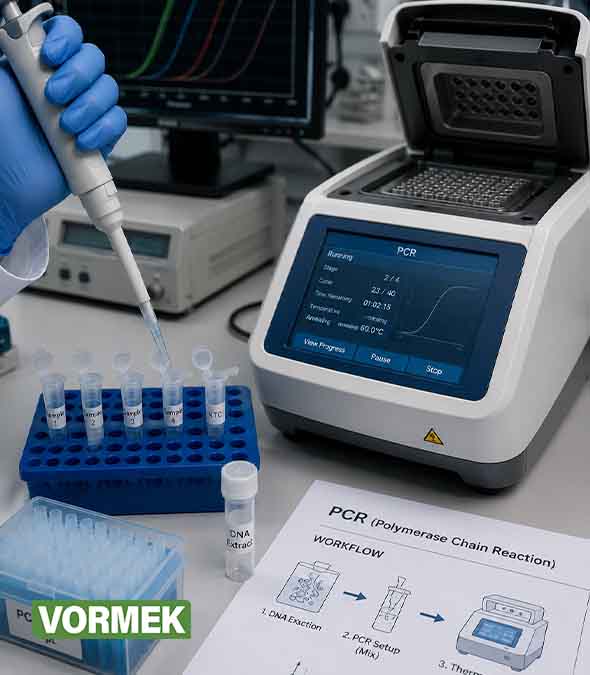
- Polymerase-Kettenreaktion (PCR): Die PCR amplifiziert spezifische DNA-Sequenzen und ermöglicht den Nachweis von Zielarten selbst in Spurenmengen. Die Echtzeit-PCR (qPCR) und die digitale PCR bieten quantitative Fähigkeiten und ermöglichen die Bestimmung von Artenanteilen in gemischten Produkten.
- DNA-Sequenzierung: Die Next-Generation-Sequenzierung (NGS) ermöglicht den gleichzeitigen Nachweis mehrerer Arten in komplexen Produkten und ist daher wertvoll für die Identifizierung von Verfälschungen mit nicht deklarierten Arten.
4.2 Anwendungen bei der Betrugserkennung
DNA-basierte Verfahren haben sich als besonders wertvoll für die Erkennung von Arten-Substitution und Falschetikettierung erwiesen:
- Fleischauthentifizierung: DNA-Tests waren maßgeblich an der Erkennung der Substitution von hochwertigen Fleischsorten durch billigere Alternativen beteiligt. Der “Pferdefleisch-Skandal” stützte sich auf DNA-Tests, um das Vorhandensein von Pferdefleisch in verarbeiteten Rindfleischprodukten zu bestätigen.
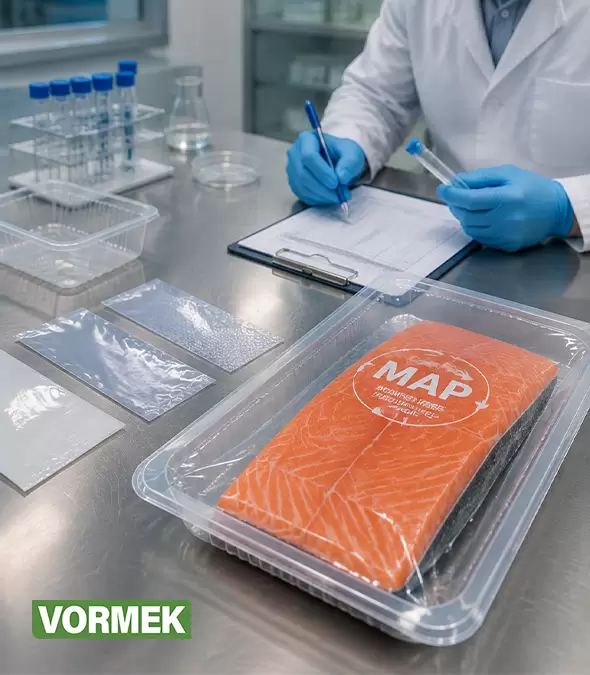
- Fisch und Meeresfrüchte: Die Substitution von hochwertigen Fischarten durch billigere Alternativen ist in der Fischereiindustrie weit verbreitet. DNA-Barcoding wurde in zahlreichen Studien zur Authentifizierung von Fisch- und Meeresfrüchteprodukten eingesetzt.
- Pflanzliche Produkte: DNA-Barcoding ermöglicht die Überprüfung von Pflanzenarten in verarbeiteten Lebensmitteln, einschließlich der Erkennung nicht deklarierter Zutaten oder Kreuzkontaminationen. Die Forschung hat eine hohe Übereinstimmung zwischen Etikettenangaben und Sequenzierungsergebnissen gezeigt, obwohl Fälle von nicht deklarierten Arten festgestellt wurden.
- Halal-Authentifizierung: DNA-Tests können die Artenidentität in Halal-Produkten überprüfen und das Vorhandensein von nicht-Halal-Arten wie Schwein oder nicht ordnungsgemäß geschlachteten Tieren erkennen.
5. Neuartige Sensorplattformen
5.1 Elektronische Nase und elektronische Zunge
Systeme der elektronischen Nase (e-nose) und der elektronischen Zunge (e-tongue) ahmen die menschliche Geruchs- und Geschmackswahrnehmung mithilfe von Sensorarrays nach. Jeder Sensor reagiert auf verschiedene chemische Verbindungen und erzeugt ein charakteristisches Reaktionsmuster oder einen “Fingerabdruck” für jede Probe.
- Elektronische Nase: E-Nose-Systeme erkennen flüchtige organische Verbindungen (VOCs) mithilfe von Sensorarrays, die auf verschiedene chemische Klassen reagieren. Die resultierenden Muster können mit chemometrischen Methoden analysiert werden, um Betrug oder Kontamination zu identifizieren. Die E-Nose-Technologie wurde zur Erkennung von Verfälschungen in Getränken, Milchprodukten, Kaffee und Gewürzen eingesetzt.
- Elektronische Zunge: E-Tongue-Systeme messen geschmacksrelevante Verbindungen in flüssigen Proben. Sie haben sich als nützlich für die Erkennung subtiler Veränderungen in Geschmacksprofilen erwiesen, die durch Verfälschung oder Verderb verursacht werden.
5.2 Biosensoren
Biosensoren enthalten biologische Erkennungselemente wie Enzyme, Antikörper oder DNA-Sonden, um Zielverbindungen selektiv zu erfassen. Wenn das Ziel an das Erkennungselement bindet, wird ein Signal (elektrisch, optisch oder elektrochemisch) erzeugt, das quantifiziert werden kann.
- Elektrochemische Biosensoren: Diese bieten eine schnelle, empfindliche Detektion mit portabler, kostengünstiger Instrumentierung. Aktuelle Forschungen haben elektrochemische Sensoren zur Erkennung nicht zugelassener Farbstoffe in Lebensmitteln hervorgehoben.
- Smartphone-basierte Assays: Die Integration von Sensoren mit Smartphone-Technologie ermöglicht Vor-Ort-Tests mit minimaler Ausrüstung. Kolorimetrische Assays, die mit Smartphone-Kameras analysiert werden, haben das Potenzial für eine schnelle, kostengünstige Farbstofferkennung gezeigt.
6. Datengesteuerte und digitale Ansätze
6.1 Maschinelles Lernen und künstliche Intelligenz
Die Komplexität der Lebensmittelbetrugserkennung hat das Interesse an maschinellem Lernen und künstlicher Intelligenz für die Analyse der großen, mehrdimensionalen Datensätze, die von modernen Analysemethoden erzeugt werden, erhöht.
- Anwendungen des maschinellen Lernens: Eine systematische Übersicht über 69 Studien ergab, dass maschinelles Lernen und Deep Learning die wichtigsten KI-Ansätze zur Erkennung von Lebensmittelbetrug sind. Support Vector Machines (SVM) und Convolutional Neural Networks (CNN) erwiesen sich als die am häufigsten angewandten Algorithmen.
- Datenmodalitäten: Spektrale und bildgebende Daten werden überwiegend für die KI-basierte Betrugserkennung verwendet, wobei die meisten Modelle mit überwachten Lernansätzen entwickelt wurden.
- Leistung: Die überprüften Studien zeigten eine starke Modellleistung bei der Analyse von Daten aus kontrollierten Umgebungen. Herausforderungen in Bezug auf Datenverfügbarkeit, Interpretierbarkeit und Verallgemeinerbarkeit bleiben jedoch bestehen.
- Deep Learning: Die Kombination von hyperspektraler Bildgebung mit Deep-Learning-Ansätzen hat eine hohe Klassifikationsgenauigkeit über Verfälschungsstufen bei Honig und anderen Produkten erzielt.
6.2 Blockchain und Internet der Dinge
Die Blockchain-Technologie bietet einen grundlegend anderen Ansatz zur Prävention von Lebensmittelbetrug: die Erstellung unveränderlicher Aufzeichnungen von Lieferkettentransaktionen, die eine End-to-End-Rückverfolgbarkeit ermöglichen.
- Rückverfolgbarkeit und Transparenz: Das dezentrale, manipulationssichere Hauptbuch der Blockchain erstellt einen überprüfbaren Nachweis des Produktwegs vom Erzeuger bis zum Verbraucher. In Kombination mit IoT-Sensoren, die Temperatur, Standort und andere kritische Parameter überwachen, bietet das System eine Echtzeit- und sichere Sichtbarkeit der Lieferkettenbedingungen.
- Integration mit Analysetechnologien: Die Blockchain kann analytische Signaturen (wie spektrale Fingerabdrücke oder DNA-Barcodes) mit Produkten verknüpfen und so unverfälschbare Authentizitätsnachweise erstellen. Diese Integration ermöglicht die Überprüfung an mehreren Punkten in der Lieferkette.
- Kommerzielle Implementierung: Große Einzelhändler haben Blockchain-basierte Rückverfolgbarkeitssysteme implementiert, die die Rückverfolgbarkeitszeit von Tagen auf Sekunden reduzieren. Die Technologie wurde in verschiedenen risikoreichen Lebensmittelkategorien und auf standardisierten Plattformen eingesetzt, was ihre praktische Anwendbarkeit demonstriert.
7. Integration in Verpackungsmaschinen
Die Verpackungsphase stellt eine entscheidende Gelegenheit für die Prävention von Lebensmittelbetrug und die Authentizitätsprüfung dar. Verpackungsmaschinenhersteller, einschließlich Vormek, können durch mehrere Mechanismen zur Minderung von Lebensmittelbetrug beitragen:
- In-line-analytische Integration: Verpackungslinien können mit Sensoren und Analysatoren ausgestattet werden, die die Produktauthentizität zum Zeitpunkt der Verpackung überprüfen. In Füllstationen integrierte NIR- oder Raman-Spektroskopiesysteme können Produkte schnell auf Verfälschungen untersuchen.
- Sichere Verpackung: Fälschungssicherungstechnologien, einschließlich manipulationssicherer Siegel, holografischer Merkmale und eindeutiger Serialisierungscodes, können von Verpackungsmaschinen aufgebracht werden.
- Erfassung von Rückverfolgbarkeitsdaten: Verpackungsmaschinen können Rückverfolgbarkeitsdaten erfassen und aufzeichnen, die in Blockchain- oder andere sichere Rückverfolgbarkeitssysteme eingespeist werden. Die Automatisierungslösungen von Vormek können in diese Systeme integriert werden, um sicherzustellen, dass kritische Daten ohne Verlangsamung der Produktion erfasst werden.
- Hygienisches Design: Für Reinigbarkeit und Lebensmittelsicherheit ausgelegte Verpackungsanlagen unterstützen die Hygienevorschriften, die der authentischen Produktion zugrunde liegen. Die hygienischen Konstruktionsprinzipien von Vormek, einschließlich Edelstahlkonstruktion und Waschfähigkeit, unterstützen die Aufrechterhaltung von sauberen, sicheren und authentischen Produktionsumgebungen.
8. Fazit
Die Erkennung und Prävention von Lebensmittelbetrug hat sich von einer Übung zur Einhaltung gesetzlicher Vorschriften zu einer anspruchsvollen technischen Herausforderung entwickelt, die die Integration mehrerer analytischer und digitaler Technologien erfordert. Spektroskopische und bildgebende Verfahren bieten schnelle, zerstörungsfreie Screening-Fähigkeiten; chromatographische und massenspektrometrische Techniken bieten eine Bestätigung nach dem Goldstandard; DNA-basierte Verfahren ermöglichen eine Authentifizierung auf Artenebene mit außergewöhnlicher Empfindlichkeit; Sensorplattformen bieten portable, kostengünstige Detektion; und datengesteuerte Ansätze, einschließlich KI und Blockchain, verbessern die Interpretation und Rückverfolgbarkeit.
Der effektivste Ansatz zur Minderung von Lebensmittelbetrug kombiniert diese Technologien in einem umfassenden Rahmen, der sich mit Erkennung, Abschreckung, Prävention und Unterbrechung befasst. ISO 22002-100:2025 hat diese Agenda vorangetrieben, indem sie explizite Anforderungen an die analytische Verifizierung und Rückverfolgbarkeit eingeführt hat und die Erwartung verstärkt, dass Kontrollmaßnahmen wissenschaftlich begründet und reproduzierbar sein müssen.
Für Verpackungsmaschinenhersteller liegt die Chance in der Integration dieser Technologien in Verpackungsprozesse und der Unterstützung der Rückverfolgbarkeitsinfrastruktur, die der Lebensmittelinregrität zugrunde liegt. Durch die Ermöglichung einer sicheren, überprüfbaren Verpackung, die zu transparenten Lieferketten beiträgt, können Verpackungsanlagen eine zentrale Rolle beim Schutz von Verbrauchern und legitimen Herstellern vor den Folgen von Lebensmittelbetrug spielen.
Vormek bietet integrierte Verpackungslösungen, die die Authentizitätsprüfung von Lebensmitteln durch Automatisierungsintegration, Erfassung von Rückverfolgbarkeitsdaten und hygienisches Design unterstützen. Unser technisches Team kann Ihnen bei der Auswahl und Konfiguration von Anlagen helfen, die Ihre Anforderungen an Lebensmittelsicherheit und Authentizität erfüllen.
Häufig gestellte Fragen (FAQ)
1. Was ist Lebensmittelbetrug und wie wird er definiert?
Lebensmittelbetrug bezeichnet die vorsätzliche und absichtliche Substitution, Zugabe, Manipulation oder falsche Darstellung von Lebensmitteln, Lebensmittelzutaten oder Lebensmittelverpackungen zum wirtschaftlichen Vorteil. Das Europäische Komitee für Normung definiert ihn als eine “Diskrepanz zwischen den tatsächlichen Eigenschaften des Lebensmittelprodukts und der entsprechenden Produktangabe”. Häufige Formen sind Verfälschung, Substitution, Falschetikettierung und Produktpiraterie.
2. Welches sind die am häufigsten verfälschten Lebensmittelprodukte?
Die am häufigsten verfälschten Lebensmittelprodukte sind Honig, Milch und Milchprodukte, Olivenöl, Fleisch und Fleischprodukte, Fisch und Meeresfrüchte, Gewürze und Kräuter, Kaffee und Fruchtsäfte. Diese Produkte sind aufgrund der hohen Nachfrage, der hohen Preise und der komplexen Lieferketten, die eine Verfälschung ohne spezielle Tests schwer erkennbar machen, besonders anfällig.
3. Wie kann DNA-Testing Lebensmittelbetrug erkennen?
DNA-Testing erkennt Lebensmittelbetrug, indem es auf genetischer Ebene die in einem Lebensmittelprodukt vorhandenen Arten identifiziert. DNA-Barcoding verwendet standardisierte Genregionen zur Artenidentifizierung, während die PCR spezifische DNA-Sequenzen amplifiziert, um Zielarten selbst in Spurenmengen nachzuweisen. Die Next-Generation-Sequenzierung ermöglicht den gleichzeitigen Nachweis mehrerer Arten in komplexen Produkten. Diese Verfahren sind besonders wirksam bei der Erkennung von Arten-Substitution in Fleisch, Meeresfrüchten und pflanzlichen Produkten.
4. Welche Rolle spielt die Blockchain bei der Prävention von Lebensmittelbetrug?
Die Blockchain-Technologie erstellt ein unveränderliches, dezentrales Hauptbuch von Lieferkettentransaktionen und ermöglicht so eine End-to-End-Rückverfolgbarkeit vom Erzeuger bis zum Verbraucher. In Kombination mit IoT-Sensoren ermöglicht die Blockchain die Echtzeitüberwachung kritischer Parameter wie Temperatur und Standort. Große Einzelhändler haben Blockchain-Systeme implementiert, die die Rückverfolgbarkeitszeit von Tagen auf Sekunden reduzieren und manipulationssichere Aufzeichnungen zur Überprüfung der Produktauthentizität und -herkunft bieten.
5. Wie hoch sind die Kosten von Lebensmittelbetrug für die Weltwirtschaft?
Die wirtschaftlichen Kosten von Lebensmittelbetrug werden auf jährlich 37 bis 65 Milliarden US-Dollar geschätzt. Die tatsächlichen Kosten sind jedoch wahrscheinlich weit höher, wenn man immaterielle Folgen wie Reputationsschäden, gesundheitliche Auswirkungen, Verlust des Verbrauchervertrauens und den Verlust von Menschenleben durch gefährliche nicht deklarierte Inhaltsstoffe berücksichtigt.
6. Wie kann Verpackungsmaschinerie zur Prävention von Lebensmittelbetrug beitragen?
Verpackungsmaschinen können durch in-line-analytische Integration (z. B. Spektroskopiesysteme für schnelles Verfälschungsscreening), Fälschungssicherungsmerkmale (manipulationssichere Siegel, holografische Elemente, eindeutige Serialisierung), Erfassung von Rückverfolgbarkeitsdaten für Blockchain- oder sichere Rückverfolgbarkeitssysteme und hygienisches Design, das authentische, sichere Produktionsumgebungen unterstützt, zur Prävention von Lebensmittelbetrug beitragen.
7. Was ist der Unterschied zwischen Lebensmittelbetrug und Lebensmittelverfälschung?
Verfälschung ist eine spezifische Art von Lebensmittelbetrug, die die Zugabe von minderwertigen, nicht zugelassenen oder schädlichen Substanzen zu einem Lebensmittelprodukt beinhaltet. Lebensmittelbetrug ist der übergeordnete Begriff, der Verfälschung, Substitution, Falschetikettierung, Produktpiraterie, Verschleierung und nicht genehmigte Verbesserungen umfasst – alles Praktiken, die eine vorsätzliche Täuschung zum wirtschaftlichen Vorteil beinhalten.
8. Welche Beziehung besteht zwischen ISO-Normen und der Erkennung von Lebensmittelbetrug?
Die ISO 22002-100:2025 hat die Anforderungen an die Minderung von Lebensmittelbetrug und die Authentizitätsprüfung verschärft und explizite Anforderungen an Schwachstellenbewertungen eingeführt, die durch geeignete analytische Verifizierungsmethoden gestützt werden. Die Norm betont die analytische Verifizierung mit empfindlichen instrumentellen Techniken und stellt einen Wandel von der dokumentationsbasierten Compliance zur evidenzbasierten, wissenschaftlich fundierten Lebensmittelsicherheitsgewährleistung dar.
9. Welche neuen Technologien sind am vielversprechendsten für die Erkennung von Lebensmittelbetrug?
Mehrere neue Technologien sind besonders vielversprechend: Die hyperspektrale Bildgebung in Kombination mit Deep Learning hat bei der Erkennung von Honigverfälschung eine Genauigkeit von fast 99 % erreicht; handgehaltene und Smartphone-basierte Spektroskopie ermöglicht tragbare Vor-Ort-Tests; CRISPR-basierte Diagnostik bietet eine hochspezifische DNA-Erkennung; und Lab-on-a-Chip-Geräte mit integrierter KI-Analyse versprechen schnelle, automatisierte Tests.
Aufruf zum Handeln
Verbessern Sie Ihre Fähigkeiten zur Lebensmittelsicherheit und Authentizitätsprüfung mit den Verpackungslösungen von Vormek. Unsere Schalenversiegelungsgeräte, Thermoformmaschinen und integrierten Verpackungslinien sind so konstruiert, dass sie sichere, rückverfolgbare und hygienische Verpackungsprozesse unterstützen, die zur Lebensmittelinregrität beitragen.
Kontaktieren Sie noch heute Vormek Packaging Solutions für eine Beratung mit unserem Verpackungstechnik-Team. Wir können Ihnen bei der Integration von Lebensmittelsicherheitstechnologien und Rückverfolgbarkeitssystemen in Ihre Verpackungsabläufe helfen.
Vormek Packaging Solutions — Engineering Excellence in Food Safety and Packaging Integrity.