Einleitung: Die wirtschaftliche Bedeutung der Verpackung von Heimtiernahrung
Der Markt für Heimtiernahrung hat in den letzten Jahren ein bemerkenswertes Wachstum erfahren. Steigende Haustierbesitzerzahlen, das Aufkommen spezialisierter Marken und ein wachsendes Bewusstsein der Verbraucher für die Tierernährung haben die Verpackungsqualität zu einer obersten Priorität für Hersteller von Hunde-, Katzen- und anderen Tiernahrungsprodukten gemacht.
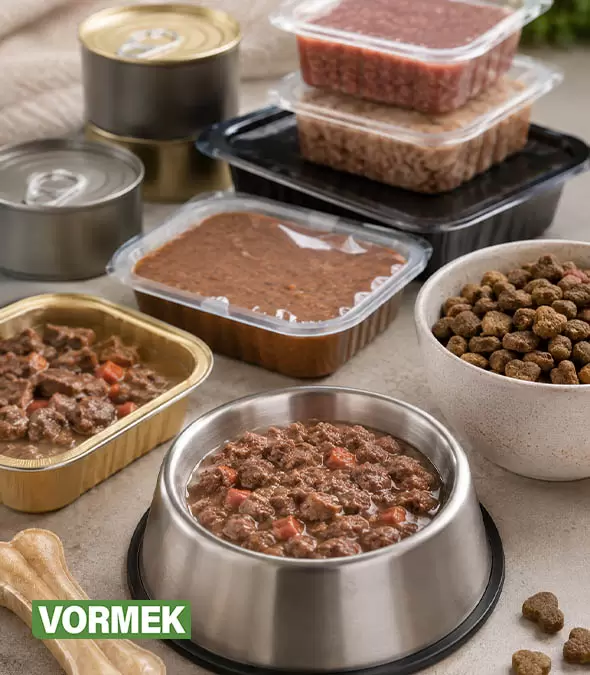
Produkte wie Nassfutter für Hunde, Nassfutter für Katzen, fleischbasierte Snacks, Nahrungsergänzungsmittel und zubereitete Mahlzeiten für Tiere enthalten Feuchtigkeit, Fette und empfindliche Proteinverbindungen, die eine standardisierte, sichere Verpackung erfordern. Die richtige Verpackungstechnologie kann die Haltbarkeit verlängern, Fettoxidation verhindern, die Produktqualität erhalten und die optische Attraktivität bewahren, die sowohl Tiere als auch ihre Besitzer anspricht.
Im heutigen wettbewerbsintensiven Markt ist eine professionelle Verpackung nicht nur eine Schutzschicht. Sie schafft Vertrauen bei den Verbrauchern, differenziert Marken und kommuniziert Qualität am Verkaufsort. Tierbesitzer werden zunehmend anspruchsvoller, behandeln ihre Tiere als Familienmitglieder und erwarten von der Tiernahrung die gleichen Qualitäts- und Sicherheitsstandards wie von ihrer eigenen Nahrung.
Hält Ihre Verpackung für Heimtiernahrung mit den Marktanforderungen Schritt? Das Ingenieurteam von Vormek ist spezialisiert auf Verpackungslösungen für nasse und trockene Tiernahrung, Snacks und Ergänzungsmittel. Kontaktieren Sie uns, um Ihre spezifischen Anforderungen zu besprechen.
Die besonderen Herausforderungen der Verpackung von Heimtiernahrung verstehen
Produktvielfalt und ihre Auswirkungen
Heimtiernahrung umfasst eine bemerkenswert vielfältige Palette von Produkten, die jeweils unterschiedliche Verpackungsanforderungen haben:
Trockene Heimtiernahrung (Kibble)
Niedriger Feuchtigkeitsgehalt (typischerweise 8-12 %), lagerstabil, aber anfällig für Fettoxidation und Verlust der Schmackhaftigkeit. Die Verpackung muss hervorragende Sauerstoff- und Feuchtigkeitsbarrieren bieten und gleichzeitig einen bequemen Zugang ermöglichen.
Nasse Heimtiernahrung (Dosen und Beutel)
Hoher Feuchtigkeitsgehalt (typischerweise 70-80 %), erfordert hermetische Versiegelung, um mikrobiellen Verderb zu verhindern. Die Verpackung muss der Retortenverarbeitung (Hitzesterilisation) standhalten und die Siegelintegrität während der gesamten Verteilung aufrechterhalten.
Halbfeuchte Heimtiernahrung
Mittlerer Feuchtigkeitsgehalt (typischerweise 15-30 %), enthält oft Feuchthaltemittel, um die Textur zu erhalten. Die Verpackung muss ein Gleichgewicht zwischen Feuchtigkeitserhaltung und Schutz vor mikrobiellem Wachstum herstellen.
Fleischbasierte Snacks und Kausnacks
Variabler Feuchtigkeitsgehalt, oft mit hohem Fettgehalt, der einen Sauerstoffbarriereschutz erfordert, um Ranzigkeit zu verhindern. Die Verpackung muss die Frische und Attraktivität erhalten und gleichzeitig für die Tierbesitzer bequem sein.
Ergänzungsmittel und Funktionsprodukte für Heimtiere
Enthalten oft empfindliche Inhaltsstoffe wie Vitamine, Probiotika oder Omega-Fettsäuren, die eine Verpackung erfordern, die vor Licht, Sauerstoff und Feuchtigkeit schützt.
Kritische Qualitätsfaktoren bei Heimtiernahrung
Schmackhaftigkeit und Aromaerhaltung
Haustiere treffen ihre Futterwahl aufgrund von Geruch und Textur. Die Verpackung muss das Aroma und die Attraktivität des Produkts während seiner gesamten Haltbarkeitsdauer bewahren. Der Verlust von Aroma kann die Attraktivität des Produkts für Haustiere erheblich verringern.
Oxidative Stabilität
Heimtiernahrung enthält oft hohe Anteile an Fetten und Ölen, die anfällig für oxidative Ranzigkeit sind. Dies führt zu Fehlaromen, reduziert den Nährwert und kann das Produkt ungenießbar machen. Die Sauerstoffbarriere ist für die Haltbarkeit unerlässlich.
Feuchtigkeitskontrolle
Produkte mit niedrigem Feuchtigkeitsgehalt (trockene Kibble) müssen vor Feuchtigkeitseintritt geschützt werden, der zu Altbackenwerden, Schimmelbildung und Verlust der Knackigkeit führen kann. Produkte mit hohem Feuchtigkeitsgehalt müssen vor Feuchtigkeitsverlust geschützt werden, der zu unerwünschten Texturveränderungen führen kann.
Mikrobiologische Sicherheit
Produkte mit hohem Feuchtigkeitsgehalt sind anfällig für mikrobiellen Verderb, wenn sie nicht ordnungsgemäß verarbeitet und verpackt werden. Hermetische Versiegelung und geeignete Barriereeigenschaften sind für die Gewährleistung der Produktsicherheit unerlässlich.
Nährstofferhaltung
Viele Heimtiernahrungen enthalten Vitamine, Mineralien und andere Nährstoffe, die mit der Zeit abgebaut werden können. Eine Verpackung, die vor Sauerstoff, Licht und Feuchtigkeit schützt, hilft, die Nährstoffintegrität zu erhalten.
Vergleich der Verpackungstechnologien für Heimtiernahrung
Die Wahl der Verpackungstechnologie hängt von der Produktart, dem Feuchtigkeitsgehalt, den Haltbarkeitsanforderungen und dem Zielmarkt ab. Die folgende Tabelle gibt eine vergleichende Übersicht:
| Verpackungstechnologie | Qualitätserhaltung | Eignung für Nassprodukte |
|---|---|---|
| Standard-Behälter mit Deckel | Mäßig | Geeignet |
| Schalenversiegelungsanlagen | Hoch | Hoch geeignet |
| Vakuumverpackung | Hoch | Geeignet |
| MAP (Schutzgasverpackung) | Sehr hoch | Hoch geeignet |
| Thermoformung | Sehr hoch | Geeignet für hohes Volumen |
| Retortenbeutel | Sehr hoch | Hoch geeignet |
Für nasse Heimtiernahrung gehören die Schalenversiegelung und die MAP-Technologie zu den gebräuchlichsten industriellen Lösungen. Die folgenden Abschnitte bieten eine detaillierte Analyse der einzelnen Technologien.
Detaillierte Analyse der Verpackungstechnologien für Heimtiernahrung
Schalenversiegelung für Heimtiernahrung
Die Schalenversiegelung ist eine der vielseitigsten und am weitesten verbreiteten Verpackungstechnologien für nasse und halbfeuchte Heimtiernahrung. Bei diesem Verfahren wird das Produkt in vorgeformte Schalen gegeben und anschließend eine Deckelfolie mit Wärme und Druck darüber versiegelt.
Anwendungen der Schalenversiegelung bei Heimtiernahrung
- Portionen von Nassfutter (Einzel- und Mehrfachportionen)
- Halbfeuchte Snacks und Leckerlis
- Pastetenartige Produkte
- Premium- und Super-Premium-Produkte für Heimtiere
- Produkte, die eine attraktive Einzelhandelspräsentation erfordern
Wichtigste Vorteile der Schalenversiegelung
- Flexibilität: Schnelle Umstellung zwischen Schalengrößen und -formaten, sodass Hersteller mehrere Produktlinien auf derselben Ausrüstung bearbeiten können.
- Produktpräsentation: Klare, attraktive Verpackungen, die das Produkt präsentieren und den Verbrauchern Qualität signalisieren.
- Integrität: Hermetische Siegel, die Kontamination, Leckagen und Produktverschlechterung verhindern.
- Skalierbarkeit: Geeignet für manuelle, halbautomatische und vollautomatische Linien, die an die Produktionsmengen angepasst werden können.
- MAP-Kompatibilität: Einfache Integration von Gasspülung für verlängerte Haltbarkeit.
- Materialkompatibilität: Funktioniert mit einer breiten Palette von Schalenmaterialien (PET, PP, APET, CPET, Aluminium) und Folien.
Schalenmaterialien für Heimtiernahrung
| Material | Eigenschaften | Typische Anwendungen |
|---|---|---|
| PET | Hohe Klarheit, gute Barriere | Premium-Nassfutter, sichtbare Produkte |
| PP | Gute Klarheit, Hitzebeständigkeit | Hitzebehandelte Produkte |
| APET/CPET | Hitzebeständigkeit, gute Barriere | Retortierbare Produkte |
| Aluminium | Hervorragende Barriere, Premium-Gefühl | Hochwertige Produkte, verlängerte Haltbarkeit |
| Karton | Umweltfreundlich, gute Bedruckbarkeit | Premium-Marken, nachhaltigkeitsorientiert |
MAP-Technologie für Heimtiernahrung
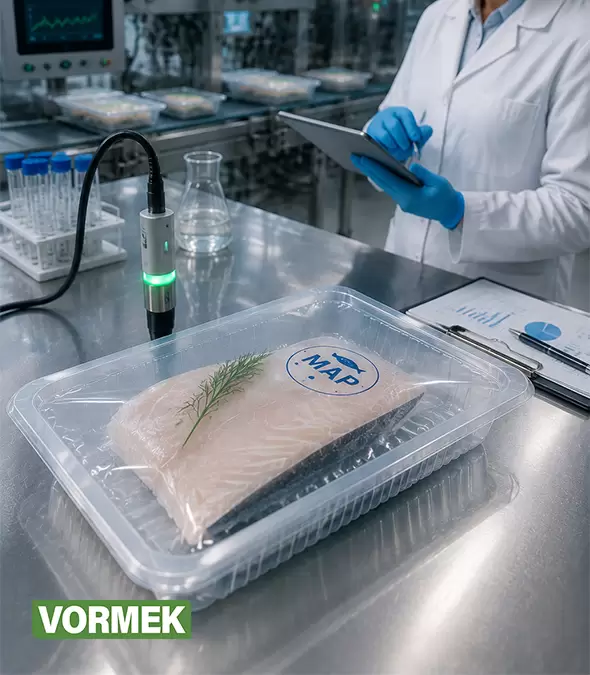
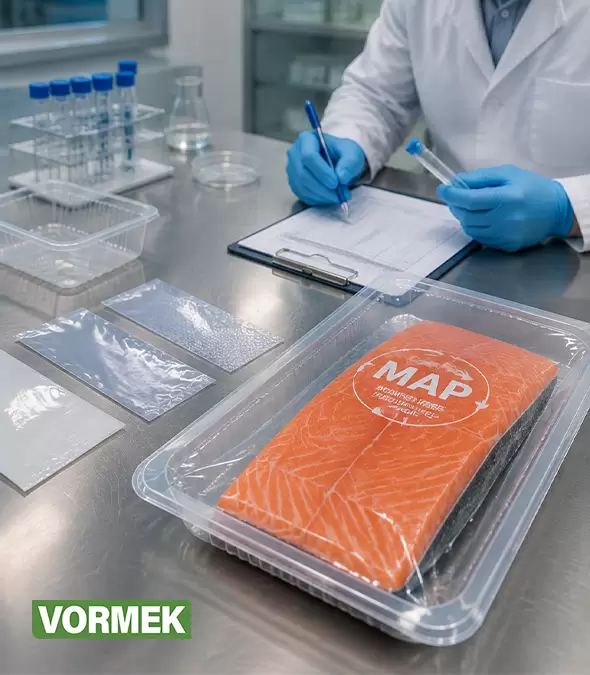
Die Schutzgasverpackung (MAP) ist für Heimtiernahrung, insbesondere für Produkte, die empfindlich auf Oxidation und mikrobielles Wachstum reagieren, sehr wirksam. Durch die Anpassung der Gaszusammensetzung im Inneren der Verpackung kann MAP die Haltbarkeit erheblich verlängern und die Produktqualität erhalten.
Vorteile von MAP für Heimtiernahrung
- Verlängerte Haltbarkeit: MAP kann die Haltbarkeit in Abhängigkeit von Produkt und Gasmischung erheblich verlängern.
- Qualitätserhaltung: Erhält Nährwert, Textur, Farbe und Aroma.
- Oxidationskontrolle: Niedriger Sauerstoffgehalt verhindert Fettranzigkeit und Nährstoffabbau.
- Mikrobielle Kontrolle: CO₂ hemmt Verderbsorganismen in Produkten mit hohem Feuchtigkeitsgehalt.
Vakuumverpackung für Heimtiernahrung
Die Vakuumverpackung ist eine wirksame Option für bestimmte Heimtiernahrungsprodukte, insbesondere fleischbasierte Snacks, Kausnacks und Produkte, bei denen die Sauerstoffentfernung Priorität hat.
Anwendungen der Vakuumverpackung
- Fleischbasierte Kausnacks und Leckerlis (Jerky, Zahnpflege-Kausnacks)
- Halbfeuchte Produkte
- Premium-Proteinprodukte
- Produkte mit langer Haltbarkeit
- Produkte für den Export und erweiterte Verteilung
Vorteile der Vakuumverpackung
- Sauerstoffentfernung: Vollständige Sauerstoffeliminierung verhindert oxidative Ranzigkeit.
- Verlängerte Haltbarkeit: Vakuum kann die Haltbarkeit für geeignete Produkte erheblich verlängern.
- Kompakte Verpackung: Die enge Folie reduziert die Verpackungsgröße und den Lagerbedarf.
- Kosteneffizient: Im Allgemeinen kostengünstiger als MAP-Geräte.
- Bewährte Technologie: Gut etabliert mit umfangreicher Branchenerfahrung.
Einschränkungen der Vakuumverpackung
- Produktverformung: Der Vakuumdruck kann weiche oder empfindliche Produkte verformen.
- Präsentation: Die enge Folie bietet möglicherweise nicht die gleiche optische Attraktivität wie schalenversiegelte Produkte.
- Flüssigkeitsverlust: Während des Vakuumierens kann Feuchtigkeit aus dem Produkt extrahiert werden.
- Nicht für alle Produkte geeignet: Produkte mit scharfen Kanten (Kausnacks mit Knochen) können die Folie durchstechen.
Thermoformung für Heimtiernahrung
Die Thermoformung ist die bevorzugte Technologie für die Herstellung von Heimtiernahrung in großen Stückzahlen. Diese Systeme formen Schalen aus einer Folienrolle, befüllen sie mit dem Produkt und versiegeln sie in einem einzigen, kontinuierlichen Arbeitsgang.
Anwendungen der Thermoformung
- Großvolumige Produktion von Nassfutter für Heimtiere
- Produkte für den Massenmarkt
- Mehrfachportionen-Verpackungen
- Produkte, die maximale Effizienz und Konsistenz erfordern
- Großtechnische Fertigungsbetriebe
Vorteile der Thermoformung
- Hoher Durchsatz: In der Lage, große Mengen mit minimalem Arbeitskräfteeinsatz zu produzieren.
- Materialeffizienz: Optimierter Folieneinsatz reduziert Abfall.
- Gleichbleibende Qualität: Einheitliche Schalenabmessungen und Siegelqualität.
- Vollautomatisierung: Vollständige Integration von Formen, Befüllen, Versiegeln und Schneiden.
- Integrierte MAP: Die Gasspülung ist nahtlos in den Prozess integriert.
Einschränkungen der Thermoformung
- Höhere Investition: Thermoformlinien erfordern erhebliche Kapitalinvestitionen.
- Geringere Flexibilität: Die Umstellung zwischen verschiedenen Schalengrößen dauert im Vergleich zu Schalenversiegelungsmaschinen länger.
- Mindestmengen: Für kleine Produktionsläufe weniger wirtschaftlich.
Kritische Herausforderungen bei der Verpackung von Heimtiernahrung
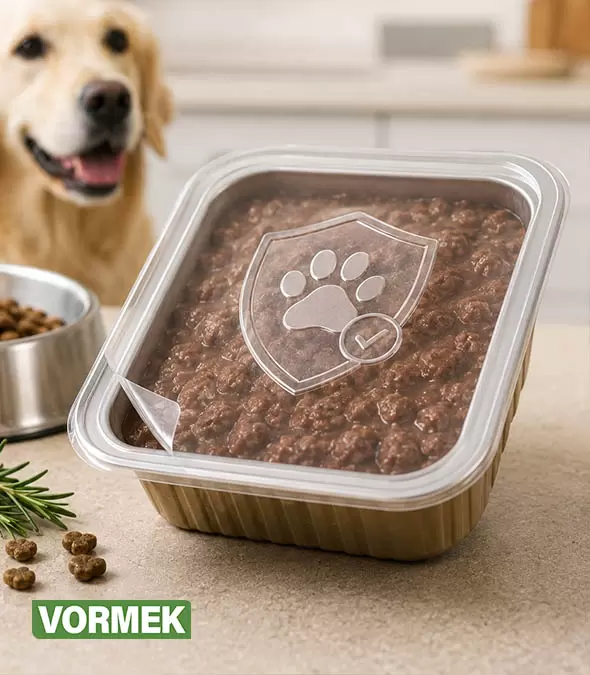
Hersteller von Heimtiernahrung stehen vor einer Reihe von Herausforderungen, die bewältigt werden müssen, um Produktqualität und kommerziellen Erfolg zu gewährleisten.
Fettoxidation
Die Herausforderung: Heimtiernahrung enthält Fette und Öle, die anfällig für oxidative Ranzigkeit sind. Sauerstoffeinwirkung führt zu:
- Fehlaromen und -gerüchen, die das Produkt ungenießbar machen
- Reduziertem Nährwert (Zerstörung essenzieller Fettsäuren)
- Verkürzter Haltbarkeit
- Geringerer Verbraucherakzeptanz
Lösungen:
- Verwendung von Verpackungen mit hohen Sauerstoffbarriereeigenschaften
- Implementierung von MAP mit kontrollierten Gasmischungen
- Verwendung von Vakuumverpackung wo angemessen
- Auswahl von Folien mit hoher Sauerstoffbarriere (EVOH, PVdC, Aluminium)
- Verwendung von Sauerstofffängern in aktiven Verpackungen
- Einhaltung geeigneter Lagerbedingungen zur Verringerung der Oxidationsraten
Aroma- und Schmackhaftigkeitsverlust
Die Herausforderung: Das Aroma von Heimtiernahrung ist ein Hauptgrund für die Akzeptanz durch Haustiere. Flüchtige Aromastoffe können verloren gehen durch:
- Permeation durch Verpackungsmaterialien
- Oxidation von Aromastoffen
- Absorption durch Verpackungsmaterialien
- Ausgasung von Verpackungsmaterialien
Lösungen:
- Auswahl von Verpackungsmaterialien mit geringer Geruchspermeabilität
- Verwendung von Hochbarrierefolien zur Verhinderung von Aromaverlust
- Minimierung des Kopfraums zur Verringerung der Aromaverdünnung
- Verwendung wirksamer Siegel zur Verhinderung von Aromaentweichung
- Auswahl kompatibler Materialien, die keine Aromastoffe absorbieren
Mikrobielles Wachstum und Verderb
Die Herausforderung: Heimtiernahrung mit hohem Feuchtigkeitsgehalt bietet ein ideales Medium für mikrobielles Wachstum, wenn sie nicht ordnungsgemäß verarbeitet und verpackt wird:
- Bakterien, Schimmelpilze und Hefen können sich vermehren
- Verderb führt zu Fehlgerüchen, Texturveränderungen und Sicherheitsproblemen
- Produktfehler führen zu Retouren, Abfällen und Markenschäden
- Vorfälle im Bereich Lebensmittelsicherheit können kostspielige Rückrufe auslösen
Lösungen:
- Anwendung wirksamer thermischer Behandlung vor dem Verpacken
- Verwendung hermetischer Siegel zur Verhinderung von Kontamination
- Implementierung von MAP mit kontrollierten Gasmischungen zur Hemmung des mikrobiellen Wachstums
- Einhaltung einer angemessenen Feuchtigkeitskontrolle in der Verpackungsumgebung
- Verwendung von Materialien mit antimikrobiellen Eigenschaften wo angemessen
Verpackungsleckage
Die Herausforderung: Undichtigkeiten beeinträchtigen die Produktintegrität und erzeugen unansehnliche, unordentliche Verpackungen:
- Produktleckagen führen zu Kreuzkontaminationen anderer Verpackungen
- Undichte Verpackungen werden von Einzelhändlern und Verbrauchern abgelehnt
- Produktgewicht geht durch Leckagen verloren
- Mikrobielle Kontamination kann durch Lecks auftreten
Lösungen:
- Gewährleistung einer gleichbleibenden Siegelfestigkeit durch Prozesskontrolle
- Auswahl kompatibler Folien- und Schalenmaterialien
- Gestaltung der Verpackungen zur Minimierung von Spannungspunkten
- Implementierung von Siegelintegritätsprüfungen
- Verwendung hochwertiger Siegelgeräte mit präziser Temperatur- und Druckkontrolle
Farbveränderungen
Die Herausforderung: Farbveränderungen des Produkts können für Verbraucher ein Signal für Qualitätsprobleme sein:
- Farbveränderungen können als Verderb wahrgenommen werden
- Die optische Attraktivität wird verringert
- Das Markenimage wird geschädigt
Lösungen:
- Kontrolle der Sauerstoffeinwirkung zur Verhinderung von Farbveränderungen
- Verwendung von undurchsichtigen oder UV-blockierenden Verpackungen, wenn Licht ein Faktor ist
- Überwachung der Farbstabilität durch Haltbarkeitsprüfungen
Transportschäden und Handhabungsschäden
Die Herausforderung: Verpackungen für Heimtiernahrung werden während der Verteilung verschiedenen Belastungen ausgesetzt:
- Vibration, Druck und Stöße können Verpackungen beschädigen
- Temperaturschwankungen können die Verpackungsintegrität beeinträchtigen
- Druckänderungen während des Transports können die Siegel beeinträchtigen
Lösungen:
- Gestaltung von Verpackungen, die den Vertriebsbelastungen standhalten
- Verwendung von langlebigen Folien mit Durchstoßfestigkeit
- Auswahl starker Siegel, die ihre Integrität unter Belastung bewahren
- Verwendung eines geeigneten Verpackungsdesigns zur Verhinderung von Druckschäden
Wichtige Auswahlkriterien für Verpackungsgeräte für Heimtiernahrung
Vor der Investition in Verpackungsgeräte ist die Bewertung der Produkteigenschaften und Marktbedingungen unerlässlich. Die folgenden Kriterien leiten den Auswahlprozess:
1. Produktart
Die Produktkategorie beeinflusst die Geräteauswahl erheblich:
- Trockene Heimtiernahrung (Kibble): Form-Füll-Verschließ-Beutel, Standbeutel oder Abfüllsysteme
- Nasse Heimtiernahrung: Schalenversiegelungsanlagen, Dosenlinien oder Retortenbeutel
- Halbfeuchte Produkte: Schalenversiegelungsanlagen, MAP-Systeme oder Vakuumverpackung
- Snacks und Kausnacks: Vakuumverpackung, MAP oder Standardabfüllung mit Barrierefolien
- Ergänzungsmittel und Funktionsprodukte: Beutelverpackung, Blisterverpackungen oder maßgeschneiderte Lösungen
2. Erwartete Haltbarkeit
Die erforderliche Haltbarkeit bestimmt das Niveau des Barriereschutzes:
- Kurze Haltbarkeit (bis zu 6 Monaten): Standardfolien mit mäßiger Barriere können ausreichend sein.
- Mittlere Haltbarkeit (6-12 Monate): Hochbarrierefolien und MAP sind typischerweise erforderlich.
- Verlängerte Haltbarkeit (12+ Monate): Sehr hochbarrierefolien, MAP oder Vakuumsysteme sind notwendig.
3. MAP- oder Vakuumanforderungen
Wenn MAP oder Vakuum erforderlich ist, muss die Ausrüstung mit diesen Technologien kompatibel sein. Nicht alle Geräte können Gasspülung oder Vakuum aufnehmen, daher muss dies im Auswahlstadium festgelegt werden.
4. Behälter- und Folientypen
Die Wahl der Schalen oder Folien beeinflusst die Gerätekompatibilität und -leistung. Zu den Faktoren gehören:
- Schalenabmessungen und -form
- Schalenmaterial (PET, PP, Aluminium, Karton)
- Folientyp und -dicke
- Druckanforderungen
- Nachhaltigkeitsaspekte
5. Automatisierungsgrad
Der gewünschte Automatisierungsgrad beeinflusst sowohl die Anfangsinvestition als auch die laufenden Kosten:
| Automatisierungsgrad | Arbeitskräftebedarf | Anschaffungskosten |
|---|---|---|
| Manuell | Hoch | Gering |
| Halbautomatisch | Mäßig | Mäßig |
| Automatisch | Gering | Hoch |
| Vollroboter | Minimal | Sehr hoch |
6. Hygiene und Reinigbarkeit
Verpackungsgeräte für Heimtiernahrung müssen Hygienestandards für die Lebensmittelproduktion erfüllen:
- Edelstahlkonstruktion
- Glatte, reinigbare Oberflächen
- CIP-Kompatibilität
- Korrosionsbeständigkeit
7. Erweiterungsfähigkeit
Die Ausrüstung sollte eine zukünftige Erweiterung ohne vollständigen Austausch ermöglichen. Modulare Designs sind aus diesem Grund oft vorzuziehen.
Schalenversiegelung vs. Thermoformung: Ein detaillierter Vergleich
Die Wahl zwischen Schalenversiegelung und Thermoformung ist eine der wichtigsten Entscheidungen für Hersteller von Heimtiernahrung:
| Merkmal | Schalenversiegelung | Thermoformung |
|---|---|---|
| Schalenvielfalt | Sehr hoch | Mäßig |
| Eignung für vielfältige Produkte | Sehr geeignet | Geeignet |
| Produktionsgeschwindigkeit | Hoch | Sehr hoch |
| Eignung für Hochvolumenlinien | Mäßig | Sehr geeignet |
| Anfängliche Kapitalinvestition | Mäßig | Höher |
| Materialeffizienz | Mäßig | Sehr hoch |
| Umstellzeit | Sehr kurz | Länger |
| MAP-Fähigkeit | Ja (mit Gasspülung) | Ja (integriert) |
| Vakuumfähigkeit | Ja (mit Vakuumoption) | Ja (integriert) |
Wann Schalenversiegelung zu wählen ist
Schalenversiegelungsanlagen sind die bevorzugte Wahl, wenn:
- Die Produktvielfalt hoch ist: Häufige Umstellungen zwischen verschiedenen Produkten und Schalengrößen.
- Die Produktionsvolumina mäßig sind: Die Flexibilität der Schalenversiegelung ist wertvoller als der maximale Durchsatz.
- Schalenvielfalt wichtig ist: Eine breite Palette von Schalengrößen, -formen und -materialien wird benötigt.
- Die Kapitalinvestition begrenzt ist: Schalenversiegelungen erfordern geringere Anschaffungskosten.
- Schnelle Umstellungen entscheidend sind: Schnelle Formatwechsel haben Priorität.
Wann Thermoformung zu wählen ist
Die Thermoformung ist die bevorzugte Wahl, wenn:
- Die Produktionsvolumina sehr hoch sind: Der Durchsatz von Thermoformlinien rechtfertigt die Investition.
- Die Materialeffizienz entscheidend ist: Die Thermoformung optimiert den Folieneinsatz und minimiert Abfälle.
- Die Automatisierung von größter Bedeutung ist: Minimale manuelle Eingriffe sind erwünscht.
- Konsistenz unerlässlich ist: Hochgradig gleichmäßige Verpackungen sind erforderlich.
- Langfristige Produktionsläufe: Umstellungen sind selten, was die Effizienz maximiert.
Die Rolle der Verpackung in der Marktentwicklung von Heimtiernahrung
Das Verbraucherverhalten auf dem Markt für Heimtiernahrung hat sich erheblich entwickelt. Tierbesitzer zeigen heute mehr Aufmerksamkeit für Produktqualität, Sicherheit, optische Attraktivität und Markenreputation.
Wie Verpackung das Vertrauen der Verbraucher fördert
Eine professionelle Verpackung signalisiert Qualität und Zuverlässigkeit:
- Visuelle Attraktivität: Attraktive Verpackungen kommunizieren Produktqualität und Markenwerte.
- Transparenz: Klare Verpackungen ermöglichen es den Verbrauchern, das Produkt im Inneren zu sehen.
- Informationen: Umfassende Kennzeichnung liefert Nährwertangaben, Zutatenlisten und Zubereitungshinweise.
- Bequemlichkeit: Leicht zu öffnende, wiederverschließbare und portionskontrollierte Funktionen bieten einen Mehrwert.
- Sicherheit: Manipulationssichere und hygienische Verpackungen schaffen Verbrauchervertrauen.
Verpackung und Markendifferenzierung
In einem wettbewerbsintensiven Markt heben unverwechselbare Verpackungen Produkte hervor:
- Design: Einzigartige Formen, Farben und Grafiken ziehen Aufmerksamkeit auf sich.
- Innovation: Neuartige Merkmale demonstrieren Marktführerschaft.
- Nachhaltigkeit: Umweltfreundliche Verpackungen sprechen umweltbewusste Verbraucher an.
- Qualitätsmerkmale: Hochwertige Materialien und Oberflächen deuten auf überlegene Qualität hin.
Marktexpansion durch Verpackung
Eine durchdachte Verpackung ermöglicht die Marktexpansion:
- Exporttauglichkeit: Verpackungen, die internationale Standards erfüllen, erleichtern den Eintritt in ausländische Märkte.
- Haltbarkeitsverlängerung: Eine längere Haltbarkeit ermöglicht eine breitere Verteilung und längere Produktverfügbarkeit.
- Kanalkompatibilität: Verpackungen, die die Anforderungen des Einzelhandels erfüllen, sichern die Platzierung in den Regalen.
- E-Commerce-Tauglichkeit: Verpackungen, die die Auftragsabwicklung und Hauslieferung im Online-Handel überstehen.
Hygiene und Sicherheit bei der Verpackung von Heimtiernahrung
Obwohl Heimtiernahrung nicht für den menschlichen Verzehr hergestellt wird, sind die Gesundheits- und Sicherheitsstandards in dieser Branche von großer Bedeutung. Verpackungsgeräte müssen gründliche Reinigung, Kontaminationskontrolle und Produktqualitätserhaltung ermöglichen.
Hygienisches Gerätedesign
Materialauswahl
Edelstahl (Sorte 304 oder 316) ist das bevorzugte Material für lebensmittelberührende Oberflächen und bietet Korrosionsbeständigkeit, Reinigbarkeit und Haltbarkeit.
Oberflächenbeschaffenheit
Glatte Oberflächen mit minimaler Rauheit verhindern die Ansiedlung von Mikroorganismen und erleichtern die Reinigung.
Design für Reinigbarkeit
- Abgerundete Ecken und glatte Übergänge
- Keine Spalten oder Totzonen
- Selbstentwässernde Oberflächen
- Zugängliche Bereiche für Inspektion und Reinigung
CIP-Kompatibilität
Clean-In-Place-Fähigkeiten ermöglichen eine automatisierte Reinigung ohne Demontage, reduzieren Stillstandzeiten und verbessern die Hygienekonsistenz.
Materialsicherheit
Verpackungsmaterialien müssen:
- Sicher für den Lebensmittelkontakt sein
- Nicht toxisch und nicht migrierend sein
- Unter Lagerbedingungen stabil sein
- Mit dem Produkt kompatibel sein
- Den geltenden Vorschriften entsprechen
Expertenperspektive zur Verpackung von Heimtiernahrung
Heimtiernahrung, insbesondere Nassprodukte und proteinbasierte Snacks, teilt viele Verpackungsanforderungen mit Lebensmitteln für den Menschen. Die Wahl der geeigneten Technologie, des Behältertyps, der Verpackungsfolie und der Verarbeitungsbedingungen wirkt sich direkt auf Haltbarkeit, Qualität und kommerziellen Erfolg aus.
Wichtige Überlegungen für Verpackungsfachleute:
- Produktformulierung: Das Verständnis der Zusammensetzung und Stabilität des Produkts ist für die Auswahl einer geeigneten Verpackung unerlässlich.
- Prozessintegration: Die Verpackung muss nahtlos mit den vorgelagerten Prozessen, einschließlich Formulierung, Befüllung und Versiegelung, zusammenarbeiten.
- Materialkompatibilität: Verpackungsmaterialien müssen mit dem Produkt und den Prozessbedingungen kompatibel sein.
- Haltbarkeitsvalidierung: Haltbarkeitsstudien sollten durchgeführt werden, um die Wirksamkeit der Verpackung zu bestätigen.
- Verbraucherakzeptanz: Tests mit Verbrauchern (und ihren Haustieren) validieren die Verpackungsentscheidungen.
Empfohlene Vorgehensweise:
- Produktcharakterisierung: Bestimmung der Produktzusammensetzung, Stabilität und Empfindlichkeitsfaktoren.
- Anforderungsdefinition: Definition der Verpackungsanforderungen basierend auf Produkt- und Marktanforderungen.
- Technologieauswahl: Auswahl der geeigneten Ausrüstung und Materialien basierend auf den Anforderungen.
- Probeläufe: Durchführung von Versuchen zur Optimierung der Prozessparameter.
- Validierung: Validierung des Verpackungssystems durch Haltbarkeitsstudien und Vertriebstests.
- Implementierung: Implementierung des Verpackungssystems in der Vollproduktion.
Häufig gestellte Fragen zur Verpackung von Heimtiernahrung
1. Ist MAP für Hunde- und Katzenfutter geeignet?
Ja. MAP kann die Haltbarkeit verlängern und den Nährwert erhalten, indem Oxidation reduziert und die Produktqualität bewahrt wird. MAP ist besonders wirksam für nasse und halbfeuchte Heimtiernahrung sowie für Produkte mit hohem Fettgehalt.
2. Ist die Vakuumverpackung für Heimtiernahrung geeignet?
Ja. Die Vakuumverpackung kann die Haltbarkeit des Produkts verlängern und die Qualität erhalten, insbesondere für fleischbasierte Snacks und Kausnacks. Sie ist wirksam für Produkte, bei denen die Sauerstoffentfernung Priorität hat und eine Produktverformung kein Problem darstellt.
3. Warum benötigt Nassfutter für Heimtiere eine spezielle Verpackung?
Nassprodukte haben eine höhere Wasseraktivität, was sie empfindlicher gegenüber mikrobiellen Verderb macht. Sie müssen in Verpackungen verpackt werden, die die Produktqualität und -sicherheit durch hermetische Versiegelung und geeignete Barriereeigenschaften schützen können.
4. Welche Faktoren beeinflussen die Haltbarkeit von Heimtiernahrung am meisten?
- Qualität der Rohstoffe
- Produktionsprozess
- Verpackungsart
- Sauerstoffgehalt im Inneren der Verpackung
- Folienqualität
- Lager- und Vertriebsbedingungen
5. Kann MAP für trockene Heimtiernahrung verwendet werden?
Ja, aber der Hauptvorteil ist die Verhinderung von Fettoxidation und nicht die mikrobielle Kontrolle. Die Stickstoffspülung wird häufig für trockene Kibble verwendet, um Sauerstoff zu verdrängen und Ranzigkeit zu verhindern.
6. Was ist der Unterschied zwischen Schalenversiegelung und Thermoformung für Heimtiernahrung?
Die Schalenversiegelung verwendet vorgeformte Schalen und ist flexibler für verschiedene Produkte und Formate. Die Thermoformung formt Schalen inline aus Folie und ist besser für die Großproduktion geeignet, da sie eine größere Materialeffizienz und Konsistenz bietet.
7. Gibt es nachhaltige Verpackungen für Heimtiernahrung?
Ja. Nachhaltige Optionen umfassen recycelbare Materialien, Rezyklatanteile, biobasierte Kunststoffe und papierbasierte Alternativen. Die Verpackung muss jedoch weiterhin einen angemessenen Schutz und Qualitätserhaltung bieten.
8. Wie wirkt sich die Verpackung auf die Schmackhaftigkeit von Heimtiernahrung aus?
Die Verpackung schützt das Aroma und den Geschmack des Produkts, indem sie Oxidation und Aromaverlust verhindert. Wirksame Barriereeigenschaften stellen sicher, dass das Produkt das Haustier mit seiner vollen sensorischen Attraktivität erreicht.
9. Welche Rolle spielt die Kühlkette bei der Verpackung von Heimtiernahrung?
Für nasse und frische Heimtiernahrung ist die Aufrechterhaltung einer Kühlkette für die Produktsicherheit und -qualität unerlässlich. Die Verpackung muss ihre Integrität unter Temperaturschwankungen bewahren und Kondensation im Inneren der Verpackung verhindern.
10. Was sind die kritischen Qualitätsfaktoren bei der Verpackung von Heimtiernahrung?
Die kritischen Qualitätsfaktoren umfassen die Sauerstoffbarriere zur Verhinderung von Ranzigkeit, die Feuchtigkeitskontrolle zur Verhinderung von Verderb oder Altbackenwerden, die Aromaerhaltung zur Aufrechterhaltung der Schmackhaftigkeit, die Siegelintegrität zur Verhinderung von Leckagen und Kontamination sowie die Nährstofferhaltung zur Aufrechterhaltung des Produktwerts.
Fazit
Die Verpackung von Heimtiernahrung ist ein spezialisiertes Gebiet, das eine sorgfältige Berücksichtigung der Produkteigenschaften, der Vertriebsanforderungen und der Verbrauchererwartungen erfordert. Die Auswahl geeigneter Verpackungstechnologien und -materialien beeinflusst direkt die Produktqualität, -sicherheit, -haltbarkeit und den kommerziellen Erfolg.
Wichtige Erkenntnisse für Hersteller von Heimtiernahrung:
- Verstehen Sie Ihr Produkt: Die Produkteigenschaften (Feuchtigkeitsgehalt, Fettgehalt und Empfindlichkeit gegenüber Sauerstoff) bestimmen die Verpackungsanforderungen. Das Verständnis dieser Faktoren ist für die Auswahl der richtigen Lösung unerlässlich.
- Wählen Sie die richtige Technologie: Die Auswahl von Schalenversiegelung, Thermoformung, MAP oder Vakuumverpackung hängt von der Produktart, dem Produktionsvolumen und den Marktanforderungen ab.
- Priorisieren Sie die Qualitätserhaltung: Die Verpackung muss die Produktqualität, einschließlich Aroma, Schmackhaftigkeit, Farbe, Textur und Nährwert während der gesamten Haltbarkeitsdauer des Produkts, schützen.
- Schaffen Sie Verbrauchervertrauen: Eine professionelle Verpackung kommuniziert Qualität, schafft Markenvertrauen und differenziert Produkte in einem wettbewerbsintensiven Markt.
- Planen Sie für die Zukunft: Verpackungsgeräte sollten eine zukünftige Produktdiversifizierung und Kapazitätserweiterung ohne vollständigen Austausch ermöglichen.
- Investieren Sie in Fachwissen: Verpackungsexpertise kann Herstellern helfen, kostspielige Fehler zu vermeiden und optimale Lösungen für spezifische Produkte und Märkte zu identifizieren.
Vormek bietet fortschrittliche Verpackungslösungen für die Heimtiernahrungsindustrie, einschließlich Schalenversiegelungssystemen, Thermoformlinien und MAP-Geräten. Unsere Systeme sind auf Präzision, Zuverlässigkeit und Hygiene ausgelegt und ermöglichen es Herstellern, qualitativ hochwertige Produkte zu liefern, die den höchsten Sicherheits- und Qualitätsstandards entsprechen. Kontaktieren Sie unser Ingenieurteam, um Ihre Anforderungen an die Verpackung von Heimtiernahrung zu besprechen.